
ZIMBABWE: Time to Speak
Apr 30, 2019
story

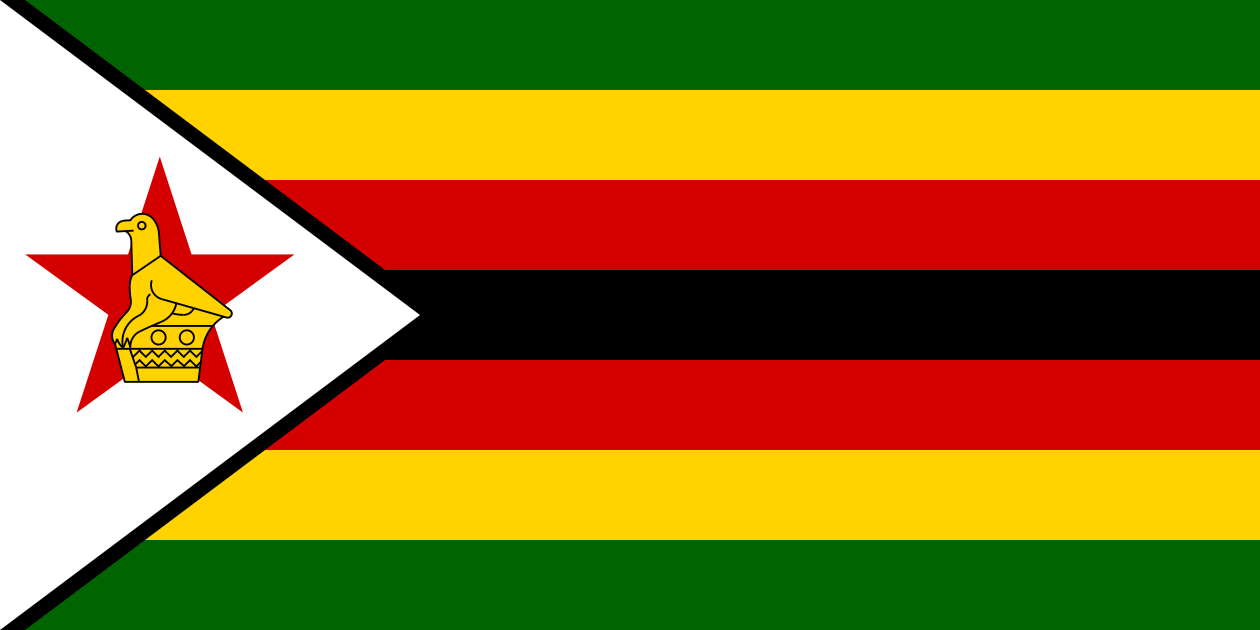
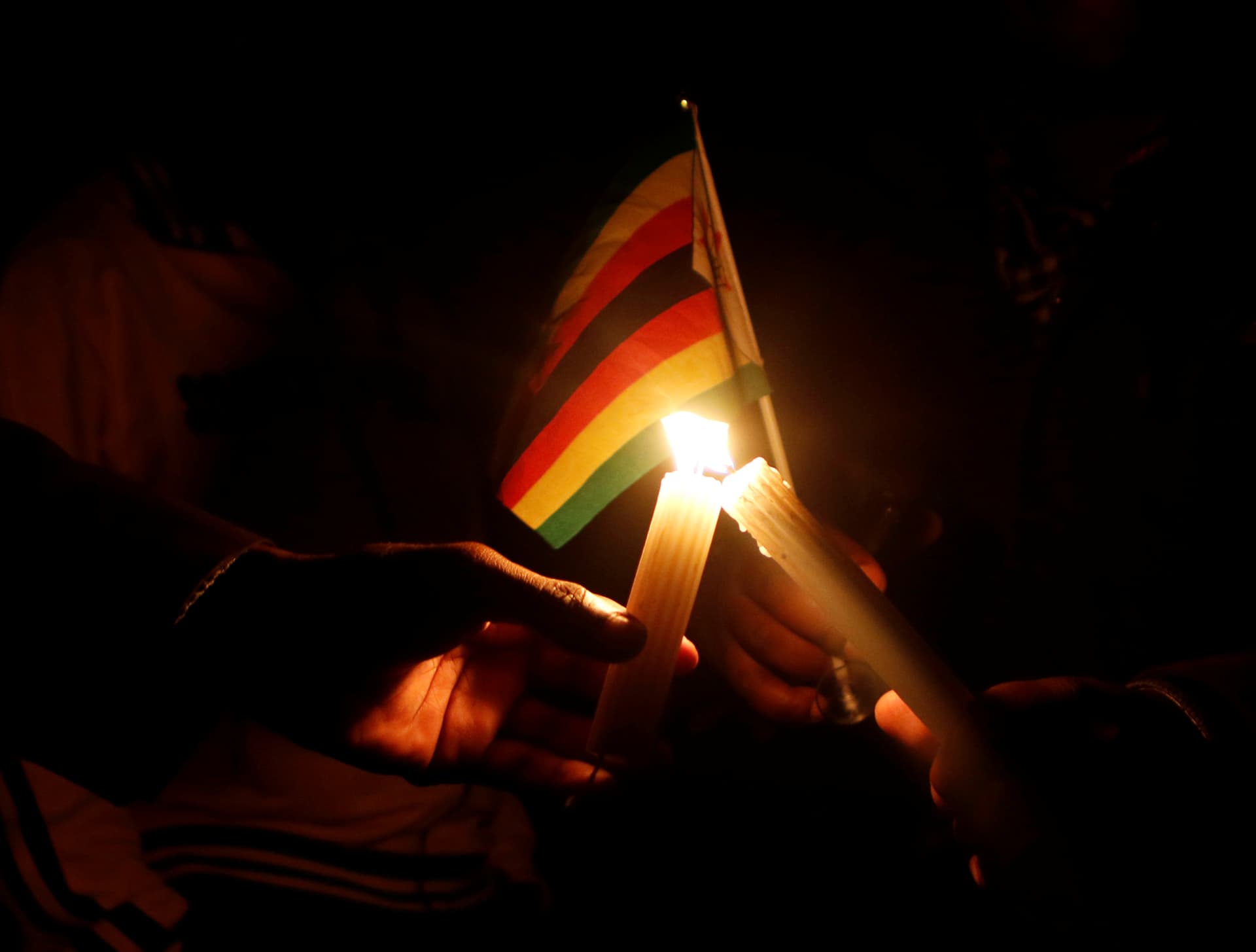
Photo © Philimon Bulawayo / Reuters Pictures
How a hashtag is shifting a climate of silence and fear in Zimbabwe.
Citizens have found their voices through social media.
I come from a country where we mind our own business.

Never mind that we drive our cars through streets where school-age children beg for coins to buy a hot meal. We close our car windows to not be bothered by these ‘rascals’.
Never mind that rape cases are soaring, that families cover up for the perpetrators because they are the breadwinners. Never mind that the judicial system is skewed towards those with money.
Never mind that some women sleep on the street after spending the whole day trying to earn a living and can't afford to raise enough for bus fare to go back home. We keep quiet. With unemployment rates escalating and economic woes looming, we just move forward and hope for a better tomorrow as long as we have a meal to get by.
This is the Zimbabwe I grew up in. If we talked, it was inside the protection of our homes, cars, or with a confidante; it was never in public places. The cost of speaking publicly was too high.
In January, government officials ordered the demolition of houses built on unapproved land. Mind you, these residents had bought these residential stands from approved dealers. It was heartbreaking to see young children watch helplessly as their houses were toppled, while women cried and husbands stood in shock.
I remember traveling to my maternal grandmother's rural home on a commuter bus a week after this happened. A gentleman sitting in the front seat near the driver was shouting obscenities about the government. In my heart, I was whispering to him, telling him to be quiet. Why was he saying the things we only said behind closed doors?
When we had traveled about 50 kilometers from the city, the gentleman sitting to my right ordered the driver to park the bus by the roadside. He had been extremely quiet throughout the journey. Now he spoke, “Sir, you have been lashing out at the government, especially the president, calling him old. ” (Our president is 92 years old). To everyone's utter shock, he then said, “I’m going to take you to him so you can say it right to his face. ”
We left the two of them in the middle of nowhere. It was chilling. We don't know what happened afterward, and we proceeded with our journey in almost total silence. We only shared a few words with each other, agreeing that one should never curse the government in public because it has eyes and ears everywhere. Walls of fear enveloped our very existence. Fear was the marrow in our bones.
This is the Zimbabwe I grew up in. But it is not the Zimbabwe I see today. We have begun to find our voices through social media. Hashtags are bringing people together to speak out against corruption and other government ills. A local pastor, Evan Mawarire, started the hashtag #thisflag, which has opened the voice of the citizens. It is shocking to see how we have transformed into a vocal people who know our rights and are ready to voice our frustrations anytime and anywhere.
The #thisflag movement began in April after Mawarire failed to pay his child’s school fees. He says that realizing that his child had to skip school because he, as the father, could not afford to pay school fees made him teary. Coincidentally, on his desk was a country flag.
He says that he told himself that Zimbabwe is a land of opportunity and richness yet corruption and misrule have destroyed the country. The rich keep getting richer while the poor continue to suffer without any cushions against social, economic, and political woes. So he made a video urging all citizens living in the country and beyond to name anything they felt was not right within the country and hashtag it #thisflag.
This resulted in citizens coming together on social media platforms, posting pictures of themselves proudly holding their flags, and saying what they wish to be rectified in their country.
Most Zimbabweans, whether living in the country or abroad, have grievances towards the government. Some were forced into asylum while others went abroad in search of better living conditions.
Of late, there have been unaccounted disappearances ofjournalists who tried to voice ourconcerns. Corruption is at a peak, with officials publicly confessing that $15 billion US has disappeared unaccounted for. Some government ministers own properties throughout the country while many citizens are seeing their shelter demolished in broad daylight.
The last straw was when the vice president of the country refused to stay in a house that had been availed to him. Instead, he continues to choose to stay in a hotel at the expense of the taxpayer. Civil servants’ salary dates are pushed later while they are expected to pay bills. Police roadblocks are found throughout the city, squeezing the few pennies in the pockets of motorists. All these socio-political ills coupled with the current drought in the country has led to an awakening of the public voice.
If you cannot allow a 92 yr old to drive a 4 seater, why allow them to run a country of 14 million people? #thisflag— African (@ali_naka) July 30, 2016
#thisflag🇿🇼 has no race , tribe, gender. It is you. Stand up, speak up, act. Nobody is going to do anything for you https://t. Co/fy27mpttqz
— Trevor Ncube (@trevorncube) August 2, 2016
We as ordinary Zimboz are tired of being segregated by the so called liberators, you destroyed our future. #thisflag https://t. Co/aepggnl3dl
— Francis Dee Mpofu (@phynx_dee) July 24, 2016
https://twitter. Com/fishans1/status/757137794984804356
And this movement isn’t just happening online. It led to three days of shutdown as protesters asked the government to listen to the pleas of the people. Many groups of people have been coming together and peacefully marching against the government’s detrimental policies.
Last month, unemployed graduates took to the streets. They demonstrated by wearing their regalia while playing football, vending, and just loitering to represent that those who hold degrees have been reduced tomere certificate holders.
Unemployed graduates playing football in gowns in Harare. Peaceful protest under a violent regime #thisflag🇿🇼
— Trevor Ncube (@trevorncube) July 29, 2016
👇🏿 pic. Twitter. Com/zakujjbtzu
Even the war veterans who fought in our liberation war over 36 years ago are speaking against the prolonged leadership of a nonagenarian leader who tolerates corrupt tendencies within his cabinet.
It is very encouraging to see that people have chosen to open their mouths. They are shouting out that they require achange of policies and actions to live well. People are hoping for a better Zimbabwe. We are coming together and sharing our pains. We are hoping the government will hear our voices and avoid bloodshed or civil unrest.
#thisflag Mawarire says, \"There's a sense in Zimbabwe that whatever we're going to choose next must be something we want and can challenge. \"
— capetalk on 567AM (@capetalk) August 2, 2016
Because the mainstream media only airs propaganda to protect the ruling class, we end up relying on international media and social media. The government is also recognizing the power of social media and trying to stop it. In 2008, those with satellite dishes were disconnected so we would all watch what was dished out by state-owned media. Recently, the government has issued warnings towards the “abuse of social media” and there are threats of disconnecting us from social media. So much for democracy!
Against this seemingly disheartening background, the citizens are finding their voices. Many people had lost pride in being called Zimbabwean. When traveling to other countries one would try not to divulge one’s Zimbabwean background.
Now we are proudly taking photos with our flag. The average person has seen the benefits of speaking out about the wrongdoing by public personnel. The battle is far from over, but having people opening their mouths to voice their illsis a big step in tumbling the walls of fear.
- Technology
- Human Rights
- Africa