
ZIMBABWE: African Mothers Are Brave but Not Unbreakable
Nov 18, 2019
story


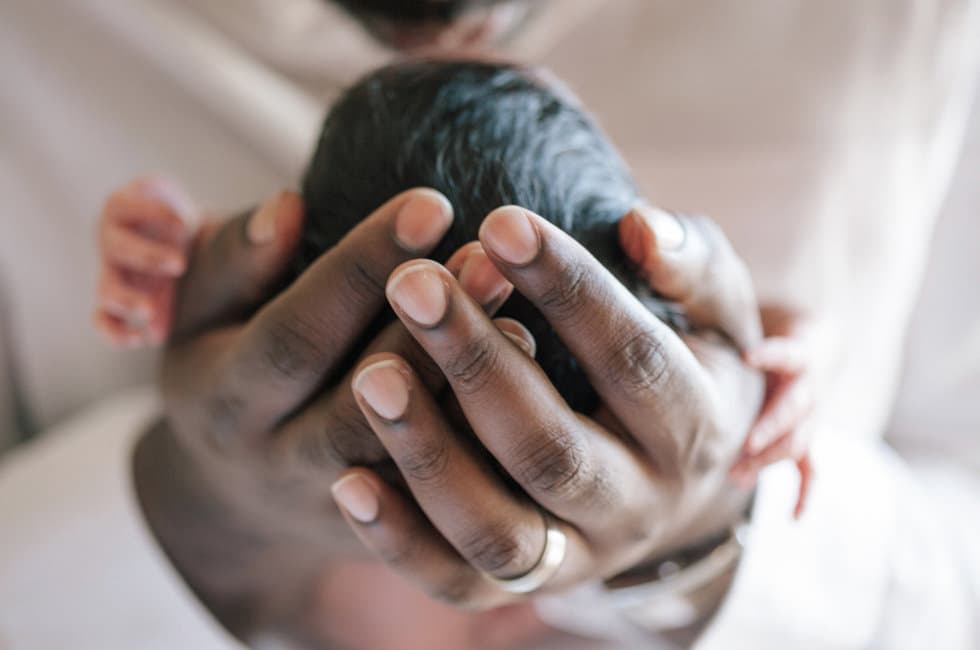
Photo by Nestling Photography on Flickr (CC BY-NC-ND 2.0)
Kundai Muringi brings perinatal mental illness out into the open—so women won't have to keep suffering in silence.
We need to challenge beliefs that continue to teach women to hide their blood and be silent about their pain.
When a woman goes to give birth, she goes to war. Whether she is ready or not, she has to fight; she comes face to face with the possibility of dying. When she can hardly lift herself, she has someone else to lift; when she can hardly eat, someone else is feeding off her; when she is trying to find herself again, someone needs her love.
The motivational image of the unbreakable African woman has helped women to survive many unimaginable, mentally and physically wrenching situations. But it has also left many living in survival mode after giving birth, not knowing how to express their pain. They do not ask for help because they have been raised to believe it’s a sign of weakness. Their fight is viewed as a shameful experience.
Through my work providing peer support to women experiencing perinatal mental disorders like depression and anxiety, I see this hidden pain all too often. I have also experienced it first hand.
Birth trauma
I was born and raised in Zimbabwe, a beautiful country that made considerable headway in terms of education and infrastructure at a time when most African countries were stagnant. But unfortunately, mental health has not been given the same attention, resulting in shame and stigma.
When I had my first child at 19, my community, family, and my attending nurses all contributed to making this an embarrassing and guilt-ridden time for me. I have no recollection of the birth of my second child, who came only two years later, or the first year of her life. Had I known earlier that that was a red flag, I probably would've done something about it. But I didn't—and neither did anyone around me.
When I got pregnant with my third child, I was an immigrant in South Africa. It was eight years after my second child, an unplanned and untimely pregnancy. Regardless, I was determined that this pregnancy would be the first that I would actually enjoy and that I would be prepared for this child, free of guilt.
Things were going well for me until a month before I was due. An earlier scan had revealed my baby was in a breech position. Now, my nurse was claiming my baby was in the correct position. I was certain I felt differently, so I challenged her. She blew a fuse, telling me that I wasn't the nurse and had no right to talk back to her.
Too stretched on cash to seek a private second opinion, I decided to calm myself and prepare for my baby's birth. The day I went into labor, as a third-time mom, I was calm. I was timing my own contractions and optimistic.
When I arrived at the hospital, expecting to have my baby in the next two hours or so, I was met with a rude fact. My baby had never turned. I had been right—and worse, the hospital did not have the capacity to perform caesarean births.
This information was followed by a trail of student nurses, one after the other, who physically probed me to see an example of a breech baby. Did I remain silent? No, I Expressed that they were worsening my pain. They casually told me that students needed to learn to avoid mistakes like this happening in the future.
An hour later, I was transferred to another hospital, where we were informed that their operating theater was full. They tied me to a bed and did an experimental delivery on me while 10 to 15 nurses stood at the top of the bed gawking like I was some freak of nature. I was constantly told to \"push harder\" unless I wanted to kill my baby.
Three hours later and bottom first, my little fighter princess was born. My husband, who had been my pillar the whole time, broke into tears, in a way I have never—and doubt I will ever—see again.
Broken, torn, and weak, I was forced to walk across the huge state hospital after the birth, only to be “welcomed” by another nurse who chose that time to ask me why I was in South Africa if I couldn't speak their languages.
The next three days were all part of a nightmare that caused me sleepless nights for months after. Birth trauma haunted me. I was irrationally protective of my baby; I wouldn't even let other family members touch her. If they did, I would sit in deep anxiety, waiting for an opportunity to grab her back. While I understand that birth hardly ever goes as planned, I know it didn't have to be so traumatic and violating.
Battling stigma
My story, as horrifying as it may sound, is not so different from what millions of other African women endure: We are often uninformed, unheard, lost, and confused at a time when we are expected to bond with our babies. My trauma happened in South Africa, but later, I realized the very same thing could have happened in Zimbabwe. My experience opened my eyes to the need for perinatal mental health care to be integrated into African health systems. One in five women in South Africa, for example, experience perinatal mental disorders and only 15% of them receive treatment.
Mental illness is not something new in Africa; it’s just now beginning to be discussed. Still, too much silence and stigma remain.
It is hard enough to be an African today in a world that constantly seems determined to wash you clean of everything African. It has become a conscious daily battle to know yourself, your people, and hold dear what needs to be imparted to the next generation to conquer extinction. As an African woman, this struggle is on a different level. You are second rated as a citizen and silenced in the midst of upholding your Africanism. Being an African woman with a mental illness is akin to a grave. Africa around you treats you like death, unknown, unheard, and invisible while you are on the margins of the marginalized, striving to stay alive.
There is a misconception floating around us that if we ignore something long enough, it will go away; but ignorance is lack of knowledge and lack of knowledge is lack of power.
As Africans, we love to raise our voices and rightfully demand equality to people of other continents and races, yet there are illnesses we still call \"theirs\" and refuse to accept as a reality in ourselves, our families, and our societies. We do not invest research and resources in these illnesses because they are not contagious.
The myths that have long been shattered about other illnesses remain rooted where mental health is concerned. Mental illness is still labeled as witchcraft, demons, and curses. Despite developments in all sectors across Africa, my mother, myself, and my daughter were all born in an environment that stigmatizes people battling mental illness.
Suffering in silence
Girls in our societies are still socialized to equate their worth with getting married and having children. They are still abused and raped by relatives that they can never name. It is still the girl who has to carry and give birth to a baby she isn't ready to have; still the girl victimized by her family and in-laws when she gets pregnant; still the girl who is called a name for having a child out of wedlock; still the girl who has to carry the shame in a judgmental society; still the girl who is forced to leave her family when she needs family support.
These girls grow into women who wage daily battles against economic instability, unemployment, violence, lack of support from home, HIV-positive diagnoses, and migration—all of which are common triggers for perinatal mental disorders.
Some women experiencing mental illness cannot even begin to imagine what might be wrong with them. Some are aware but remain quiet. And then there are those who speak out and are met with ignorance: heartless advice to just be grateful to have a baby or assumptions from partners that abnormal behavior is merely attention seeking.
Women are suffering in silence to fit an ideal of African women as strong maternal goddesses. But every woman is no more a maternal goddess than every man is an adequate financial god.
A Way Forward
Perinatal mental disorders are treatable and a considerable amount can be done in prevention, but first, we must acknowledge mental illnesses like any other illnesses and familiarize ourselves with them. Until we do, women will continue to break and die, marriages and families will become dysfunctional, and children will continue to suffer.
We need to challenge beliefs that continue to teach women to hide their blood and be silent about their pain. We need to challenge the beliefs that discourage a man’s presence while his partner gives birth and dismiss the fears that a man’s desire for his wife will be tainted by reality. African men's oblivion to what happens in a labor room leaves them insensitive to women's experiences and recovery.
We need to reject the propaganda of maternal goddesses and embrace the heroism of mothers! Heroes Fall too; they bleed, they feel pain, sometimes they have scars—and sometimes the scar is a traumatized mind.
Selfishly, many people refuse to acknowledge perinatal mental illness because they believe it will not affect them. Not experiencing something personally does not make it unreal. Women’s mental health challenges are very real, and Women’s mental health challenges are very real, and African women need to dig the shame out from under our fingernails and speak of our realities.
We will find healing in hearing our own stories and being pillars for other women. Everybody has a voice, but the freedom to use our voices requires the braveness of individuality. We must raise our voices—not for those who have never listened—but for the worlds of souls who have waited to hear our melodies.
STORY AWARDS
This story was published as part of the World Pulse Story Awards program. We believe everyone has a story to share, and that the world will be a better place when women are heard. Share your story with us, and you could be our next Featured Storyteller! Learn more.
- Health
- Africa