
WOMEN ARE MEDIA LEADERS
Jan 21, 2015
story
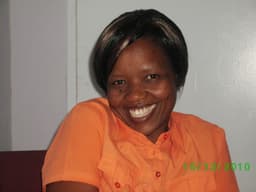

This has never crossed my mind. I never thought I could use a computer, communicate with people around the world in this manner. Computers were meant for rich people and those who could afford them. At school, life was very simple, chalkboard was the main tool for conveying messages as the teacher would write and teach there. Sometimes lessons were conducted under the tree. Just recently when the government introduced computers in junior secondary schools so that by 2016 every Motswana would be computer literate. However though many are still behind with technology but quite a good number of Batswana are coming up more especially women.
Despite the growing number of women choosing a media career, very few are in decision-making positions, a situation the recently formed Botswana Media Women Association (BOMWA) aims to correct.
\"In the leadership positions we have not reached 30 percent representation because media remains male-dominated at management levels,\" said Shollo Phetlhu, BOMWA chairperson and acting general manager of Botswana TV (BTV).
\"The media sets the agenda and is the mirror through which the country looks at itself. We therefore feel that the role of the media in nation building cannot be complete without the active participation of women,\" she said.
Although Botswana has the highest proportion of women print media practitioners in Southern Africa - 41 percent compared to the regional average of 22 percent - women continue to complain about entrenched gender imbalances. Challenging the media, using its own codes and standards, is a strategy BOMWA intends to exploit.
\"Our women need to be empowered in the area of training, to keep abreast of development, because media is dynamic. For example, BTV women no longer have to carry heavy equipment and can use small, portable and up-to-date cameras,\" commented Caroline Phiri-Lubwika, information officer at the Botswana chapter of the Media Institute Southern Africa (MISA).
\"This helps to break down barriers for women wanting to take up challenging jobs,\" she added. Phiri-Lubwika said giving women a voice through the national media was also vital.
\"In every society women and children suffer the most, so it is very important to allow them to be able to air their grievances. A male-dominated management is unlikely to understand problems experienced by women
- Africa