
We have needs too!
Jan 21, 2015
story
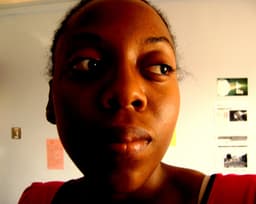


To the UN Women Executive Director, Michelle Bachelet,
I am not rural.
I am not illiterate.
But still, as a woman from the Global South, I have needs. Sadly, these needs continue to slip through the cracks of gender discourse because for so long, the focus of women’s development initiatives has been addressing the needs of the rural, illiterate and direly poor.
I do not argue against the fact that these women’s needs are urgent and immediate. I know that they are and I welcome every single cent in development assistance that is channelled towards their needs. In fact, I demand that more be done to understand the complexity of their predicament. As your sister agency, the UNDP, has realised, poverty is multi-dimensional and rooted in various deprivations that must be addressed with diligence and determination. I commend this realisation and urge that UN Women finds imaginative, representative and progressive ways of working with the UNDP to understand more fully the gendered aspects of the dimensions of poverty.
But now, I return to my own disgruntlement which I will contextualise with a short narration of my life.
I am a 26-year-old Zimbabwean woman who has had enjoyed privileges that many of my countrywomen have not. I have received a good education and have had the chance to work and be self-sustaining. Nothing has ever been handed to me ready-made on a plate, and I have succeeded through hard work, perseverance and the support of an incredible social network that includes parents who never made me feel incompetent or incapable because of my being female.
But as a writer, poet and journalist, I note the various unaddressed challenges which Zimbabwean women who choose a similar path for themselves face.
A 2009 report on gender and the media in southern Africa, entitled ‘Glass Ceilings: Women and Men in Southern African Newsrooms’ showed that the average proportion of women in the media in southern Africa was 41%. When South Africa was excluded, the proportion plummeted to 32%, or just one third of the total. Because of their marginal status, these women were said to be experiencing discouraging working conditions, such as sexual harassment and relegation to ‘soft’ news beats like fashion and lifestyle, as opposed to the male reserves of politics and business.
Yes, there are local-based institutions that support women in the media, but I must observe that their operations have been severely curtailed by lack of consistent funding and technical support. Regardless of proposals written and funding streams sought, the emphatically negative response from donors always seems to mention that nurturing women in the media is not a development priority area.
Well, I must roundly differ. Much as it is important to afford the most marginal of the marginal their share of support, we must not forget that by nurturing positive examples of women in the developing world, we help to debunk negative stereotypical myths and give many women and girls the hope that they too may rise up one day to assume positions of authority in the spheres of health, politics, the media, environment and any other code that they so wish to pursue.
But as prominent Zimbabwean feminist, Everjoice Win, once noted,“… the middle-class woman [in Zimbabwe] is completely silenced and erased from the images of development and rights work. She is constantly reminded that development is about eradicating poverty and so it focuses on those defined as ‘the poor’ (read as resource-poor). Therefore her story and her experiences are not part of the narrative. In essence, this means women’s lives are put in a kind of league table and it is those that qualify who get addressed.”
Potent words that aptly describe my argument.
But beyond advocating for increased funding for women in leadership, I want to also note that the same issues that affect our rural poor women affect city- dwelling contemporary women too. Contrary to what donor funding suggests, gender-based violence and HIV do not only affect the most marginalised groups in society (that is, the poor, or sex workers or any other often cited sub-group). Women of affluence – be it monetary or mental - contract HIV too. But where should they turn to for assistance if all the social support systems make it clear they are not the target of initiatives? Are counsellors trained in providing services for all women, or just the women that they always expect to encounter?
I know of one woman who lived in a middle class suburb in Harare who could never tell anyone that her husband was beating her up every week of her life simply because of the shame that she felt about this. It isn’t anything new to note that a beating often elicits feelings of shame, but consider how much more difficult it can be for a women, deemed by society to ‘have it all’, to open up about the vulnerabilities that are so often – and incorrectly so – associated with certain social groups. Consider also how difficult it would be for similar women to open up about their HIV status, their inability to negotiate the use of condoms or contraceptives within their relationships; and their realisation that a sound education and a good job do not eradicate patriarchy.
I am not rural.
I am not illiterate.
But I am a woman whose needs deserve to be addressed with the same respect as any other woman’s.
I hope that through UN Women, we might begin to better understand that ‘third world’ women are not an undifferentiated mass, and that all women have needs be acknowledged, through development assistance, capacity building and representative development monitoring and evaluation.
We experience similar situations but our needs vary. Let’s not be disregarded as we matter too in this long struggle towards equity and gender justice.
I thank you for your time.
Sincerely,
Fungai Rufaro Machirori
Harare, ZIMBABWE
As the United Nations Entity for Gender Equality and the Empowerment of Women officially begins its work this month, World Pulse is asking women worldwide: What is YOUR vision and recommendation for UN Women? We invite you to raise your voice by writing a letter to UN Women Executive Director Michelle Bachelet outlining your recommendation for how this new UN agency can truly affect change on the ground to promote gender equality and uphold the rights and needs of women both on a local and global scale.
Learn more: http://www.worldpulse.com/pulsewire/programs/international-violence-agai...
- Africa