
WE Belong to Each Other: What 3,500 Miles, 1 Arrest, and a Homer Spit Bike Ride Taught Me
Jul 10, 2026
update
Seeking
Visibility



I just shared this on LinkedIN in response to Sheena Katz' podcast for World Pulse on what one person can do about climate change. You can watch it here:
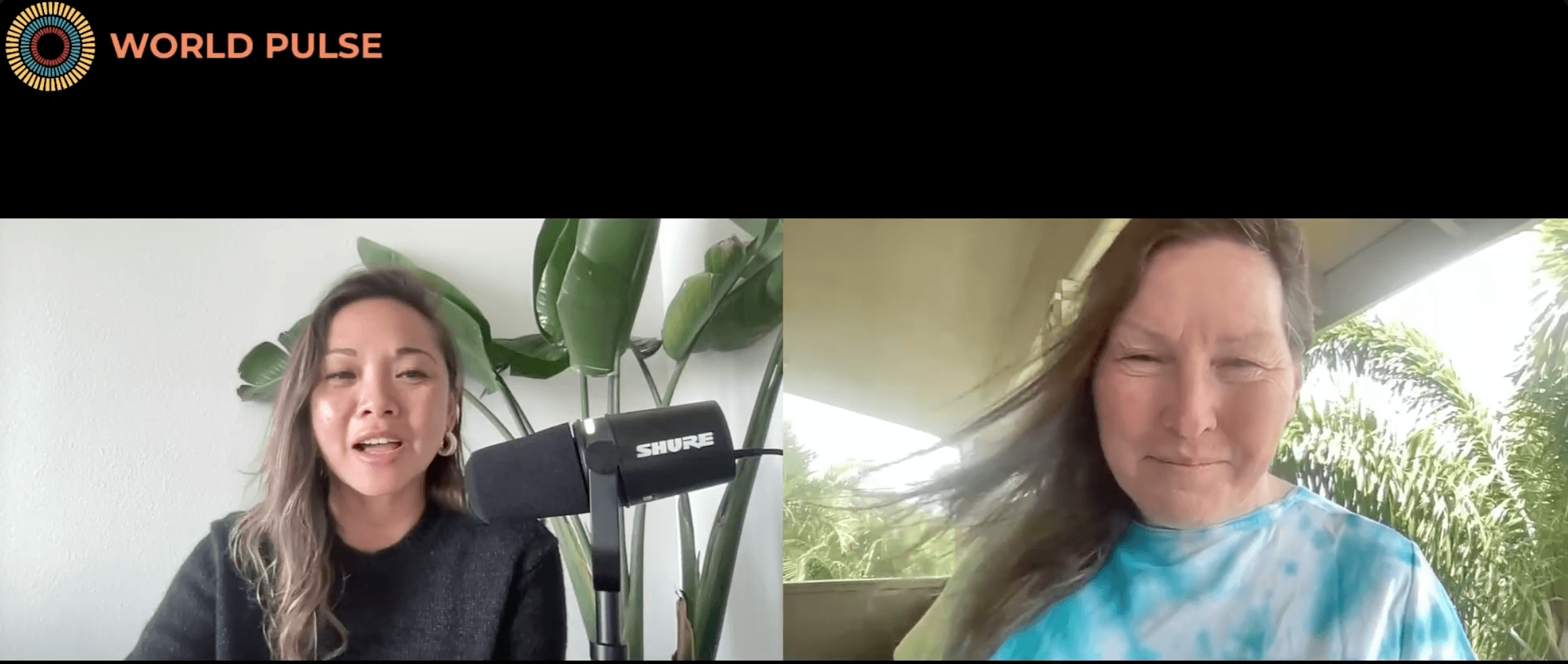
Here's a fun fact nobody tells you about saving the planet: it involves a lot less yelling than you'd think, and a lot more honest conversation over Egyptian licorice tea.
I got to have one of those honest conversations with World Pulse, and they turned it into a podcast episode. We talked about why climate strategy stalls out the second people feel too overwhelmed to act and what it actually takes to move someone from "this is scary" to "here's what I'm doing about it."
Spoiler: it's not a lecture. It's a story. Preferably one with a bit of humor in it, because doom is exhausting and nobody signs up for exhausting twice.
This conversation is one thread in a bigger tapestry I've been writing for World Pulse called Plugged IN, Charged UP — a running string of stories about what it actually looks like to live this work, drive this work, sometimes get arrested for this work, and keep showing up anyway.
Curious where the thread leads? Start pulling here: https://lnkd.in/gUZWGqhy
Huge thanks to Sheena and the whole World Pulse team for believing that hope, respect, and a good story are still some of the most underrated tools we have.
WE belong to each other. That's also a strategy at TRUST Climate Action Strategists.
#ClimateAction #WomenLeaders #WorldPulse #PluggedInChargedUp.
Then I decided to share it with you here, in case you have a podcast in your future.
Let's start with a confession: I have never once "saved the planet." Nobody has. The planet was doing just fine before us and will likely be doing just fine long after us, in that quietly savage way nature has of not needing our permission. What I have done is spend a good chunk of my life trying to convince humans to be a little kinder to the only house we've got. Turns out that's a much harder sell than saving a planet. Planets don't argue back. Humans do.
I got to talk about some of this on the World Pulse Podcast recently, and it got me thinking about the feeling underneath the strategy, because there's always a feeling underneath the strategy, whether we admit it or not.
Here's the truth about taking climate action nobody puts on the brochure: it feels like everything, all at once, usually before breakfast. There's the grief, obviously for the coastlines shifting, the seasons that no longer keep their appointments. But there's also, weirdly, joy. The specific joy of standing next to strangers who suddenly aren't strangers anymore because you're all cold and tired (in the midst of a massive Western American multi year drought our first day on the March led to hypothermia in chilling rain downpour all day long) and doing the same ridiculous, hopeful thing together. There's fear, the kind that makes your hands shake right before you do the brave thing anyway. And there's this stubborn, glowing thread of hope that refuses to be talked out of showing up, even when showing up is inconvenient, uncomfortable, or as I learned firsthand leads directly to handcuffs.
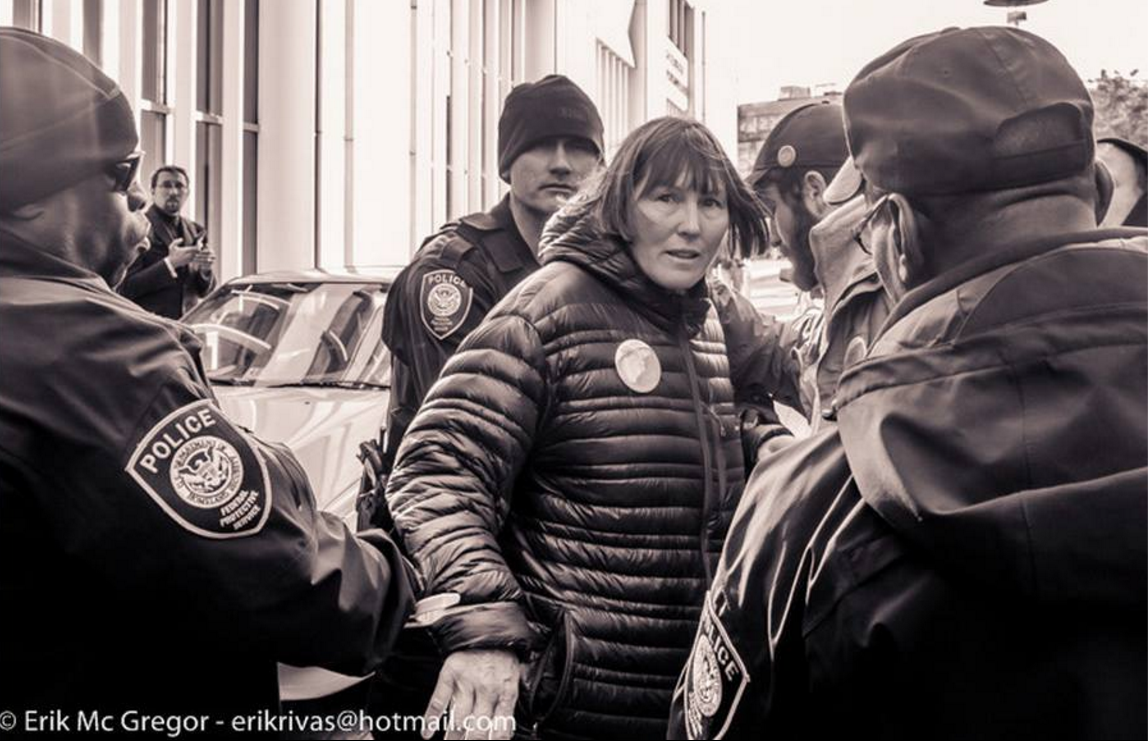
That last one happened at the end of the Great March for Climate Action, a walk from Los Angeles to Washington, D.C. that ate up the better part of a year and several pairs of shoes. We walked through deserts, through towns that had never heard of us and towns that had been waiting for us, and by the time we reached the Federal Energy Regulatory Commission, FERC, the agency that quietly decides an astonishing amount about what kind of energy moves through this country. We weren't walking anymore, we were standing our ground. I got arrested there. I'd like to tell you it felt cinematic. It mostly felt like paperwork, some bully DC police, and the specific pride of knowing exactly why I was there.
Years later, a different kind of protest, a very different landscape: Kachemak Bay, Alaska, where I led a small, determined cadre of climate activists against Shell's oil tankers preparing to move through those clear glacial waters. We didn't have a fleet. We had bicycles, conviction, and one enormous red circle with a line through it, the international symbol for "absolutely not". We rode it straight down the Homer Spit, that narrow finger of land jutting into the bay, for everyone on shore and every tanker on water to see. It is a strange kind of power, a bike and a piece of painted foamcore. It is also, it turns out, exactly enough. Shell went away.
Between the marches and the tanker protests, there's been quieter work...the kind that doesn't make headlines but shapes decades. I've served on the boards of the Betty Ford Alpine Gardens, the Center for Alaskan Coastal Studies, and the WILD Foundation, three institutions with wildly different zip codes and one shared instinct: that the high alpine plants clinging to mountain air, the coastal zones where Alaska meets the sea, and the wildest, least-tamed places left on Earth all deserve someone paying long-term, patient attention to how humans behave when they visit. Turns out humans behave better when someone's watching, gently, for decades.
Here's what I keep coming back to, in the arrests and the bike rides and the boardrooms alike: none of it worked because I was clever. It worked because I wasn't alone. WE belong to each other. Not as a slogan, but as the actual mechanism. The strangers who fed me on the March. The activists who showed up on bikes because I asked. The board members who kept a decades-long promise to a mountain and a coastline they may never fully see saved.
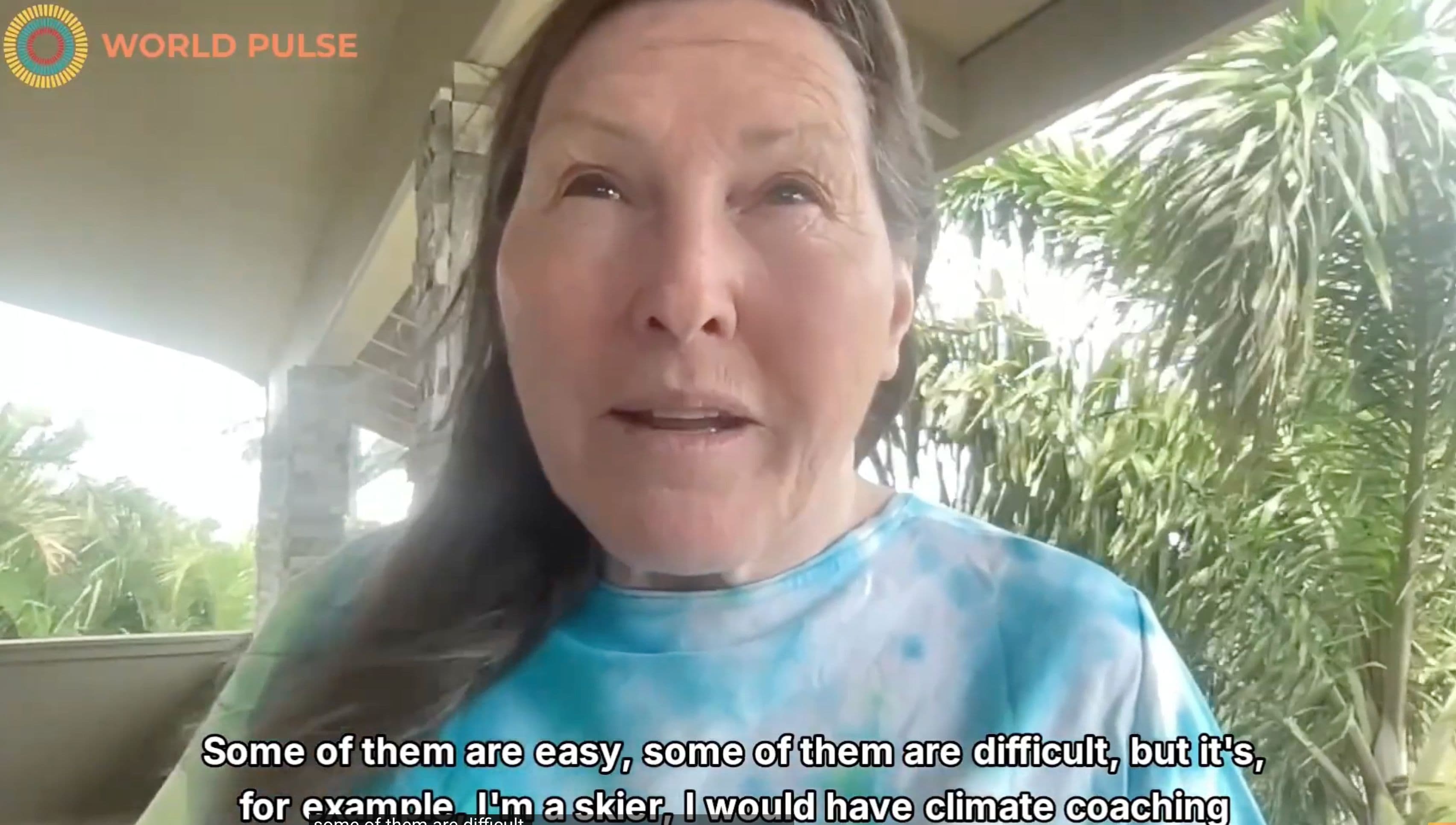
This story is one thread in a longer string of updates I've been writing for World Pulse called Plugged IN, Charged UP. You are pulling that thread right now, through more marches, more mountains, more moments of "absolutely not."
And to Sheena and the whole World Pulse team: thank you for building a home for stories that choose hope over despair, respect over noise, and togetherness over the myth that any one of us does this alone. We don't. We never did.
Plugged IN, Charged UP.
- Leadership
- Peace & Security
- Earth Emergency
- Indigenous Rights
- Peace Building
- Climate Change
- Impact Lab
- Global