
VOF - WEEK TWO
Jan 21, 2015
story
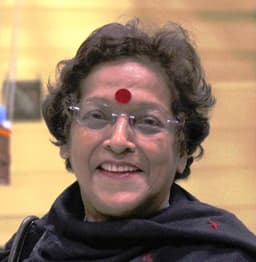

Shoma Chatterjee's Journal
Comment (1)
Share this post
View profile
Tags:
The Many
‘’Voice” for women across the world, reaches beyond voice in real life. It extends the borders of ‘voice’ as expressed through the written word. In life, voice reaches far beyond speech and language and is expressible in the form of sounds, music, song, silence and the written word. ‘
‘Voice’ has physical, emotional and metaphorical dimensions women who are denied a 'voice' directly, through the silencing mechanisms patriarchy uses as a clever political strategy and indirectly, such as by telling them what they ought and ought not to do, under the excuse that it is ‘unsafe’ for her.
Documents like letters, diaries, etc. are expressions of ‘voice.’ An author uses his/her writing as ‘voice’ that he/she finds difficult to express through normal channels in public or private space. ‘Voice’ can also be understood through facial expression, laughter, tears, glaring eyes, shouting, screaming or just remaining silent. Socially speaking, such ‘voice’ can be articulated through a woman’s submission and surrender to the pressures society places on her. A woman may create a shell of ‘silence’ around her and retreat into it, as her language of rebellion.
A woman’s life changes through a shift in her ideologies about life, family, housework which opens out her space from the private to the public domain - geographically, economically, socially and within the family. Her voice changes in a purely physical sense too, as her tone, pitch and volume of communicating through speech change along with the change in her lifestyle, moving out from the four walls of her home to the world outside.
Women are, by and large, intelligent enough to use their eyes, face, and body without necessarily having to complement it with sound or speech or song. My vision, as an extension of Voices of the Future, is aimed at creating a collective voice through WEB 2 and Pulsewire by using this platform as a free and open space for networking between and among women transcending barriers of age, class, colour, education, geography and language.
‘Voice’ can also be expressed through the woman’s use of space – defining and questioning traditional space, transcending given spaces, interpreting space, transgressing space, revolutionizing space, and redefining space. ‘Space’ in this context, is taken to imply the geographical and confined spaces of her home, the public domain of her workplace, the street domain of open spaces, the emotional and social spaces of her family and home, the narrative spaces of her chronological evolution. It also extends to a woman’s transcending of patriarchal spaces that are rigid in her case which she often does, at risk to her marriage, family, work and life.
Through our voices for the future, we can collectively aspire to create spaces for ourselves by using our voice, our body, our movement, our mobility and even our liabilities. If needed, we can transcend spaces not suitable to our freedom, our sense of the Self, our self-esteem. And what best way to achieve this other than Web 2? (WORD-COUNT:493)
- South and Central Asia