
Vision for VVF
Jan 21, 2015
story
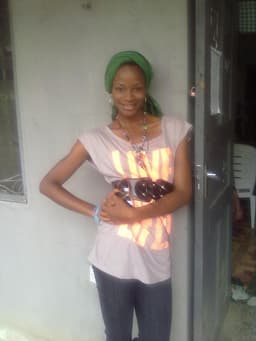

All my life I have fought for my right as a woman, not to be looked down on or taken for granted because I bear the honour of being born with the wisdom of the feminine. Growing up in society that favours the male child and puts the needs of the female child on hold, women lack appreciation, even by mothers who depend on their sons in old age. Added with the fact that I am not an average Nigerian woman, and have an independent perspective on life willing to work to empower women.
A personal vision of mine is to be a leader, an inspiration to my peers, my elders and those before me. Women and children suffer heinous crimes in our own country and very little people are aware, being generally unconcerned with the happening of the northern region. I want to be an advocate who is not afraid to stand for her rights and those who cannot speak for themselves due to culture or religion. I plan to stand against injustice force fed to women and break the cycle that limits us from our potential to becoming the change that our society needs to see.
In northern Nigeria a parent’s primary dream for their daughters is to find a man that willing to take her off their hands as soon as possible, and for some girls, that means as early as thirteen years old. She most likely will suffer through prolonged labour which can last up to a week due to her underdeveloped pelvis and may likely be a victim of Vesico Vaginal Fistula or VVF by the end of her ordeal. She will suffer through pain, trauma and rejection by her own husband already searching for another wife. I feel sympathy for these women and female children left uneducated and bound by culture not to think for themselves. After they have been affected by VFF, they get treatment, rehabilitation and training to become independent after they have been abandoned by their husbands and families. Hospitals that provide this treatment in the north are understaffed and these women have to wait outside with tubes, sometimes up to 3 months at a time. Treatment and rehabilitation are slow and can only help a number of sufferers at a time.
It is suprising that a great number of Nigerians are generally unaware of VVF or its prevalence in their country. These women do not have a voice to speak. They are depressed, traumatised and feel rejection from their loved one. I want to be able to create awareness for this disease, to spread the word to as much people as possibly. I envision a national then international campaign ensuring that VVF becomes well known and the effects and implications will be viewed from videos and graphic pictures of the disease so as to drive home the message to the public, for them to imagine “what if?”. What if this happened to me or my own daughter, or niece or friend? What if my daughter was forced to wait outside a smelly hospital with hundreds of infected teenage mothers with a tube connected to her bladder for 3 months waiting for an operation with sores and probably other diseases?
Pulse Wire is a place where my voice can be heard. A place where I can help VVF sufferers speak out againt this travesty, to cry out to the global community on the suffering and abandonment that they go through. But also the good that they learned to experience once again through the rehabilitation and training given to them to ensure that survival and financial independence. Voices of Our Correspondent will play no small role in helping me tell their story through their eyes. What they suffered, the pain and rejection they endured and finally, the success they have made from refusing to suffer any longer. In their own way they take back their femininity and encourage others to do the same. Through the training I shall be able to work with these women and ensure that not only will VVF be campaigned against, but also that its reduction will be possible in Nigeria.
- Africa