
US/INDIA: I Could Have Been an Honor Killing Statistic
Apr 30, 2019
story


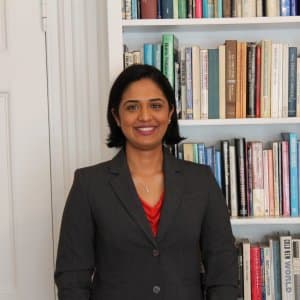
Attacked by her own father for having a male friend, Rupande speaks out against honor crimes.
Suddenly, I looked sideways and saw my father’s car racing towards me at full speed.
One evening when I was 13 or 14 years old, I was spending time with my boyfriend. We seldom saw each other, so I was very excited to meet up with him. We were walking on the street—not holding hands, not in any physical proximity—only walking and talking like two friends do.
Suddenly, I looked sideways and saw my father’s car racing towards me at full speed. I froze, not knowing what to do. My father knocked me over with his white Maruti van.
I lay on the street with my knee badly bruised and bleeding while he got out of the car and started beating my boyfriend.
I Am Not Alone
I was born in India to extremely controlling parents. I would often hear the threat, “I gave you life. I can take it away as well. ” The attitudes I encountered growing up demanded that women not leave the house, not have friends, or be social in any way. If we didn’t follow these rules, we were punished and subjected to the worst kind of emotional assault and physical pain.
Recently, I was watching the Oscar-winning documentary A Girl in the River: The Price of Forgiveness. The film, set in Pakistan, is about honor killings: acts of vengeance committed by male family members against female members held to have brought dishonor upon the family. The International Honour Based Violence Resource Centre estimates that 5, 000 honor killings take place throughout the world each year, with 1, 000 occurring in India and another 1, 000 in Pakistan.
I identify with Saba, the main character in the film. Her father threatened her when she married against his will. Then in an outrage he and an uncle shot Saba and threw her in the river, leaving her to die there alone. But she survived.
I wanted to bawl as I saw my own experiences reflected in the movie and those of thousands of others who have yet to come face-to-face with their fathers’ wrath. Saba’s case happened in Pakistan, but make no mistake that events like this transpire in other parts of the world as well.
This violence has been taking place for decades, and it continues to happen every day to innocent women and girls whose only crime is to have a male friend.
In the Name of Honor
Luckily, I wasn’t seriously hurt when my father hit me with his van, but he almost went to the same extent Saba’s father did. Why?
My crime was talking to someone who did not belong to my gender. It was not acceptable to my father that I talked to a male friend in the presence of “society”. What would people think of him, letting his women run loose like that? He Was trying to protect his honor.
For him, what is important about this incident isn’t what he did to me and how he hurt me. What is important to him is that I went against his will and hurt his feelings. Protecting his honor came above everything else. Even above the daughter he claims, even today, to love more than anyone else.
That day, I stopped believing that my father could protect me. I lost all faith in him and his love for me. And of course, I never got over it. I don’t think I ever will.
Society Is Complicit
I left India 15 years ago, and I wish that more had changed in that time. What happened to me and what happened to Saba comes out of an attitude that women are objects, not humans. They kill us if we do not listen to them, pour acid on our bodies if we reject them, harass us on the streets if we pass them, and then blame us if we complain or fight against them.
The problem isn’t just fathers, but a society that honors fathers who commit horrendous acts against their daughters. No one speaks a word, no one stands with us. We are left with our trauma to deal with the ugly scars these “parents” throw on us. We hear that we do not deserve to be loved because we did not abide by their rules.
Saba is the only one who knows what she went through in that river. Yet, when she made it out alive, no one asked her what she wanted to do. Because everyone wanted Sulah (reconciliation), she was forced to forgive those who almost killed her. Our society does not give women rights to make up their own minds.
After watching Saba’s story, I felt hopeless. The fight to change minds and outlooks is so long; some days it makes me not want to get out of bed. But despite the harrowing battle that lies ahead, the future of our daughters depends on it.
Towards the end the movie, Saba discloses she is pregnant and is wishing for a girl. I hope Saba has a daughter and I hope that little girl can fight her way through to build a beautiful life and live the way she wants to. It’s the same wish I have for my little girl.
I will share my story and speak up until we all realize that girls are smart and intelligent humans who deserve a fair chance at life. Every day I fight to make people more inclusive and tolerant, to give more opportunities to women. Every day I fight to change what I can so no one—least of all my little girl—has to ever go through what I did.
- Gender-based Violence
- Human Rights
- Northern America