
US: Bringing My Village Together in Palo Alto
Feb 9, 2021
first-story
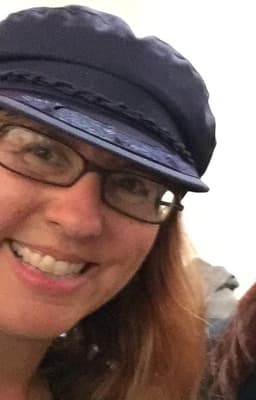

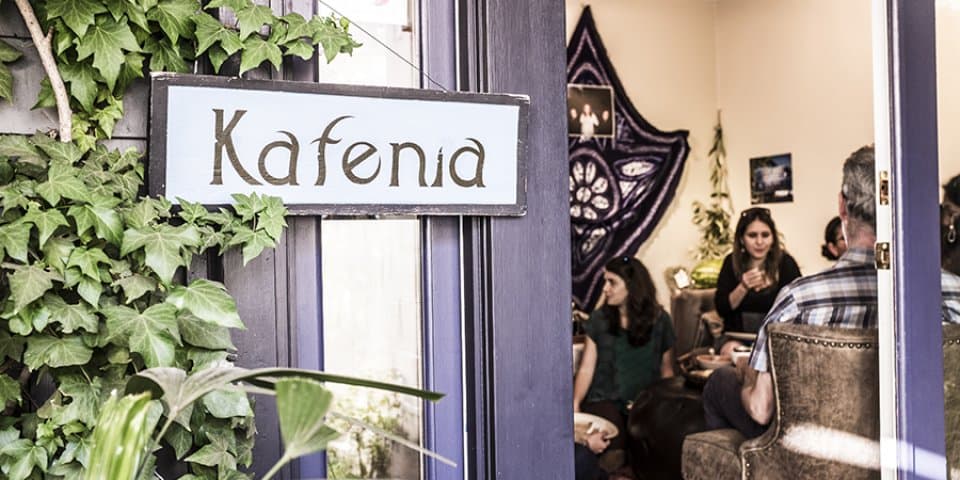
Photo courtesy of Mary Jane Marcus
A traditional Greek men's café is making a comeback in California—this time with women front and center.
When this idea first came to me, I wondered if I could reclaim something so patriarchal.
When my grandfather immigrated to San Francisco from Greece in the 1910s, he brought with him the tradition of the kafenio, a coffeehouse and social center for village men. Now, almost a century later, I am reviving this tradition in Palo Alto, California and reimagining it from a female perspective. Instead of the male-dominated kafenio of my grandfather’s era, my vision is an inclusive space I call the Kafenia.
The kafenio emerged during the Ottoman Empire when drinking alcohol in public was not allowed. It was open morning through evening. It served Greek coffee and then liquor as the day went on, as well as simple handheld foods. Men would go to the kafenio whenever they were not working. It was a place of pleasure, separate from women’s private spaces.
When this idea first came to me, I wondered if I could reclaim something so patriarchal. Traditionally, women did not like the kafeniosince it took their husbands away from helping with the children and household duties.
But what drew my grandfather to the kafenio is the same thing that draws me to this tradition today—a longing for connection. My grandfather was part of the European economic migration to the United States in the early 20th century. He started his own kafenio to keep village life alive in a bustling metropolis of San Francisco. Even when he was no longer running it, my grandfather would frequent the kafenio. A legend in my family is that my grandfather had to be pulled away from the kafenio to attend my aunt’s wedding, and he went back as soon as it was over.
I see the kafenio idea as a beautiful structure, ready to infuse with new traditions: a place for deep connection, social and political dialogue, arts and music, and real community. Even though Palo Alto is my village, it doesn’t always feel like one because we have no place to gather in public.
When I started interviewing people to research what kind of café space to open here, I was struck by how many people shared that they had many social connections but not much meaningful contact. In the heart of Silicon Valley, I hear from people that they want more in-person community and less device time.
Just like the traditional kafenio, the Kafenia is a place to really slow down and be together. In the Kafenia, though, instead of debate, we share our humanity and our stories. It is a gathering place centered on the multicultural abundance of our community.
True to the kafenio spirit, once you enter our doors, everyone is equal, whether you are a faculty member at Stanford or a recent refugee. To make it more inclusive, people can choose to“pay it forward” so that we can reach out to folks who would not normally know about these gatherings, like community colleges and refugee resettlement agencies. We are starting small. We gather once a month, moving hopefully to once a week, and eventually to our own permanent space.
Because Greece resides at the crossroads of cultures, the Kafenia feels like home for many of our friends from Lebanon, Libya, and the greater Mediterranean. We even have our village elders. Our Grandmother in Residence has a special seat always set aside for her (health permitting) and leads one gathering to share her story and wisdom. We look up to our “Tata Najwa” from Lebanon, our current Grandmother in Residence, who has lived through war yet still has faith in humanity. We don’t ask our immigrant neighbors to assimilate. Instead, we see their communal values as vital to steering our American culture on a positive course.
Our November gathering happened to take place the day after the uselection. We began the evening by sharing food as they do even today in Greek villages: feta, olives, beet tzatziki, dipping entire pieces of bread in olive oil with our hands. My neighbor Mirna offered her Moroccan mint tea service at a side table. Gathered in a circle, we enjoyed a one-pot stew called Mageirio, a mainstay on the Greek island ofikaria. I could hear what sounded like the laughter of old friends from the kitchen, even though many of us had just met.
We ended up discarding plans for facilitated dialogue and just authentically shared what we were experiencing. The evening closed with the spontaneous song, \"This Little Light of Mine, \"led by a beautiful woman I had never met until that evening. We are reweaving our relations just by being together in this way. And unlike a typical “special event, ” we know we will be together again soon.
Community is the core of this project and it is what has made this vision possible. I’ve had the dream for many years to host a beautiful, internationally welcoming space, but I was afraid I couldn’t make it viable or that I wouldn’t know how to do it while raising my 3-year-old daughter Evvie. I joined a cooperative social business incubator program in Oakland where I’ve been part of an incredibly supportive group of entrepreneurs who are practicing a kinder style of innovation. This group helped me to identify not only my business goals, but my personal needs (like downtime), and ideas to structure the business to support this. We are learning about cooperatives, community-supported models, and new paradigms we can use to build a more equitable economic model. I’m still not sure how we will have the Kafenia open all the time given high rents and costs here, but I know we will find a way. It’s taken courage to bring this vision to life.
If you ever visit Palo Alto, I want you to know that there is more here than Google and Facebook. There is a place where you will be welcomed with open arms and a warm piece of bread and olive oil. Or better yet, I hope you will open a kafenia or reimagined social space in your own community.
yassou!
- Economic Power
- Leadership
- First Story
- Northern America