
US: An Unshakable Self Love
Apr 30, 2019
first-story


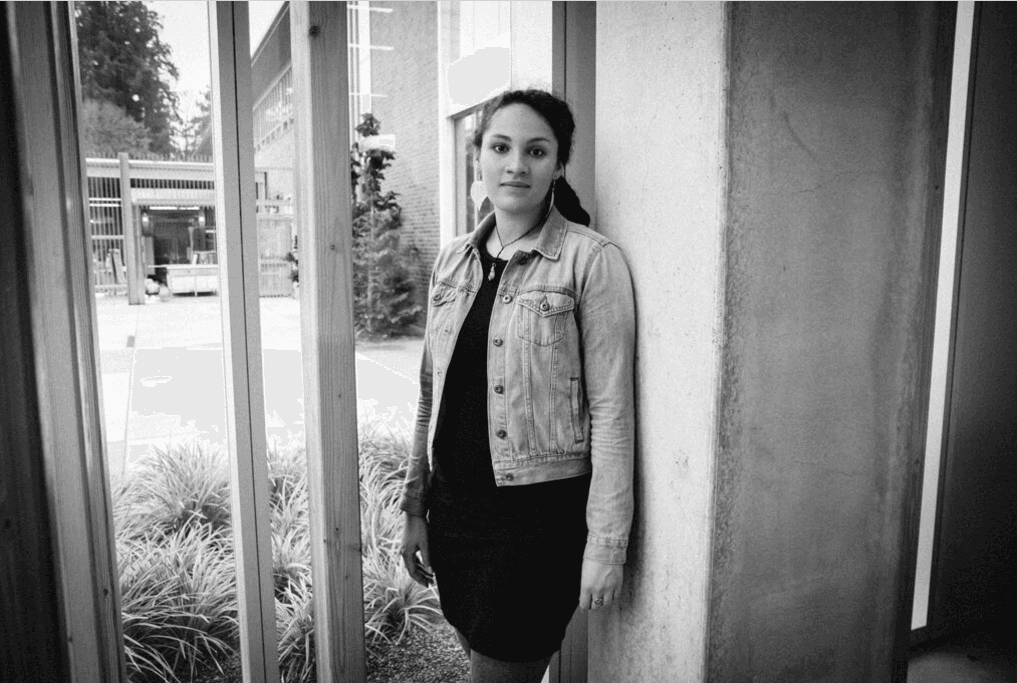
Photo © Mickey Stellavato, PhD | University of Oregon
While healing from an eating disorder, Aleiya Evison learned to care for herselfunconditionally.
What would it look like to nurture my mind, body, and soul with compassion and kindness?
I first started to use food as a way to avoid my emotions when I was 8 years old. I hadn't seen my father in 3 years, my mom had recently remarried, and we had just moved to a new neighborhood. I didn't really have the tools or the vocabulary to express how all of these changes were impacting me, but I did know one thing: Food made me feel better. When I ate, I lost a sense of reality, and even if it was only for 15 minutes, I felt like I could cope.
At the same time, I was starting to go through puberty before everyone else my age; I was the only black girl in my class, and by the age of 10 I had grown to be five feet five inches tall. When I started to develop cystic acne in sixth grade, my self-esteem plummeted even lower.
I was so distinctly different from my peers that even though all I wanted to do was dissolve into the walls around me, my physical changes were on display for all to see. I wished desperately for a different body, clearer skin, and straight hair. I couldn't find a single thing I liked about myself physically and was in a constant state of shame, self-deprecation, and discontent. Beneath this, of course, was an unseen but deep need to process my emotions and understand the changes that were happening in my life. I was hurting.
By the end of middle school I began to lose my baby fat, and during high school, while playing three sports, I grew into my body and lost some weight. There was a time when I was conditioning for basketball and volleyball nearly every day. Even though my weight was healthy, and I was physically strong, I still felt deeply insecure about my body. I was stuck in the mindset that I would always be the chubby girl with acne and ugly hair.
I did not believe that I was physically desirable in any sense of the word, and no matter how \"in shape\" I grew to be, I wasstill walking around as a shell of myself. I still hated my thighs. I didn't think my stomach was ever flat enough, and I could not possibly imagine a day where I wouldn't have to wear heavy foundation to cover my acne scars.
For people who have experienced trauma in childhood—sexual assault, divorced parents, absent parents, physical, emotional, or verbal abuse, addiction, mental illness, or poverty—it can be extremely challenging to grow into a healthy adult who is self-loving and equipped with healthy coping skills. If we have had experiences at any point in the past in which we felt less than, unworthy, or not good enough, we carry that pain with us into adulthood until it is acknowledged and released.
Throughout college I have started to grapple with healing the child-self that hated her body. My weight has fluctuated consistently during the past four years, and I have oscillated betweenself-acceptance and dieting and comparison. There are months when I refuse to weigh myself, start my morning with positive affirmations, and will not diet. There are times when I feel stable and centered in my self-love, and other times when I have been sent back into a tailspin into negative self-image.
Last year, when I studied abroad in Panama, I lost weight because at least once a week I hiked 14 miles round trip. I was constantly sweating from the tropical climate, and eating differently. Getting in shape, for the first time in my life, wasn't something I had to think consciously about. I also had very little access to mirrors, so I was incapable of obsessing over the changes in my body to the same extent I might have back home.
However, when I came back from Panama, several people commented on how I \"looked great\" and had lost weight. At once I derived a sense of simultaneous satisfaction and horror from these observations. I felt a sick sense of urgency to maintain this new, more accepted body. And yet, I was also hurt that this was one of the first things people cared to talk about with me when I had just spent three months in another country. What had these people thought of me before I left for Panama? Was I Fat before I left? Was Ibeautiful Now because I was skinnier?
Within six months I gained the weight back. I was caught in another cycle of binge eating and low self-esteem. Insecurity seeped into my consciousness. I wanted to be thin, but the pain from my lack of self-acceptance caused me to tap into my tried and true coping mechanism—food. When I wasn't binge eating, I was in a panic to lose weight. At all costs, I could not be the undesirable, chubby girl from my past.
This past summer I contacted a nutritionist. I said I was interested in developing healthier habits, when really what I wanted was to be skinny. After my consultation, they told me that my weight was perfectly healthy; my blood work had come back perfect. They also told me that I had developedan eating disorder, and that I should go to therapy for body image issues before it developedinto something more serious.
This diagnosis knocked the wind out of me. An eating disorder? That Was something that other people experienced, not me. I had never made myself throw up, so how could I have an eating disorder? I Had obsessively counted calories, worked out longer than I probably should have, and nitpicked specific parts of my body, but wasn't this just what women did?
After receiving this news, I went home and wept. Someone had finally acknowledged years of pain that had manifested into something with a name. Someone had said out loudwhat had been my truth since the age of eight. I knew, in this moment, that something needed to shift, and not in the form of diets or workouts.
It took me a few weeks before I could bring myself to even tell another person about this appointment, but eventually I confided in one of my friends who is deeply kind and understanding. She lent me her copy of Women, Food and God, and I tearfully read about the difference between conditional and unconditional love for self.
I watched videos about the intersection of spirituality and body image. I wrote ten-page journal entries about the root of my pain. I started asking myself why I derived most of my self-worth from what my friends and romantic partners thought of my appearance at any given time. What would it look like to exercise and eat healthy foodsolely because of a deep, unshakable love that I felt for myself? What Would it look like to nurture my mind, body, and soul with compassion and kindness? How Do you care for yourself unconditionally? The Answers to these questions felt hard and far away, but they also felt like truth.
Healing is an arduous process that requires patience, courage, and grace. To undo the narratives that were solidified by our wounded child-self and society's expectations of usmay even take a lifetime. But the freedom available, when we can completely step into the truth that we are valuable and worthy of love regardless of our always-changing weight or beauty, is magic.
I am in the midst of my healing. I must constantly come back to telling myself that I am valuable regardless of my appearance. The world will always have specific ideas about how I should look. The task at hand is to develop such a strong sense of self that I am not affected by anyone's perception of my physicality. I seek to know who I am beyond the physical, while also celebrating my body and treating it with care.
May we all experience the beauty of an unshakable self-love.
- Health
- First Story
- Latin America and the Caribbean