
Unlocking your full Potential: The Power of Unconscious Biases Management
Aug 7, 2023
story
Seeking
Encouragement


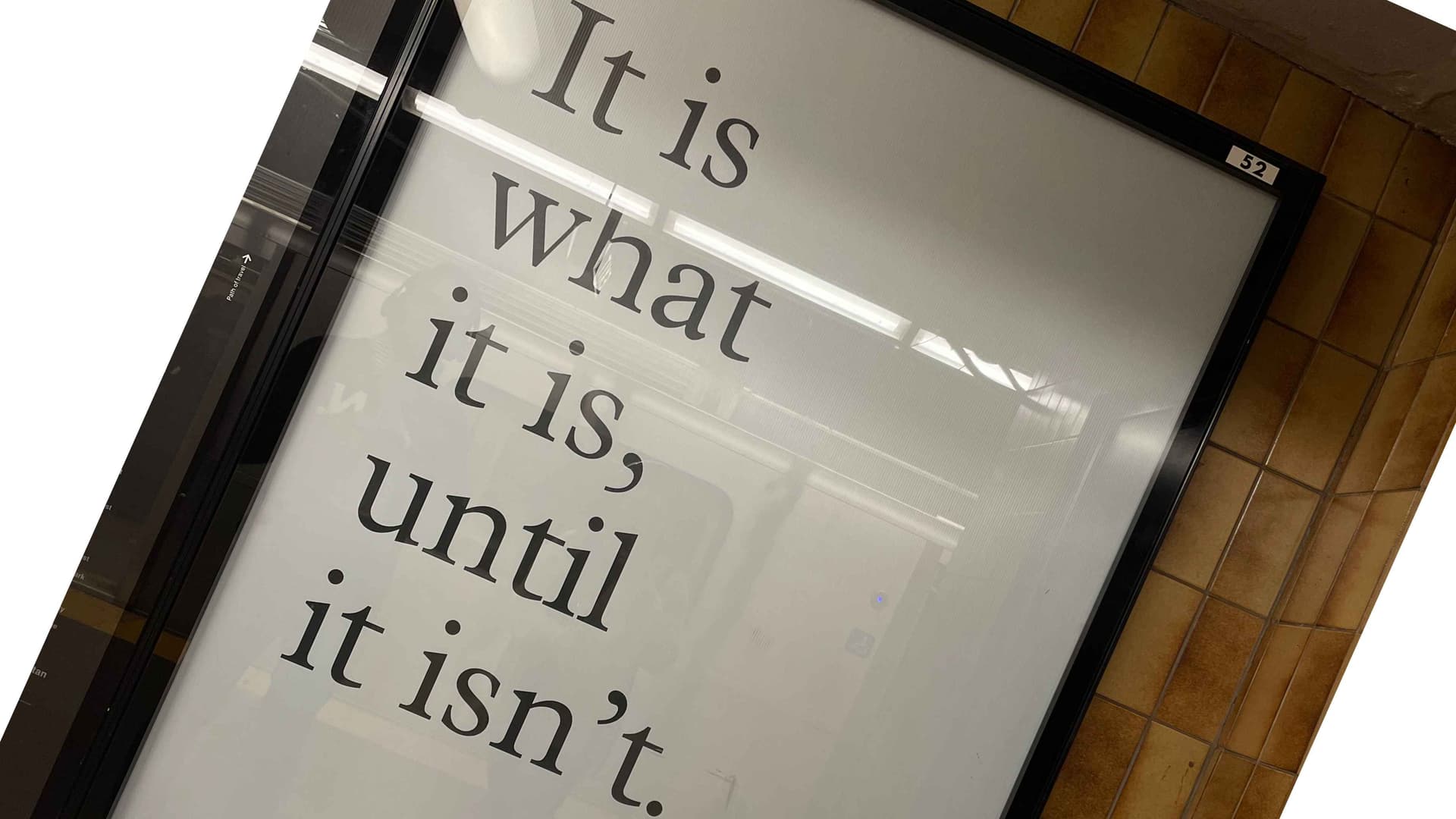
Photo Credit: Photo taken by me
Photo of a phrase I found in a train station in Toronto that says: "It is what it is, until it isn't." and represents the decision to make a change, even if you think that is being always the same
Nowadays, most people in the world are looking for places to belong and be respected. However, biases are deciding for us unconsciously because is an inherent aspect of human cognition, this is influencing our perceptions, decisions, and interactions with others. Despite its hidden nature, the impact of unconscious bias can be profound, both on ourselves and those around us. Recognizing and managing these biases is not just a matter of promoting fairness and inclusion; it is also a powerful tool for personal development and professional advancement. Far from being a recipe for growth and development, in this article, I would like to share some tips that work for me.
On my personal journey of self-improvement, I have often found myself struggling with the way I perceive others and how I believe they perceive me. This battle has frequently left me feeling inadequate and doubtful of my abilities to handle leadership roles. However, a long time ago, when I set out on my path to create a more inclusive environment for diverse individuals in my workspaces, I took the first step by implementing a simple yet powerful training program called 'inclusive interviews'. Every training session I delivered I heard an intense question within my mind: how an unconscious bias can affect me? is there a chance to decide my future based on my own unconscious biases?
Consequently, in the next training sessions, I introduced these questions and discovered that most of the participants haven’t thought about this. As human beings, we often notice and focus on the differences and barriers faced by others more than we do on our own. So in the training, the initial impact was what I needed to respond affirmatively to my questions. Each time we face an uncomfortable situation, our primary reactions are shaped by our individual experiences and biases about life.
Certainly, unconscious biases are deeply prejudices and stereotypes that affect our judgments without our awareness or intention. They can be related to various factors such as race, gender, age, appearance, and more. These biases develop from our life experiences, upbringing, media influences, and societal norms, leading us to make automatic decisions based on assumptions rather than objective assessments.
As I’m a Latina, from a humble family background and am introverted, every time I interact with a multicultural group, I always doubt if my point of view will be necessary due to my experience during my adolescence hearing my teachers and family saying that we’re from “the third world” (an expression I have used until today and now I learned is more appropriate saying “we come from a developing country).
The same happened after having many failed English classes in high school, where I should learn a whole song and sing it without a good voice, determining my future relationship with the language. For many years, I allowed these thoughts to dictate my choices and lead my progress. However, there were a couple of defining moments in my 20s when I found myself in work meetings, speaking in English for the first time. It was during these moments that I realized the effort and courage it took to push myself beyond my comfort zone and be able to try out without any expected result.
Therefore my research in tools for improving self-awareness and discipline led me to a couple of activities that up to the day I still working on, noticing early the bias that is blocking the decision I must make. So, I invite you to review and practice the ones you feel are appropriate for your own journey:
- Educate yourself: Learn about common types of biases and how they can affect decisions and perceptions.
- Journalism: Set aside time each day to write in a journal. Reflect on your thoughts, emotions, experiences, and any insights you've gained. This helps you become more attuned to your inner world.
- Read your Journal: Identify repeated thoughts, emotions, and experiences, especially those triggered by another person. These usually are your biases.
- Seek diverse perspectives: Surround yourself with diverse individuals and engage in conversations that challenge your assumptions. If you’re preparing a presentation, or thinking of making any decision, look for a piece of advice from a different person than the ones you used to.
- Challenge Stereotypes: Whenever you catch yourself assuming something about you based on your group identity, consciously challenge that assumption. Give yourself the chance to look deeply at it, and notice what bias is behind it.
- Seek feedback: Speak with your colleagues and friends to give you feedback any time they see you’re making a decision based on your natural behavior.
Confronting and challenging our biases is not an easy task. It demands resilience and a willingness to confront discomfort. Embracing this challenge fosters personal growth and resilience, making us better equipped to face adversities in our personal and professional lives. In fact, acknowledging and managing unconscious biases enhances our decision-making capabilities. By taking conscious steps to consider diverse perspectives, we can make more well-rounded and objective choices, taking chances that we wanted but never thought we were capable of.
- Girl Power
- Leadership
- Education
- Our Voices Rising
- Shout Your Vision
- Moments of Hope
- Global