
Underprivileged women and career development
Nov 9, 2022
first-story
Seeking
Visibility
.JPG&w=1920&q=75)
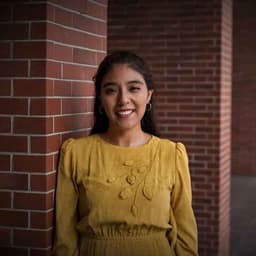
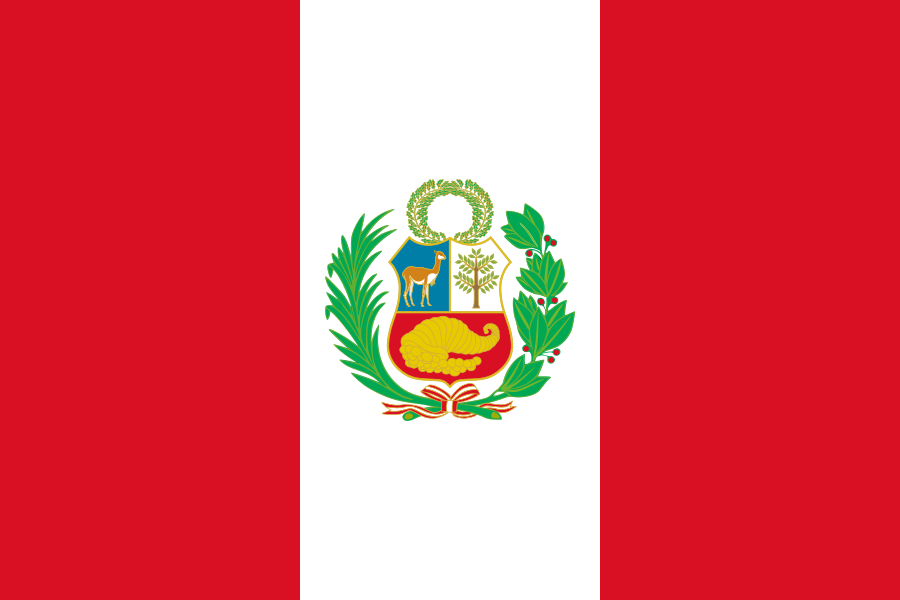
I come from a small village called “Chincha”, located in the south of Peru. My father is from an
indigenous community and my mother is from an afro Peruvian community. Both did not have
the opportunity to have access to higher education. My father is illiterate, and my mother studied
until the second year of high school.
They encouraged me to pursue a university career despite our constraints and limitations. I am
the result of the opportunities they yearned for but could not have. I eventually became a lawyer,
and, in my last year of law school, I did an internship at the Ministry of Foreign Trade in my
country. From there, I decided to focus on issues related to international trade law and foreign
policy.
However, the path to specializing in these areas remains difficult. First, the economic factor is
important to achieve one’s goals, and not all of us have the same opportunities and privileges in
life. Second, being a woman hailing from underrepresented communities in a country from the
Global South where only 6.2% of women from indigenous communities and 2.6% percent from
afro Peruvian communities can access higher education makes the track even harder. There is
still a gap for equal access for women who belong to underrepresented communities in areas of
education, work, and economy in countries like mine.
As in most areas of research, the number of female voices in foreign policy, especially those who
are from underrepresented communities, are fewer than men. According to the 2022 Global
Gender Gap Index, no country has managed to close the gender gap and it would take 132 years
to achieve gender parity.
Women's voices, especially those that have gone unheard for decades, are needed to tackle
disparity and, in foreign policy, those voices are especially important because they
allow different perspectives as well as diversity in the decision-making process of a
government’s strategy in the international arena.
Furthermore, as Saskia Brenchenmach mentioned, the participation of women in the foreign
policy and national security arena is not only because we can bring something “special” to
contribute, but also on a basic level it is a fairness issue, and I would even add a social justice
action.
That’s why through this piece I would like to share some advice to grab and climb the ladder
pattern when you are a woman from underrepresented communities. I know this journey is
difficult and sometimes it seems impossible, but I hope these recommendations can help you in
some ways.
Five Highlighted Considerations
1) Be organized. On the internet, we can find many online resources available to organize our
goals such as Notion, Roam Research, and Evernote, or if you prefer handwriting, having an
agenda or notebook where you can write and visualize your objectives will be useful. It is
important to build a productive system; a good book to search about it, is “Building a Second
Brain” by Tiago Forte.
2) Look for your rainbows. Your environment and the people around us are important. Maya
Angelou mentioned that the idea of a “Rainbow in the clouds” is that when everything in your
life is cloudy and there is no hope in sight, the greatest feeling is when we find people who
inspired us and from whom we can learn. Having a crew who can give support when we have
doubts or fear makes a difference.
3) Ask for advice. I experienced that there are a lot of people in the world who even without
knowing you, would make the time to help you. Don’t hesitate to contact through email,
LinkedIn, or other social media, people who you admire or who are involved in your field to ask
for advice or a few minutes talk to resolve your doubts.
4) Reading opens many doors. I take this from Ruth Bader Ginsburg. Reading can help us to
discover a new world and can make a remarkable path in our lives. Not only read about your
specialization but also other topics. That will help you to have a more open vision to face
challenges.
5) Believe in your inner fire. It will be easy many times to get lost on the journey, have many
doubts, and that impostor syndrome might take over us. In those moments we must remind
ourselves where we come from, everything we already faced, be introspective, and look for that
passion that has taken over us and will continue to take us further. We need to do this for the
women in our communities before us and for the ones who will come after.
Final Reminder
Being listened to, raising our voices, and finding spaces when we are women from
underrepresented communities in the foreign policy arena is a long-lasting challenge that needs
effort, patience, and passion. I would like to remind us that among all the suggestions, please
always believe in your inner fire and for all those who are aware of their privilege help us to
continue building spaces where we all have a voice and representation. Helping each other will
bring hope for a fairer and more inclusive society.
- Girl Power
- Peace & Security
- Human Rights
- First Story
- Shout Your Vision
- Latin America and the Caribbean