
UGANDA: Saving Lives With A Smartphone App
Aug 27, 2019
story
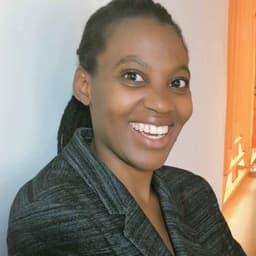

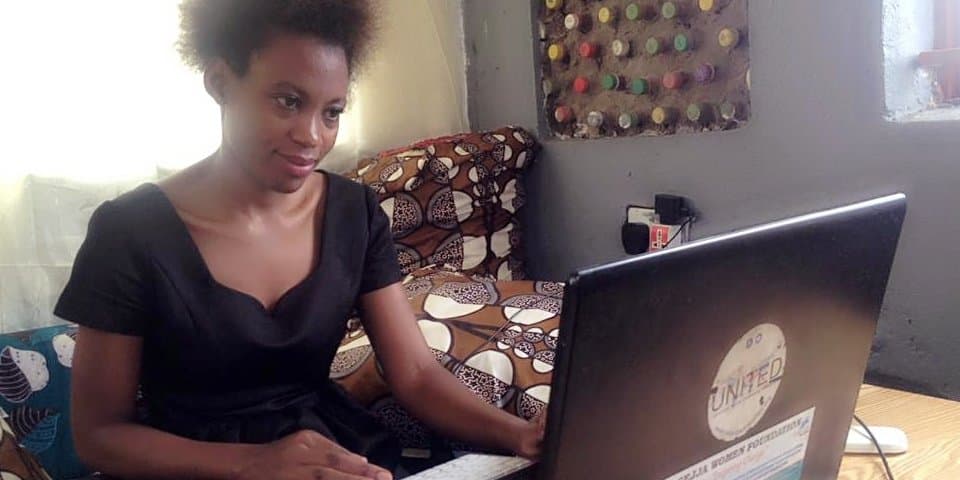
Before, Agnes Nyamwiza didn’t know how to turn on a computer. Now, she’s building an app for women to access the health information that could have prevented her sister’s death.
I decided to fight cervical cancer using what I had, and that was my computer and my smartphone.
Until I reached university, I had never seen or touched a computer. And I had not owned or known how to use a smartphone. The whole world of technology was nowhere near me.
Once at university, I had to take a course on ICT. At this point, I did not even know how to switch on a computer! Thanks To the support of my friends, I slowly learned the basics that helped me pass exams. The course was a challenge, though. It required me to use a computer, and yet my parents could not afford one. In order to improve my editing and typing skills, and also earn some income, I started to help fellow students in typing and editing their research reports and other coursework using the university computers.
The university introduced me to the use of technology, and it has now become something I can’t live without. After my course ended, I bought myself a computer. It became my best friend and a source of income, entertainment, information, and knowledge. Whenever I had a problem or a question, I ran to the computer. I got information from Google and used social media and many other online resources to look for whatever information I wanted.
Later I opened a stationery shop where I installed computers and printers, and here I helped students access computer services like the Internet, typing, editing, printing, and photocopying. For those students who arrived at university just as I had—without any technology skills—i provided education on how to use a computer.
Then in November 2017, my elder sister Ann called from my village back home to tell me she was dying. I decided to travel back to the village to check on her. When I arrived, I found her in pain. She told me she had been receiving treatment from the local clinics but had had no change in her condition. I spent the night in her house and around 11 p. M. Heard her groaning in her room. I went to her door and knocked, and it was my brother-in-law who opened it. He looked worried and told me, “This is what we have been going through for some time now. ” I asked him what the doctors had told him exactly, and he told me they had said she had fibroids.
I moved to my sister’s bed. She was clearly in a lot of pain; she was weak and could hardly utter a word. I held her hand, made a short prayer, and asked her what was paining her. She explained that she had pain in her back and abdomen, her legs were swollen and paining too, she had heavy bleeding even when she was not on her period, and all this had made her lose a lot of weight. I sat with her there for over three hours not saying anything only holding her back. Her husband sat there too, on a chair close to the bed, looking helpless. Eventually, my sister quieted, and I noticed she had somehow fallen asleep amidst her pain. I slowly pulled my hand off her back and tiptoed to my room.
Lying on my bed, I couldn’t sleep thinking of how Ann was. I got on my phone and started searching, feeding into my browser all the symptoms she had told me. I found information suggesting she could be suffering from uterine fibroids, pelvic inflammatory disease (PID), or even cervical cancer.
In the morning I talked to my brother-in-law about the possibility of taking Ann to be examined at a competent hospital. He said he didn’t have enough money. I called my mother and told her the situation. Mom said she would talk to Dad about them contributing to Ann’s hospital bill. That afternoon my father called Ann’s husband and informed him that he had transferred money to his account so that he could take Ann to the hospital.
Early the next morning the three of us left for the hospital. Tests were taken and Ann was admitted to the hospital as we waited for her test results. Later that night the doctor called Ann’s husband to his office and informed him that they would continue with more tests the next day. The next day it was confirmed that Ann had cervical cancer. It was in its advanced stage and she would have to undergo surgery.
The surgery was carried out successfully, and afterward, I went back home. Ann was later discharged, and then she and her husband also went home. I kept praying for Ann every day to be healed. After three months, she passed on; she had succumbed to cervical cancer.
In my home village, no one had ever been tested for cervical cancer before. In fact, most of us at home had never even heard of cervical cancer, and then just like that, it had snatched Ann from us.
After a month, I decided to go to the hospital to get tested for cervical cancer myself. It was difficult; I trembled until I got my results. Thank God they were negative. I kept thinking about how if Ann and her husband had known about this test earlier, she wouldn’t have died.
It was then that I decided to fight cervical cancer using what I had, and that was my computer and my smartphone.
Today I am working on building a mobile app that will help women access information about cervical cancer and screening and vaccination services. The app will also connect them with health centers and clinics where they can receive these services and get treatment. Many women today in Uganda have access to smartphones. I want to train them on how they can use this technology to learn about their health and how to prevent illness and address health issues that may arise.
Additionally, I am using social media to spread awareness about cervical cancer and am happy that, through Facebook, I’m reaching many young women who are at higher risk of getting this disease.
Had my sister had access to the information I now share with other Ugandan women, she might still be alive today. I don’t want another woman to go through what my sister did when preventative care and treatment exist for cervical cancer. With the help of information and communication technology, I will continue to fight against cervical cancer and for women’s health.
STORY AWARDS
This story was published as part of the World Pulse Story Awards program. We believe every woman has a story to share, and that the world will be a better place when women are heard. Share your story with us, and you could receive added visibility, or even be our next Featured Storyteller! Learn more.
- Africa