
UGANDA: Love, Work, and Sickle Cell
Apr 30, 2019
story
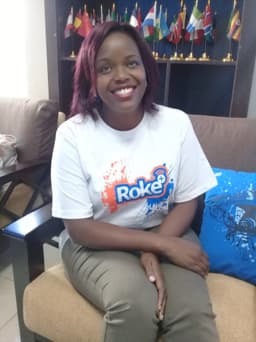
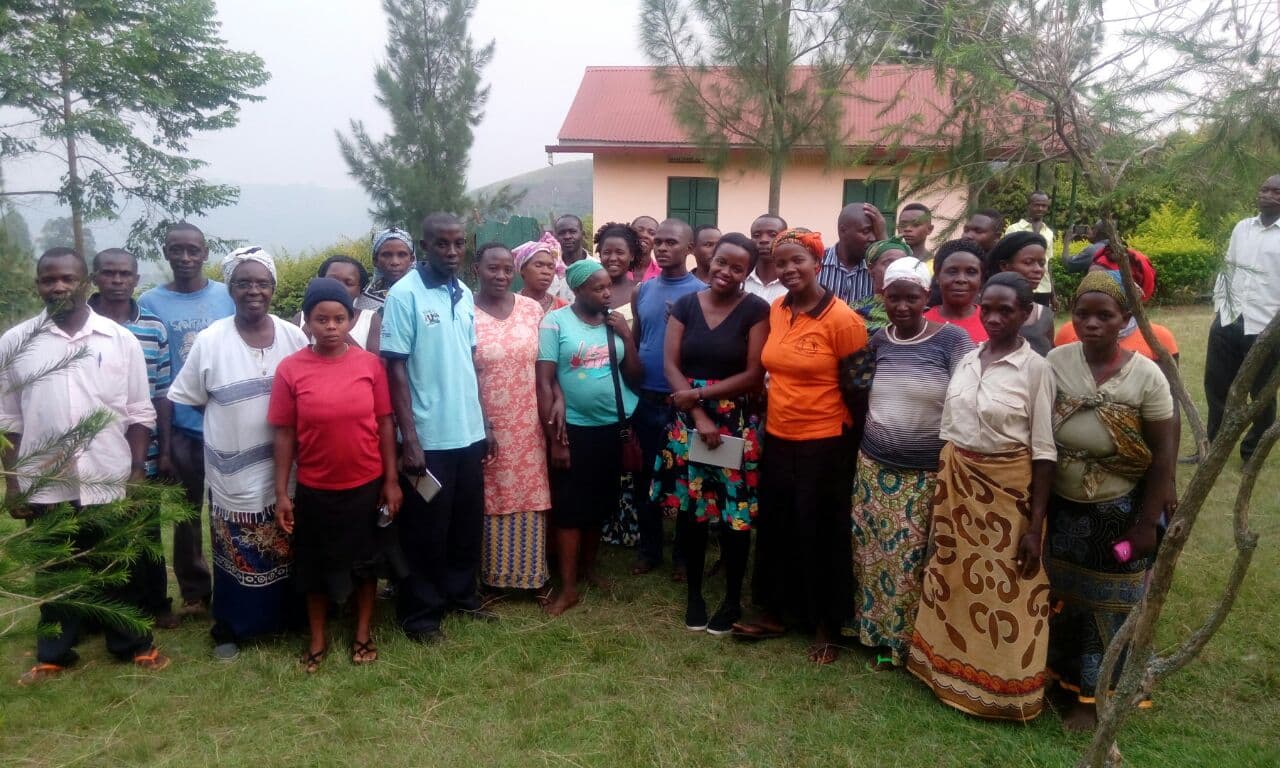
Juliet and the parents of children with sickle cell disease in Nyamirima. Photo courtesy of Juliet Acom.
After her child was diagnosed with sickle cell disease, Juliet Acom made it her life’s mission to educate others.
A problem shared is half solved, and when I do this work it helps me to release some of the stress I feel as a single mother with an ill child.
It’s 16: 00 hours on a hot, dusty December Saturday. I am seated on a veranda of a semi-permanent house in a remote village in Nyamirima, Western Uganda. I do not know anyone here. I speak the language horribly, so I just limit myself to making funny faces at the children who are staring and giggling around me.
I let them ruffle my kinky maroon hennaed hair, as I smile and wave to the people around me. My translator, a primary school teacher, has since gone back to his home, walking five kilometers away from the mission grounds where, two hours before, we were helping families of children living with sickle cell disease.
Finally, my ride—a battered 1995 Sahara pickup truck—arrives and I am hoisted into the back by a jolly old man who seems bothered that I only understand about 25% of his stories. As we drive towards the town where I will grab the night bus back to the city, I feel a calming sense of joy. I wave at my new friends as we drive away, leaving a trail of dust.
I am exhausted and feel an oncoming headache, but I am equally elated that my Saturday was well spent educating total strangers about genetic disorders. I provided counseling and information about nutrition for sicklers and natural pain management as an alternative to strong painkillers. On that day, I felt proud that I was able to dispel fears about sickle cell disease. I helped families to understand that sickle cell is not caused by evil spirits that only live in women and that are supposedly curable by witchcraft and animal sacrifice.
You see, I have made it a life goal to travel to remote villages to share my own story—the story of a single mom raising a child with sickle cell disease. I share my story to stand with families and economically empower communities affected by the stigma that arises from lack of information on this disease that, according to statistics from the World Health Organisation, affects 5% of the world’s population.
In a country where many live on less than a dollar a day, the only treatment for the disease, an expensive bone marrow transplant costing over 80, 000 USD in Europe, America, and Asia, is but a dream. Prevention is the only way. It is important for youth to know that just as they carry out HIV/AIDS tests in preparation for parenthood, they should also make it a priority to run a sickling test.
In my efforts, I have met resistance, especially from absentee fathers of children living with sickle cell. My pleas, cajoling, and continued reminders have inevitably brought them to government medical facilities to learn how to manage the illness—just to get me off their backs. In this work, there is no giving up! The Fathers are usually resistant because it is assumed that these children will not live long. They prefer to spend those finances on children who are not sick. The burden of care, and blame, is left to mothers.
I know this story personally.
Eleven years ago, my son was diagnosed with sickle cell and I was left shattered. All I knew about the disease was that it definitely led to death. The nearby clinics I went to had no clue about treatments, and the government hospital to which I was referred was overwhelmed with a doctor/patient ratio of 1 to 40. There were just a few volunteer counselors who would come in twice a week to ask routine questions, give nutritional information, and provide medical information to those with sickle cell.
My experience led me to learn and gather as much as I could about the disease so that I could help my son and others in underprivileged communities. The more I shared my story and reached out to parents in similar situations, the more I was able to come to terms with my son’s condition and help him to manage it better. They tell us a problem shared is half solved, and when I do this work it helps me to release some of the stress I feel as a single mother with an ill child. Along the way, I have helped others release their own stress and realize they have support from someone going through the same thing.
Anywhere I go, the questions come in different languages, from people of all ages, sizes, and socio-economic backgrounds, but they are all the same: What is the best diet for someone with sickle cell? Which Hospital is best? How Can I involve my partner in taking care of my child? Will My child have a normal life? How Will I manage to care for them and keep my job?
These were questions I used to ask myself, and thankfully I am now able to answer most of them for others. I have learned so much from online networks and online research, and I have been able to share that knowledge with the communities I reach.
I celebrate the existence of reliable, effective communication tools in this generation that have allowed me to access knowledge, connect with others, and share my stories. Social networks have enabled many of us to freely express our fears, share our challenges, and find support.
I have found places where I can crack jokes about the cultural stereotypes following single moms without being “too careful. ” These networks help us to soldier on, fight, stigma, and most of all keep faith in emerging solutions.
I am committed to educating all so that we can prevent this disease and bring solutions to the forefront for those who are suffering. I hope that by sharing my story hope will be restored to families affected by sickle cell, and that they in turn will be inspired to reach out to others as I have done.
STORY AWARDS
This story was published as part of the World Pulse Story Awards program. We believe everyone has a story to share, and that the world will be a better place when women are heard. Share your story with us, and you could be our next Featured Storyteller! Learn more.
- Health
- Africa