
TRINIDAD AND TOBAGO: Breast Health Isn’t Just ‘Girl Talk’
Apr 30, 2019
first-story
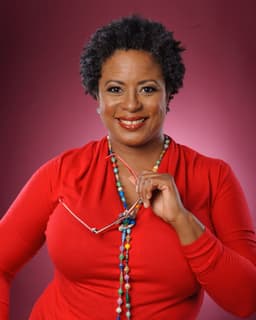

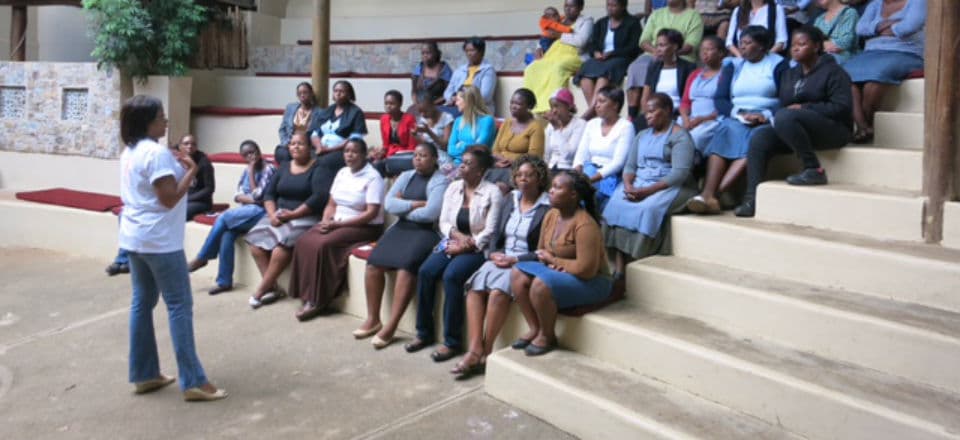
Nicole leads a breast health seminar in Swaziland. Photo courtesy of Nicole Joseph-Chin.
Nicole Joseph-Chin realized that if she wantsto change the lives of women with her breast care message, she also needs to reach out to men.
Breasts are important to everyone and there should be no barriers to this dialogue.
On a very rainy afternoon this month, I stopped in a local restaurant and noticed four men at a table having drinks. I recognized my friend Mark among them and I went over to say hello.
When we greeted each other, Mark introduced me to his colleagues as \"The World's Most Knowledgeable Breast Lady, \" a title that many use to address me and one that I have welcomed as my biggest asset.
As the founder of the social enterprise Ms. Brafit, I have made breast care my personal mission. The idea was born from my own need for comfort and confidence growing up. As a girl who already had a DD bra size at the tender age of 9, a bra made a difference in my self-esteem and body perception. I started Ms. Brafit because I felt certain that I could empower other women and girls—while changing the social narratives connected to breasts.
I also felt that if this organization was to create social impact, we had to address all breast needs—from the breastfeeding mother to the woman navigating her post-surgical transition after a mastectomy or lumpectomy. That is whywe offer bra and mastectomy fitting consultations and solutions for all body types and conditions.
We also deliver breast health programming to adolescent girls; to educators; to organizations looking to empower their workforce; and to wellness practitioners such as physiotherapists, guidance counselors, nursing staff, oncologypractitioners, and maternal healthcare providers. We aim to ignite conversations that break taboos and promote self-acceptance. We create spaces to discuss everythingfrom post-surgical scars to the emotional scars associated with body shaming and self-image.
In our breast care work, it's very important to set the proper environment for discussions around breasts without making the topic seem taboo and scary. We try to be inclusive in our delivery. After all, breasts are important to everyone and there should be no barriers to this dialogue.
My friend Mark and his colleagues are a good reminder of this. They are men over the age of 60; they are husbands, fathers, and grandfathers. That day at the restaurant, one of the gentlemen in the group became very emotionally charged as he shared how breast health has affected his household.
He told us about his daughter, a young woman and mother of two little girls under the age of 9. She discovered a lump in her breast, was subsequently diagnosed with breast cancer, and had a mastectomy—all within a short space of time. She is currently undergoing further treatment.
This gentleman spoke of the sequence of things and how quickly the lives of his entire family have changed. He described himself as an advocate and asked me for my contact information in order to become part of our support and advocacy network. He exuded passion as he spoke in a way that included his three peers and allowed them to also speak freely about the disease.
Their concerns were about the women in their lives: their wives, daughters, and granddaughters. They beamed with pride as they spoke of their families.
When I meet men who are this passionate about discussing breast health, it encourages me and reinforces the importance of dialogue that transcends age, social standing, and gender.
In the Caribbean, there's a perception that discussing breasts and breast care is strictly \"girl talk\" that should be voiced by women, to women, and should only be applicable to the females of the world. Yet, most men in the region boast of being breastfed and nurtured or raised by several women in their extended-family households, including mothers, aunts, and grandmothers. Men are fathers, husbands, colleagues, and sons, and women's health influences them greatly—even if it is rarely acknowledged.
I am grateful to Mark for introducing me to his caring friends. More and more of my most insightful conversations at Ms. Brafit are coming from men like these. I applaud the men who stand strongly behind women and who amplify their voices for healthy breasts and early detection of cancers.
We will have healthier societies if men are involved in more of these conversations. Let’s not stigmatize breasts with sexual innuendo. Instead, let’s encourage women to get screenings, support girls to be self-aware, and empower communities to learn about breast health.
Thank you to all the men who show that breast health can be “guy talk” too.
STORY AWARDS
This story was published as part of the World Pulse Story Awards program. We believe everyone has a story to share, and that the world will be a better place when women are heard. Share your story with us, and you could be our next Featured Storyteller! Learn more.
How to Get Involved
Do you know of a community that could benefit from the work of Ms. Brafit? Nicole Is looking to deliver educational programming to diverse global communities. If you are interested in Ms. Brafit curricula or speaking engagements, contact Nicole via the comments or send a private message.
Nicole is also seeking partners who work in global adolescent and maternal health to help spread Ms. Brafit's breast awareness message. Send a message to Nicole or leave a comment if you wish to partner or have ideas!
You can visit Ms. Brafit online at www.Msbrafit. Com and on Facebook and Twitter.
- Health
- Positive Masculinity
- First Story
- Latin America and the Caribbean