
This Circle Has No Sides


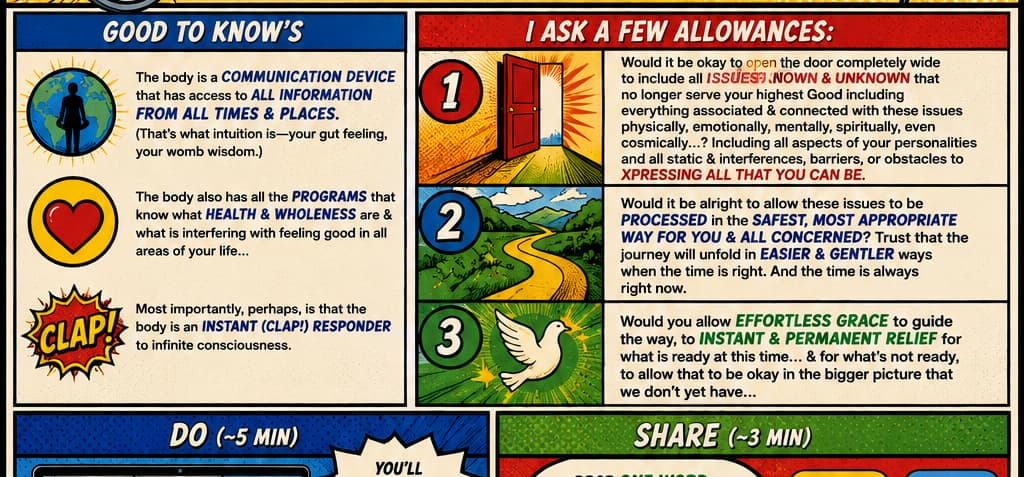
We gathered with this notice:

During a climate communication coaching session this morning, and on my screen was Sindhu, joining from Tamil Nadu, India. We were there to practice something deceptively small: telling a sixty-second climate story. Not a TED talk. Not a white paper. Sixty seconds: a moment, a place, a sense, what changed, and what's now at stake for whoever's listening.

I asked Sindhu to start with her body, not her data. Ninety seconds of grounding first. Hand on your belly, feet on the floor, three slow breaths. I call it a pit stop, not meditation, because we are not trying to achieve enlightenment here, we are trying to keep a human nervous system online long enough to tell the truth without either shutting down or catastrophizing. Grief and facts do not fit through the same door at the same time. You have to open the door on purpose.
And then Sindhu told me about her hills.
She grew up in a hill station that never, never cracked 25°C. That was the whole identity of the place. Cool. Green. Reliable. This year it hit 30, and the monsoon, the one everything depends on, simply didn't show up on time. Not adjusted. Not delayed by a polite week. Missing, like an appointment nobody canceled.
Here is the part that undid me: the community is almost entirely agricultural. No monsoon doesn't mean inconvenient. It means the water that fills the reservoirs that turn the turbines that power the homes doesn't arrive. The dams are dropping. The streams that used to just be there, the way streams are supposed to just be there, are vanishing one by one. And because of the heat, families in a place famous for never needing them are buying refrigerators and electric fans for the first time in their lives, appliances as a new, unbudgeted, unglamorous cost of climate change, showing up in kitchens instead of headlines.
Meanwhile, resorts keep going up for tourists who come to escape the heat somewhere else, and the tour buses keep idling, and the forest that used to hold the hillside together gets a little thinner every season, and the soil dries from the trees no longer pulling rain from the sky.
And through all of it: Sindhu's grandmother. Ninety-eight years old. Still farming.
I sat with that for a second before I said anything, because a 98-year-old woman with dirt on her hands, still growing food in a climate that has changed shape underneath her entire life, is not a statistic. She is a witness. She's watched this valley for a century, long enough to know the difference between a bad year and a broken pattern. She is doing the single most radical thing available to any of us right now, which is staying in relationship with the land while everything about it changes. That's not nostalgia. That's leadership with a hoe in her hand.
We didn't need better data to make that story land. We needed better listening.
That's the whole secret, and it's maddeningly simple: most of us are trying to win an argument about climate change when the person across from us isn't actually arguing. They're scared, or tired, or grieving something they haven't named yet. So instead of debating, I teach what I call denier judo: agree with the feeling underneath the resistance, offer one true fact, ask one honest question, and then, this is the hard part for anyone who talks for a living. Stop talking. Let them fill the silence. People rarely change their minds because they lost an argument. They change because they felt heard enough to hear something new.
Sindhu didn't need judo today. She needed a container sturdy enough to hold a story that big, and sixty seconds turned out to be exactly the right size. Constraint isn't the enemy of truth-telling. It's the shape truth-telling needs in order to travel.
By the end of the call, the compliance platform and the grandmother in the Nilgiri Hills had quietly become the same conversation. One tracks a battery's entire life so it doesn't poison someone at the end of it. The other tracks a family's entire life so the rest of us don't get to pretend the monsoon failing is an abstraction. Both are chain-of-custody. Both are refusing to let harm happen in the dark. Data protects the planet at scale. Story protects it at the scale of the human heart, which is, not coincidentally, the only scale most of us actually feel anything at.
So here's what I'm asking you to do, plainly, before you close this tab:
Write your own sixty-second climate story. One moment. One place. One sense; what it smelled like, sounded like, felt like on your skin. What changed. What's at stake for the person listening. Then tell it. Today. This week, to as many people as will hold still for a minute. Your neighbor. Your local leader. Your board meeting. Your kid.
And then do the harder, quieter half: listen. Ask them what they've noticed changing in their own place, their growing season, their fishing season, their allergy season, their grandmother's garden. Don't correct it. Don't fact-check it. Just receive it, the way I received the Nilgiri Hills today.
Ninety-eight years old, still farming, still watching the sky. That's the whole climate movement in one image. Go find yours and then go find someone else's. How is climate changing where you live?
Plugged IN, Charged UP.
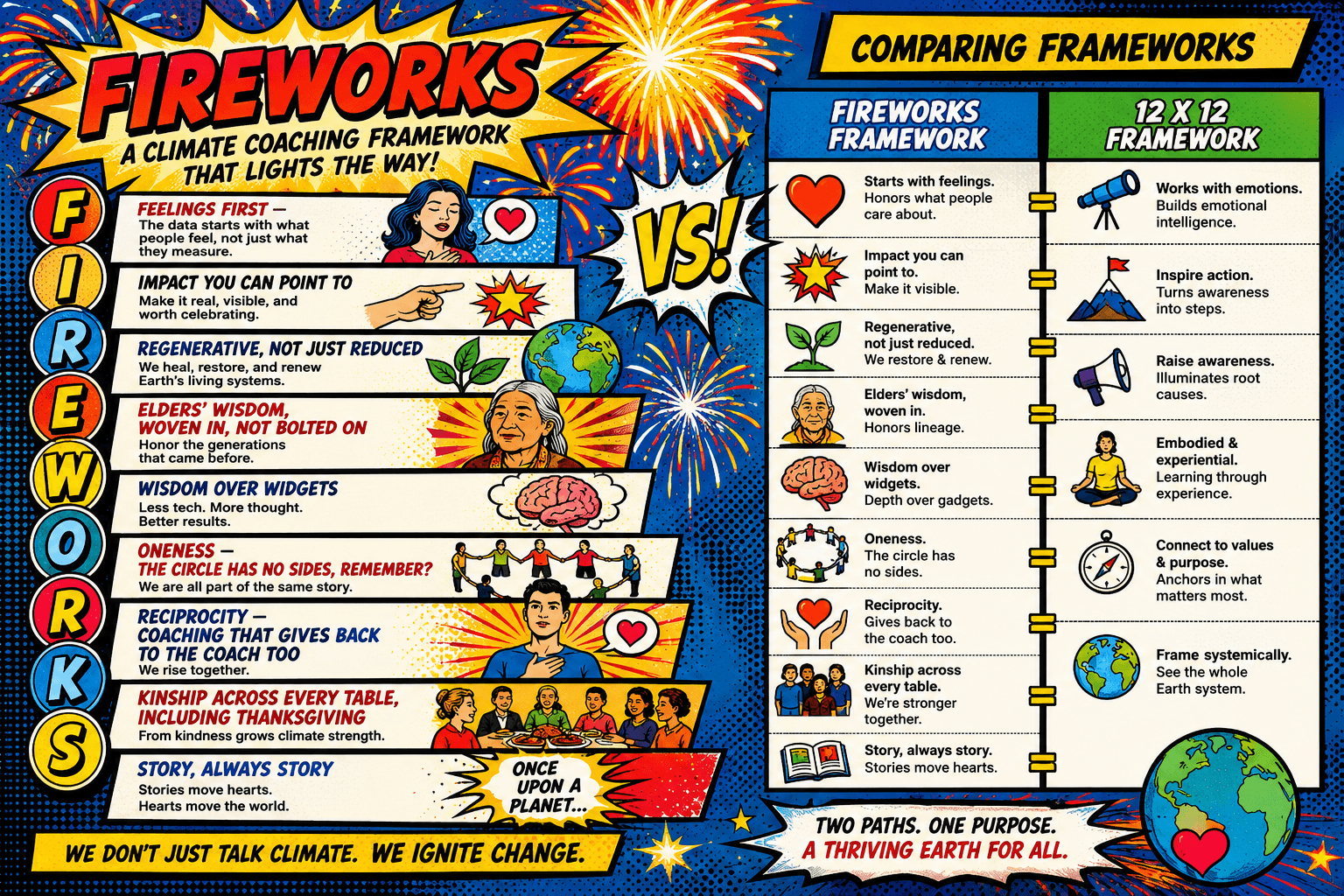
Bonus: we ended speaking about FIREWORKS. My version of climate coaching yourself and that FIREWRC version uncovered by the 12 X 12 research project that was presented at the International Coaches Federation. We were selected as finalists in their Social Impact Awards for the category of Emrging Catalyst.
Enjoy the 53 minute zoom recording:
Passcode: 5oe1+Q=m
- Leadership
- Environment
- Peace & Security
- Climate Change
- Northern America