
"The Tawerghans: A Tragic Tale of Discrimination and Persecution"
Apr 17, 2023
story
Seeking
Feedback

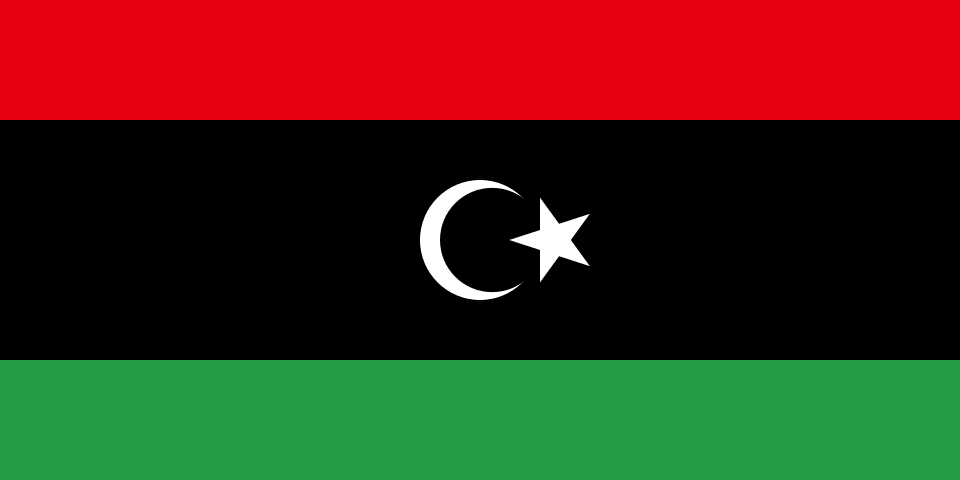
"Escaping is not a solution, but a necessity for survival," as stated by Munia Khan, is a quote that resonates with Anas, a young Tawerghan who suffered greatly due to the civil war of 2011 in Libya. Anas was born in 1985 with dreams of pursuing a career in communications engineering, but his dreams were shattered when he and his family were forced to flee their home in Tripoli due to accusations of supporting former Libyan leader Muammar Gaddafi. He faced immense discrimination and persecution for his ethnicity and political beliefs.
Anas was arrested and taken to a prison in Misrata, where he was tortured and wounded. He was blindfolded and insulted with racial slurs without ever taking part in any fighting. Even after his release, the psychological scars of his torture remained with him. Despite facing so much discrimination and persecution, Anas remained determined to help others. He volunteered with various organizations and provided assistance to other Tawerghan refugees.
In 2014, Anas was once again targeted for his ethnicity and was interrogated by the Al-Sad Brigade in Misrata. He was released two days later, with no charges against him. In May 2022, Anas was abducted and tortured by an armed group while visiting the Tawergha refugee camp in Tripoli. He was called a "Tawergha dog" and threatened to burn alive. His wounds were severe, both physical and psychological, and he was eventually thrown in front of a hospital in Tripoli where he was found a week later.
Anas left Libya and is now seeking refuge in a country that respects human rights and does not discriminate against individuals based on their ethnicity or political affiliations. He dreams of a day when he can return to his homeland, where his family still resides, and live a life free from fear and discrimination.
Anas' story is just one of many examples of the suffering and displacement that the Tawerghans faced during and after the Libyan revolution. The Tawerghan community, predominantly consisting of black Libyans, had always lived peacefully in the city of Tawergha until the civil war of 2011. They were accused of supporting former Libyan leader Muammar Gaddafi and, as a result, were subjected to torture, rape, and other human rights violations. Many were forced to flee their homes and seek refuge in camps for internally displaced people, where they still live to this day.
The Tawerghans are a historically marginalized community in Libya, who have been subjected to numerous human rights violations since the 2011 revolution that overthrew former Libyan leader Muammar Gaddafi. They were blamed for supporting Gaddafi during the revolution, and as a result, they faced collective punishment, including extrajudicial killings, torture, forced displacement, and destruction of their homes and properties. The Tawerghans were forced to flee their ancestral lands and seek refuge in makeshift camps, where they continue to live in dire conditions to this day.
The Tawerghans have the right to live in peace and security, free from discrimination, violence, and persecution. The right to return is a fundamental human right recognized under international law, including the Universal Declaration of Human Rights and the International Covenant on Civil and Political Rights. The Libyan government has a duty to ensure that the Tawerghans are able to exercise this right, by providing security and protection, restoring their homes and properties, and prosecuting those responsible for their displacement and other human rights violations.
In addition to Anas' story, there are countless other stories of Tawerghans who have suffered at the hands of anti-Gaddafi militias and the Libyan authorities. The Tawerghans were subjected to forced displacement, torture, rape, and other human rights violations, solely based on their ethnicity.
Many Tawerghans still live in makeshift camps for internally displaced people, where they face dire living conditions, limited access to basic necessities such as food, water, and medical care, and constant fear of violence and discrimination. They have been denied the right to return to their homes and lands, which is a fundamental human right recognized under international law.
The Tawerghans have been abandoned by the international community, which has failed to respond adequately to their plight. The international community has a duty to protect and promote human rights, and to hold accountable those who violate them. The Tawerghans need the support of the international community to ensure that their rights are respected and protected.
As Nelson Mandela once said, "For to be free is not merely to cast off one's chains, but to live in a way that respects and enhances the freedom of others." The Tawerghans deserve the same freedom and respect as all other human beings. Their rights must be upheld, and their suffering must be acknowledged and addressed.
The story of Anas and the Tawerghan community is a reminder of the importance of human rights and the need to protect and promote them. It is a call to action for the international community to ensure that the Tawerghans are not forgotten, and that their rights are respected and protected.
- Africa