
The Hunger-Tree Project: Because Every Child is Worthy of Food, At the Very Least
Mar 5, 2023
story
Seeking
Visibility


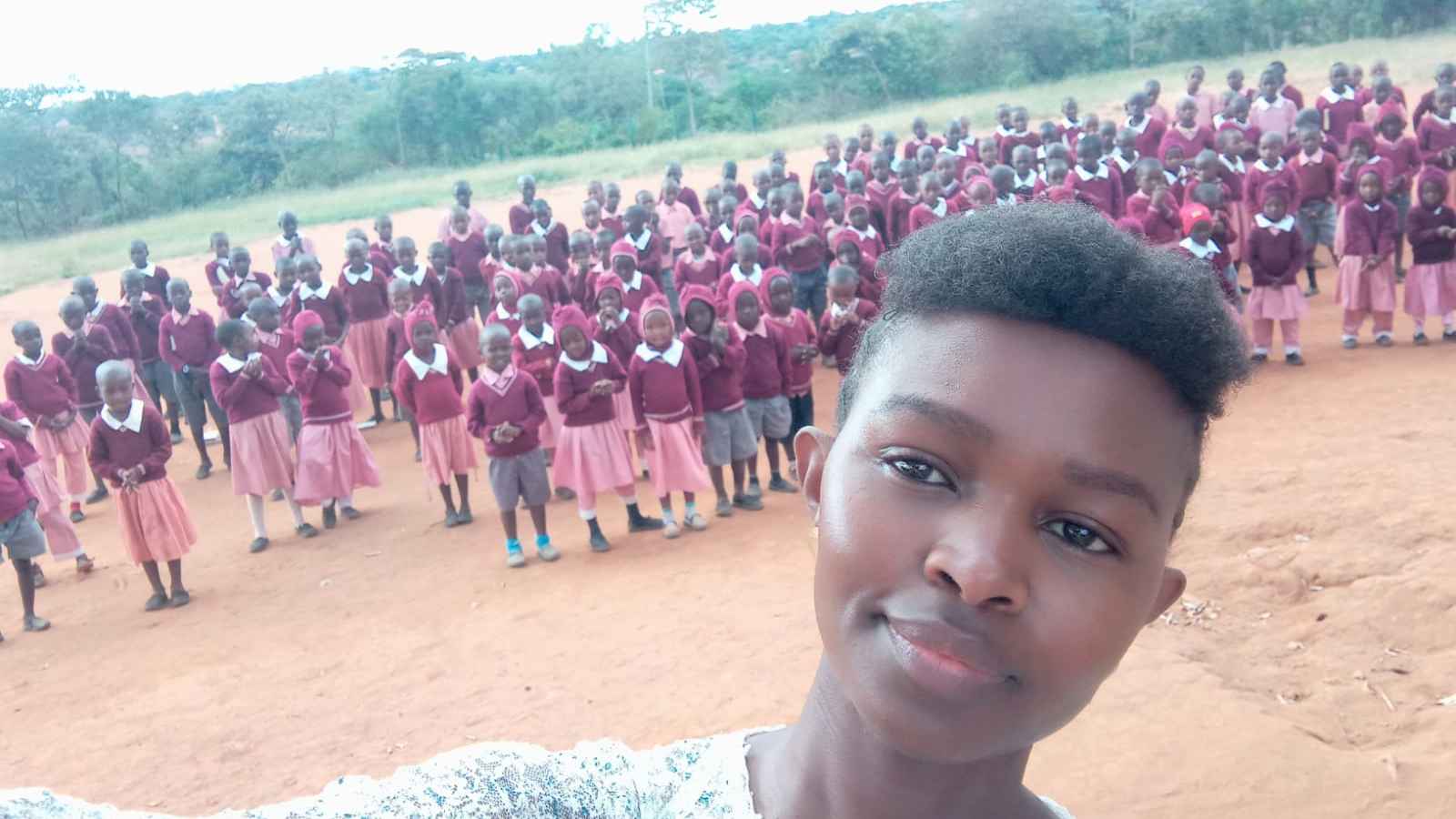
At my village school in May 2022 to launch the school lunch program for the 'Hunger-tree' children. I am one of them
A school day in most parts of the world is governed by bells. Loud and shrilly as they are, bells are not scary. To us Hunger-tree children, however, the lunchtime bell is the most dreadful sound we brace ourselves for, daily. Whenever this bell rings, we feel doubly hungry and helpless.
When the lunch bell rings, the deputy principal gathers all the students under what has come to be known as the Hunger-tree. She reads the names of those whose parents have provided the dried grain of maize and beans which is boiled daily for the school lunch. Those whose names are not in the book of food must remain under the Hunger-tree for the duration of lunch.
There are around forty of us, about a quarter of the school’s population huddling under the Hunger-tree in silence. The smell of githeri, the freshly boiled maize and beans waft through the air, an unbearable assault to our hunger-saturated brains. To our right, our schoolmates line up, contented anticipation in their faces, meandering towards the ginormous pot of steaming food we should all be sharing.
We watch longingly as those at the front of the queue receive scoopfuls of food and gleefully sit down to their lunch.
We the Hunger-tree children, as are collectively known at school and in the village, are not allowed to leave our watch until the eating students have finished their lunch. We may not run off and play. We may not sit quietly elsewhere, reading. We may not engage in any activity that might take our minds off our hunger and the helplessness it ultimately generates. We may not bring any left-overs either.
With a school day that stretches from 6:30 am and finishes at 5:30 pm, it is a long time for a child to be hungry. Our afternoon lessons pass in a blur, and the walk home in the evening will be a struggle.
As we watch, food remains close, yet perpetually out of reach.
We are spectators to food for the Deputy Principal's pleasure. She invented the 'Hunger-tree watch' as punishment for our parents because, according to her, they don’t care enough to supply the 27 kilograms of dried maize and beans needed to feed each child for the school year. Her logic is that, since it is so traumatic for a hungry child to watch their peers eat, our suffering will motivate our parents to source our grain quotas. But our parents lack the means to buy the grain in bulk for a single child, leave alone multiple children. Resources cannot be generated magically by inflicting pain on one's dependants. As the Swahili saying goes, one cannot lick an empty hand.
Besides, I am 11 years old, and I know my mother cares. I often sense her sadness and despair when she speaks of us under the Hunger-tree. But buying grain in bulk is out of her reach.
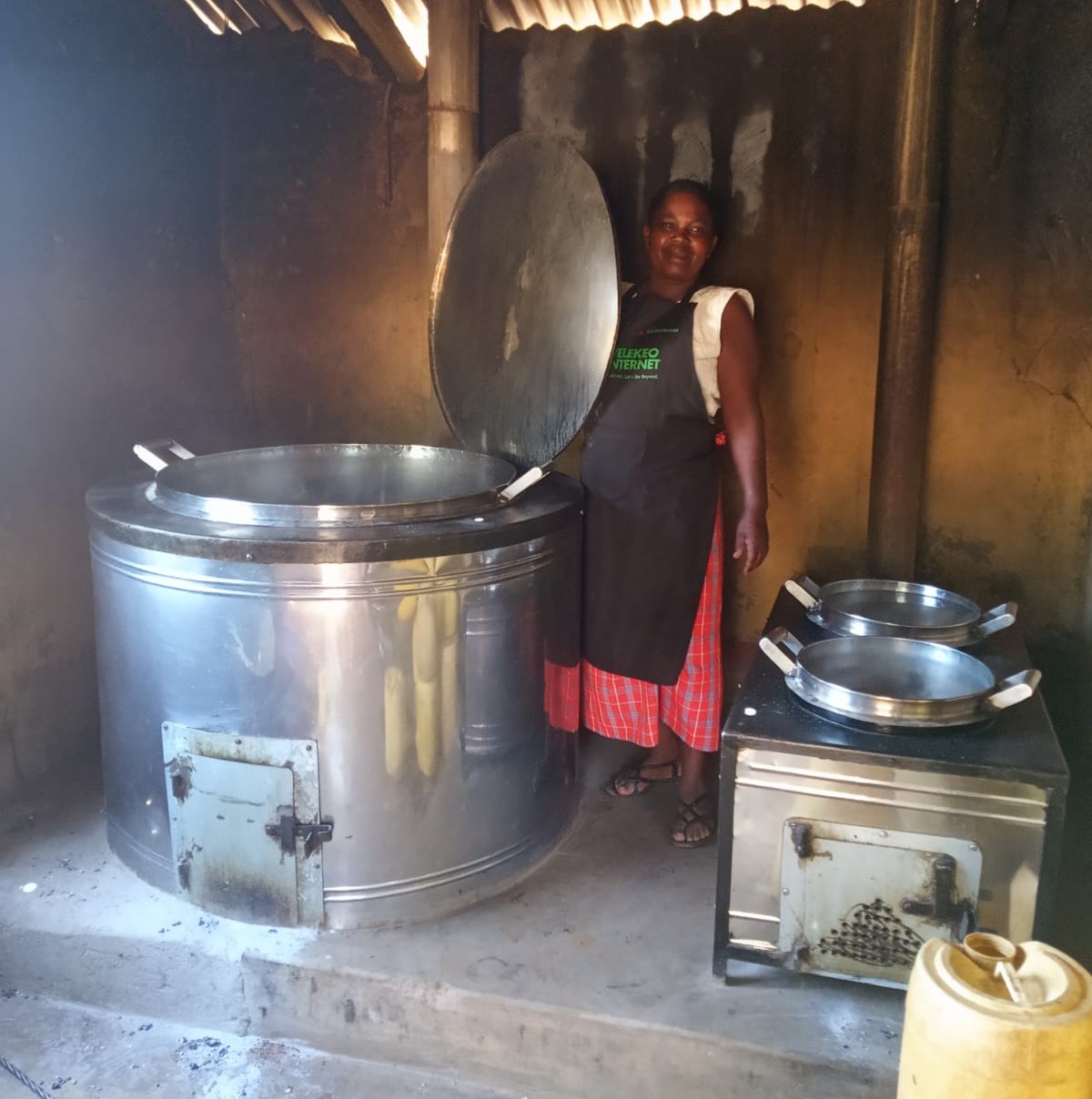
The giant pot of lunch and its master. My childhood cook is relieved that she can now serve EVERY child at lunch time.
The Hunger-tree was not always there. Like most novel ideas, it was a child of the millennium. The usual arrangement of packed lunches from home was the norm until a new deputy head teacher decided to create more equity by having all students eat the same thing. From then on, families were required to bring dry ingredients for each child to the school at the beginning of term. Unfortunately, buying a term's worth of food all at once proved difficult for many families in the margins, mine included.
The very scheme purported to make us all equal pushed struggling families further into disadvantage.
Nearly three decades since its inception, my fellow villagers speak of the Hunger-tree as if it were a welcome phenomenon, without live, hungry children under it. It has been so comprehensively integrated into the fabric of the school governance and village culture that nobody questions it or considers a more inclusive approach to school lunches.
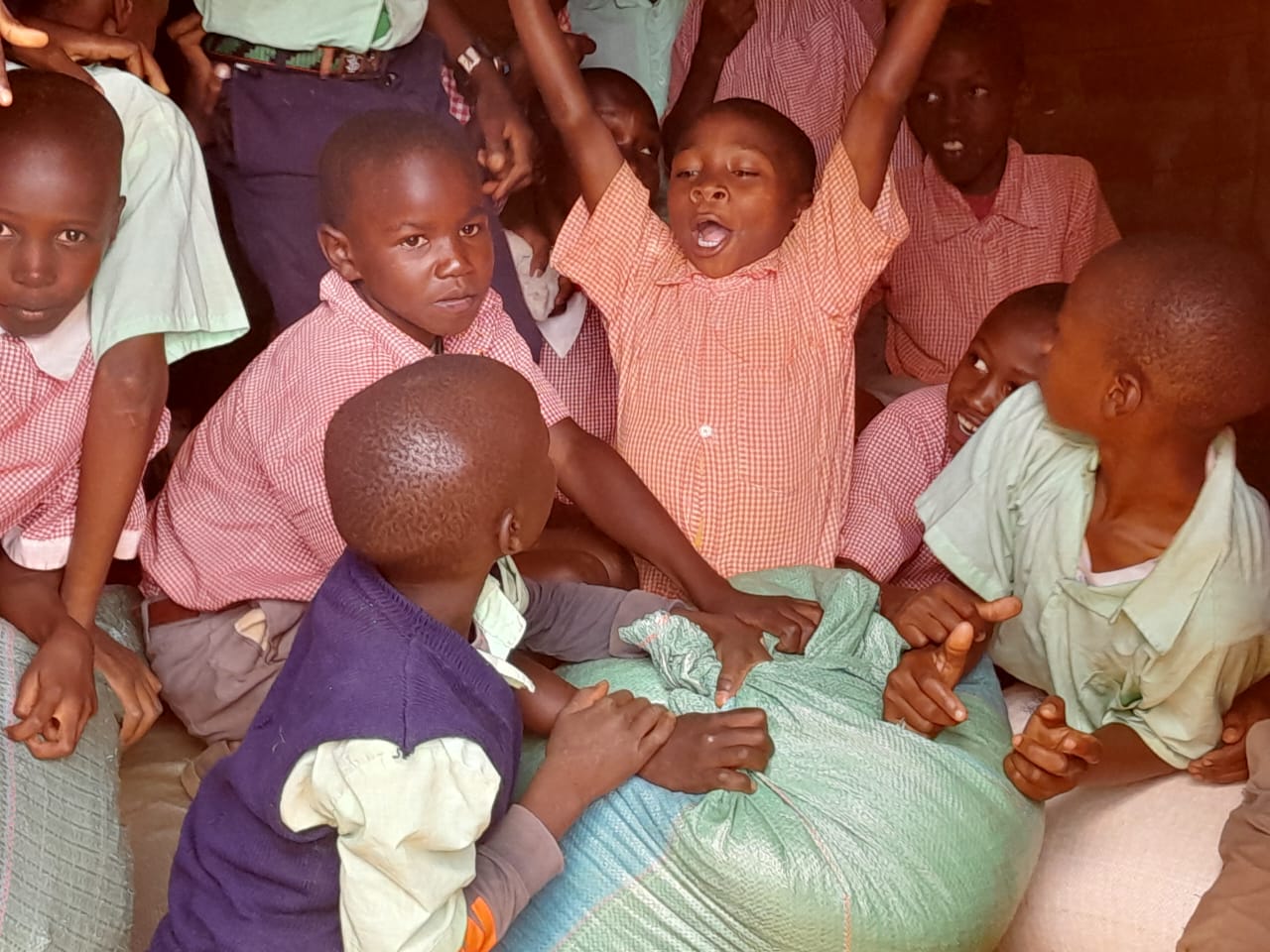
School lunches funded by the Hunger-tree project are infusing joy back into childhood!
A traumatic experience in early 2022 thrust me back to the powerlessness I felt as a Hunger-tree child. For the first time I sat face to face with my hungry inner child, hugging her knees in quiet desperation. In that moment, I felt her anger, frustration, and powerlessness. I held her in my heart and wept with her. I explained to her that her circumstances were not her fault, but an outcome of the gross inequalities that, ironically, make charity both necessary and possible.
I assured her that she is worthy of food and nourishment, at the very least. And with that recognition I made her a promise that, if I could move her to the food queue even for a single school lunch, I would. This was the birth of the Hunger-tree Project.
Our vision is simple: recognise that hunger is an adverse childhood experience and bridge the food divide by providing the dried maize and beans needed to move the Hunger-tree children to the food queue. Launched in 2022, The Hunger-tree Project it is a lifeline that has restored hope and dignity to many struggling families and their children.
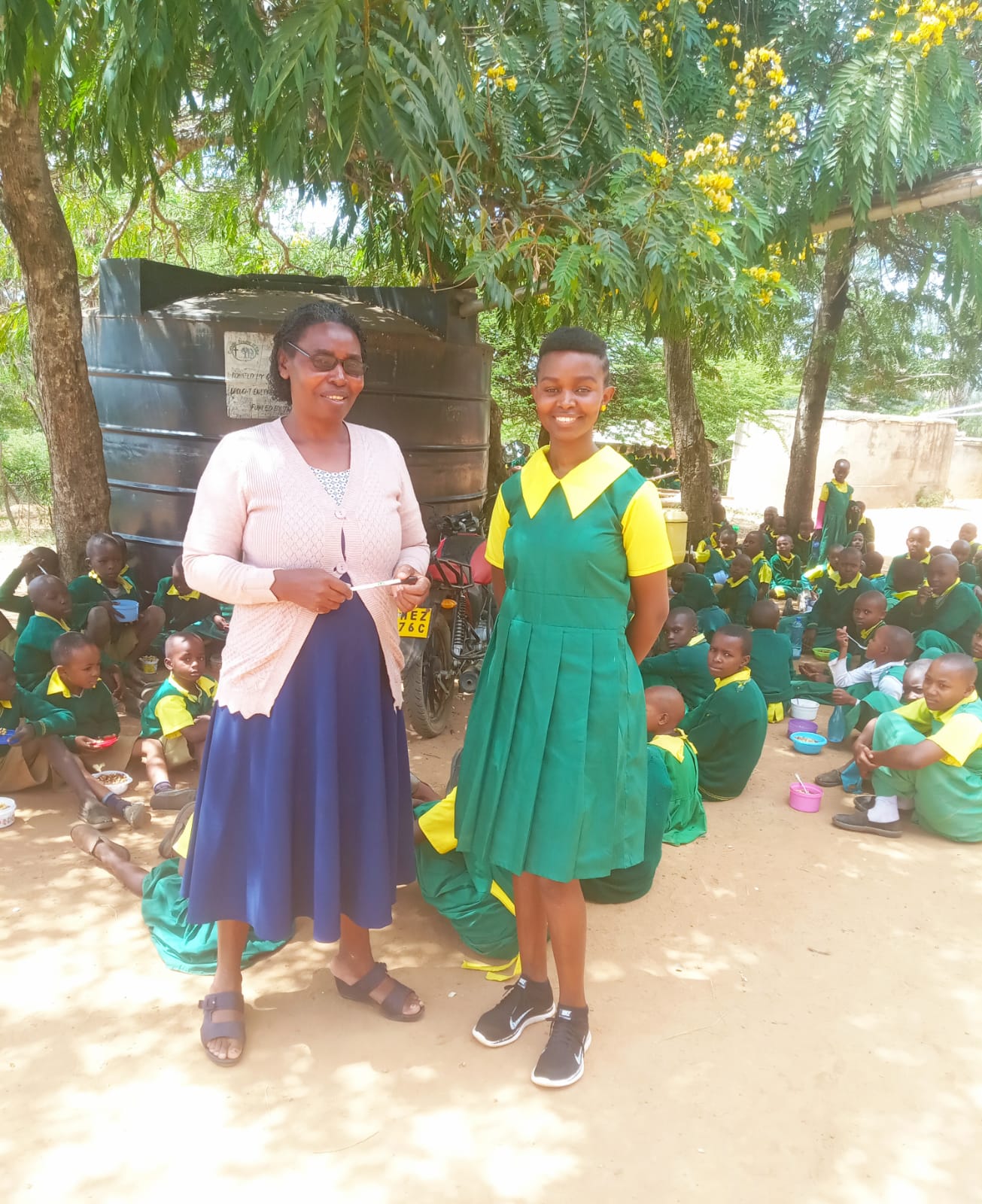
The author in uniform to launch the Hunger-tree school lunch program at one of the two schools in her village
Lunch program in the 2 schools in my village at a glance
- 115 Primary school students enrolled in the Hunger-tree School Lunch program.
- 61Kinder/preschool students enrolled .
- $35 feeds one child lunch for one school year.
In the two schools in my village, the Hunger-tree children live on one meal a day. Sometimes none. Bringing leftovers for school lunch is not permitted, and buying their grain quota in bulk is not feasible for their family income. Without external intervention, their fate of a hungry childhood is sealed.
But it does not need to remain so. You, can help.
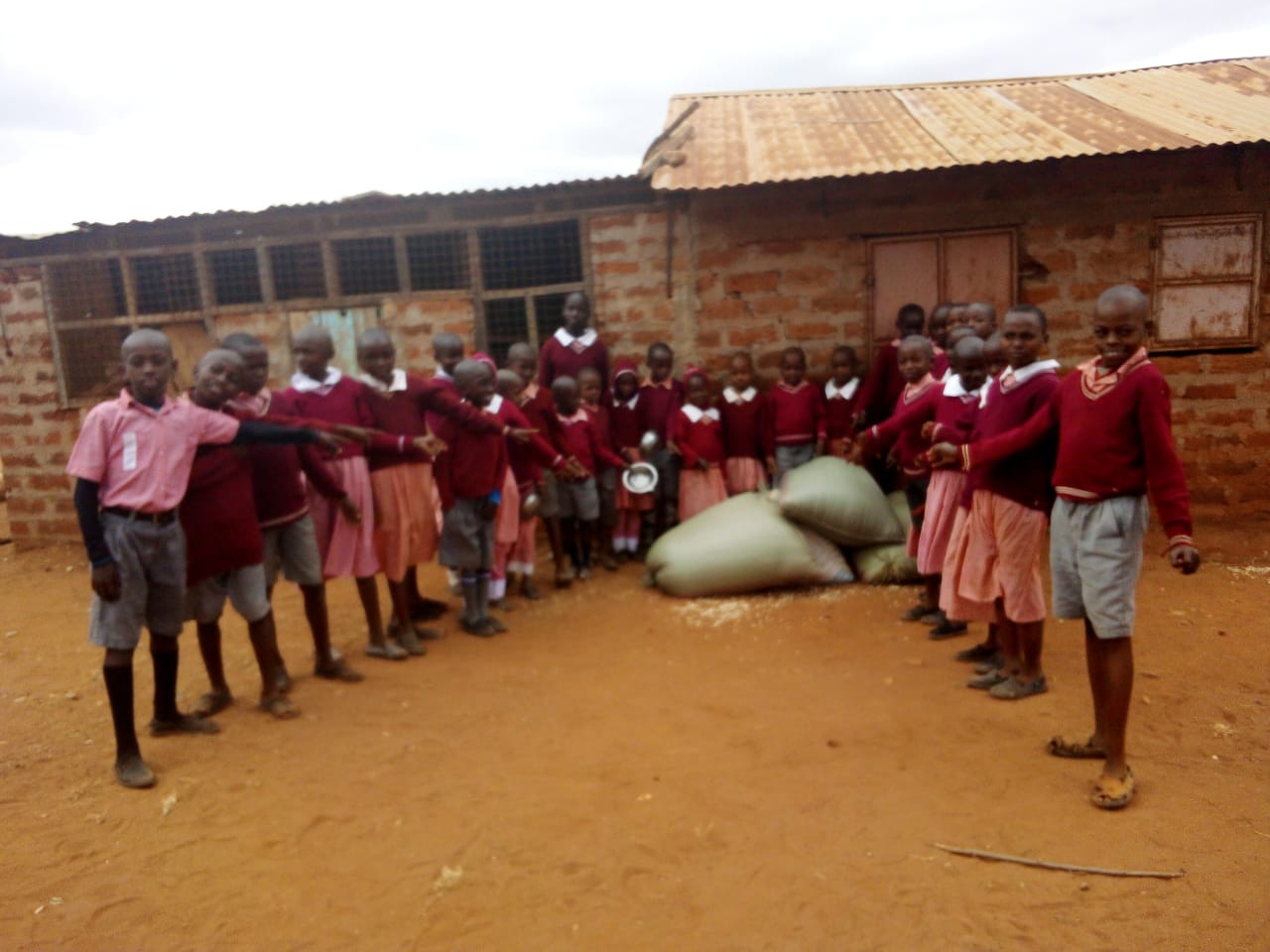
A Hunger-tree food shipment is received
The Hunger-tree project was thus a much needed, welcome relief for the hunger-stricken students and their families. It made school less dreadful and shortened the 11-hour-long school day. Additionally, abolishing the Hunger-tree eradicated hunger driven truancy because the promise of lunch made attending school attractive.
It is no wonder then that, at its launch, there were tears of wonderment, of joy, of gratitude, and of relief set in motion by the deep compassion of those who gave. As one parent said to me, ‘you have done for our children what we have no power to do for them.’
Food to a hungry child is infinitely powerful. It is incomprehensible that providing simple meal can catalyse incredible physical relief, improve self-esteem, increase access to education, restore dignity, and infuse joy back into childhood. But, it does.
The Hunger-Tree project currently supports two primary schools in my village, providing lunches to 115 students. It also provides a ‘morning tea’ porridge for 61 kinder and prep students in both schools. For the majority of these students, food at school is their first meal of the day and on some days, their only meal.
In all the neighbouring schools, the Hunger-tree children still sit desolately as spectators to nourishment. They sit in hope that one day, this project will get resources enough to launch into their school, too, and move them into the food queue.
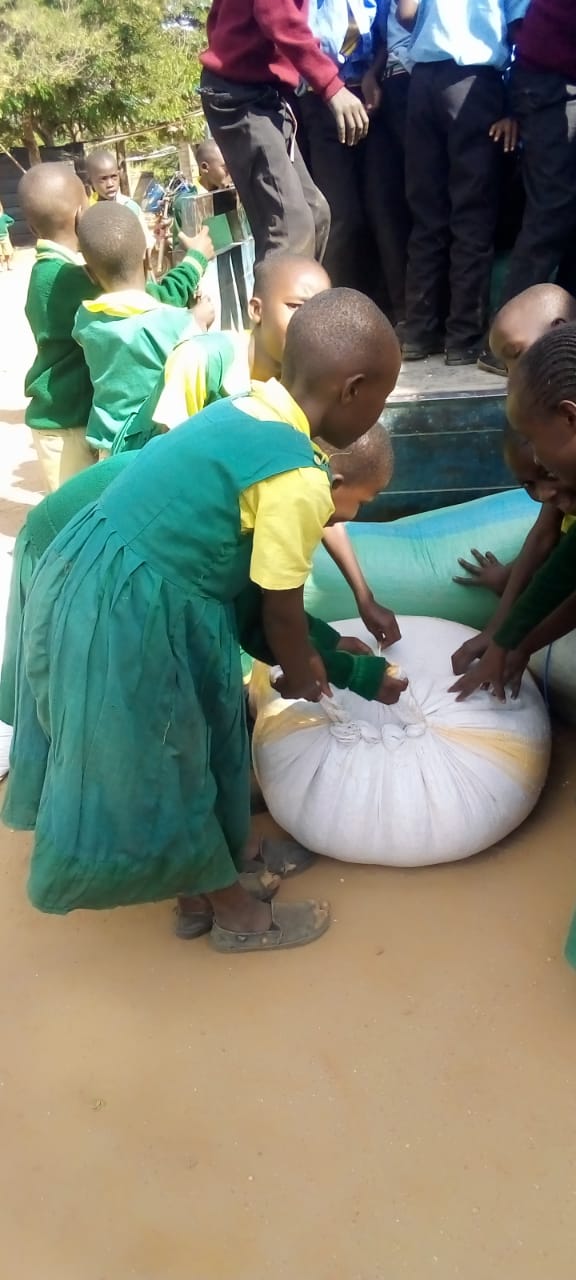
Students help unload a Hunger-tree food shipment. Food deliveries are made at the start of every term.
Currently, 880 meals are provided to at risk children every week, and more than 30,000 meals per year. This has been made possible by the compassion and generosity of people like you.
Food is vital to life. While many of us eat at least three times a day, for some Hunger-tree children, a single meal is a luxury far out or reach. Together we can change that. By sharing a little, we can place a life-changing plate of food in the hands of a hungry child everyday while they are at school. We cannot feed a child today and send them back to sit under the Hunger-tree tomorrow, watching their friends eat.
No! We have to make those children watch their peers eating because their parents don't care!
A sitting principal rebutting my observation that it would be kinder to permit his Hunger-tree children to sit or play away from the vicinity of the food.
Please share a meal with a hungry child today. You will give them an equal chance at education, hope that they matter, and restore dignity to their families. Most importantly, you will reshape the punitive, colonial attitudes among educators in rural Kenya that oppress the marginalised.
Tell a child they matter with a much needed meal. Infuse them with hope; change their tomorrow.
To get involved, please email our Hunger-tree Project team at hungertree@wpbc.org.au.
N.B. We are an emerging charity. We are not yet registered, but hope to be in the near future.
Thank you for your compassion.
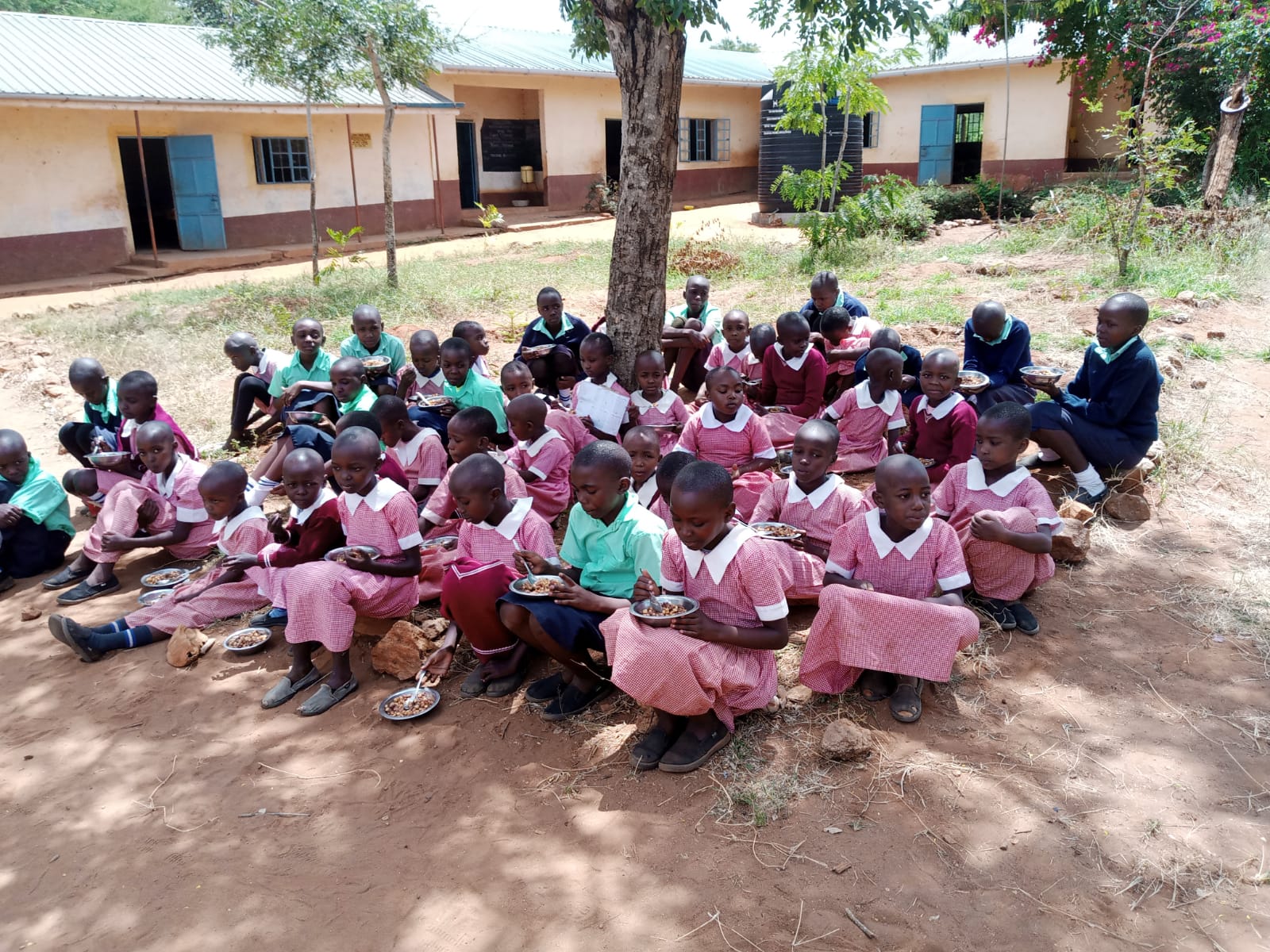
Thanks to your compassionate giving, the Hunger-tree is no longer a symbol of childhood adversity but a place to sit and ENJOY a meal with you mates. Join in. Help make magic every day!
- Leadership
- Education
- Moments of Hope
- Food Security
- Global