
Sister Zeph: Classroom Revolutionary
May 14, 2018
story

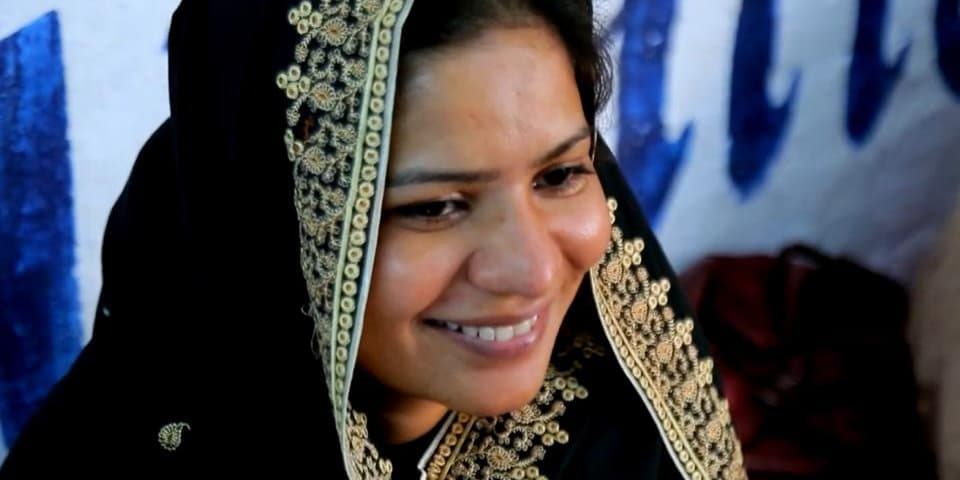
Her enemies see girls learning as a threat. Sister Zeph sees Pakistan's greatest hope.

“If we hadn’t hidden ourselves inside in our home and locked the doors we wouldn’t be alive today. ”
The teacher, activist, and World Pulse member who calls herself Sister Zeph recounts this terrifying moment from 2005. Gunmen fired shots into her home in Gujranwala, Pakistan, targeting Sister Zeph and her family. Although the shooters never identified themselves, their actions made their views on girls and education clear.
Seven years after this incident, the attempted assassination of another activist, Malala Yousafzai, brought the struggle over girls’ rights to education in Pakistan into the forefront of global public consciousness. In 2014, 16-year-old Malala was awarded the Nobel Peace Prize for her courageous education advocacy, which continued even after she recovered from a Taliban gunshot wound to the head. She emphasized from the stage of her Nobel lecture: “I am not a lone voice. ”
Every time Sister Zeph opens the doors of the Zephaniah Free School to its 200 students, she strengthens the chorus of voices for change in her country. Roughtly 5. 5 million school-aged children in Pakistan are not in school—the second highest number in the world. More than half of Pakistan’s out-of-school children are girls. These are the statistics Sister Zeph is up against.
There was a time when Sister Zeph struggled in isolation with the dangers and challenges of her chosen profession, as the sole teacher for over 100 girls. “I used to cry in my loneliness because every passing day my workload was increasing. ”
She would go to her full time job during the day to pay the school’s expenses, and teach classes in the evening. She faced a constant uphill battle as she went door to door in her neighborhood, trying to convince local families to allow their daughters to attend her school. Lacking a classroom, she taught her classes in open air. She struggled to find financial support to properly equip her school, which has always been open to all free of charge.
Several years ago, when Sister Zeph began connecting to the world through the Internet, things started to shift. She calls her computer her “magic box” for the new world of opportunity it opened up for her.
Sister Zeph taught herself English and other subjects online, allowing her to transcend her family’s lack of resources and formal education. She created a Facebook page, which drew new supporters and resources to her cause. She joined World Pulse, which she refers to as “a garden of beautiful souls. ” Instantly, a global community opened up to embrace her with encouragement and recognition. She was recently featured in the documentary Flight of the Falcons for Channel newsasia.
Her biggest turning point, she says, came last year, when she received the Lynn Syms Prize, a generous monetary award, for her work.
Sculptor and philanthropist Lynn Syms established this prize in 2014 in partnership with World Pulse. The award honors a grassroots leader who is elevating the concerns of her community and serving as an inspiration to community leaders elsewhere. The prize was introduced as part of the Women Weave the Web Campaign, which crowdsourced the wisdom of grassroots women leaders on issues digital inclusion and empowerment.
Using digital tools, my girls are learning what we cannot teach them.
Lynn Syms says the grassroots aspect of the prize is very important to her. Sister Zeph is already working in her community. She is there for these women and girls on a day-to-day basis, putting all of her heart and resources into this work. With additional resources, she is ready to lead change on a large scale. The selection committee chose Sister Zeph out of an impressive pool of applicants from all over the world.
Sister Zeph’s education career began at the young age of 13. A teacher humiliated Sister Zeph in front of her class, prompting her to walk out of her school for good. She began teaching herself and her sister, and then gradually taking on students until she had established her own school. She was convinced even as a teenager that there was a more compassionate approach to education than what she had experienced.
“My purpose, ” she says, “is not only to teach students to read books and to get degrees. I am making them change makers; I teach them to recognize their calling because when we come to know our purpose of life it makes us successful. ”
Lynn Syms says Sister Zeph’s start as an educator took “real guts and real determination and belief in herself, ” qualities which Syms sees shining through Sister Zeph's work with the Zephaniah Free School today.
Sister Zeph believes strongly that everyone should be able to access free, quality education. Her school provides educational opportunities for girls as young as 3 and women as old as 70. Last year, Sister Zeph’s own 65-year-old mother became her student, learning to read for the first time.
Since she was awarded the prize, Sister Zeph has purchased a school building with two rooms. She plans to expand this and increase security for the girls. Today the school employs several teachers, including a former student who is working towards her master’s degree. The school is equipped for vocational training and has a computer center. She plans to create more computer centers in nearby villages. Everything is growing. Especially, Sister Zeph emphasizes, her hopes and dreams for what is possible.
“Can you imagine? ” She asks, “my students ask me questions about lava; they ask me to tell them about the history of Egypt; they pray for peace in Syria, they can tell you so much about the culture of the USA; they want to make electricity themselves… Using digital tools, my girls are learning what we cannot teach them. ” She says they are challenging their assumptions and becoming thinkers.
Cross-cultural partnerships with World Pulse members provide a unique opportunity to enrich students’ learning. Iffat teaches Sister Zeph's students how to use computers from the Netherlands. Urmila covers health topics from India. Malee teaches art from the US. And an Internet connection makes it all possible.
Digital tools have expanded Sister Zeph's curriculum, and also her network of support.
“I do not feel alone, ” says Sister Zeph. “I know there are people who understand my cause, and they are with me in this battle to educate and empower the girls. ”
Unfortunately, the violent attack in 2005 was not the last. In 2013, Sister Zeph’s sister and mother were injured in another attack. People have thrown rocks at the school, put glue in the locks, and spread rumors about her.
Just this month, her mother suggested leaving the city after being harassed by a group of men. Her father, who was once fearful of Sister Zeph’s outspoken stand, has since come around to her cause. He supports his daughter's decision to stay and fight to achieve the goal of empowering women.
While the enemies of education speak through bullets and intimidation, Sister Zeph speaks through her students’ success.
Girls who otherwise would be married off young are now going to university, becoming teachers, nurses, and police officers. They are studying computer science, English, and finance. Many, she says, will become mothers who will advocate for their daughters. Each girl’s education impacts the lives of her parents, siblings, children, husband, and in-laws. Sister Zeph is proud of the changes she sees in the families of educated girls. She believes her country too will change for the better.
Sister Zeph still sometimes fears for her safety. She still experiences heartbreak whenever she can’t convince a family to allow their daughter to go to school. She still puts in long hours, including a day job that helps fund her work at the school. When her work is at its most challenging, she summons her 13-year-old self: the girl who recognized her worth enough to protect it, who knew her potential enough to nurture it.
“Nothing can keep me away from my calling, ” she says. “I was born to spread education. I will do it as long as I am alive. ”
- Leadership
- Technology
- Education
- Northern America