
SIERRA LEONE: No More Empty Promises on HIV
Apr 30, 2019
first-story


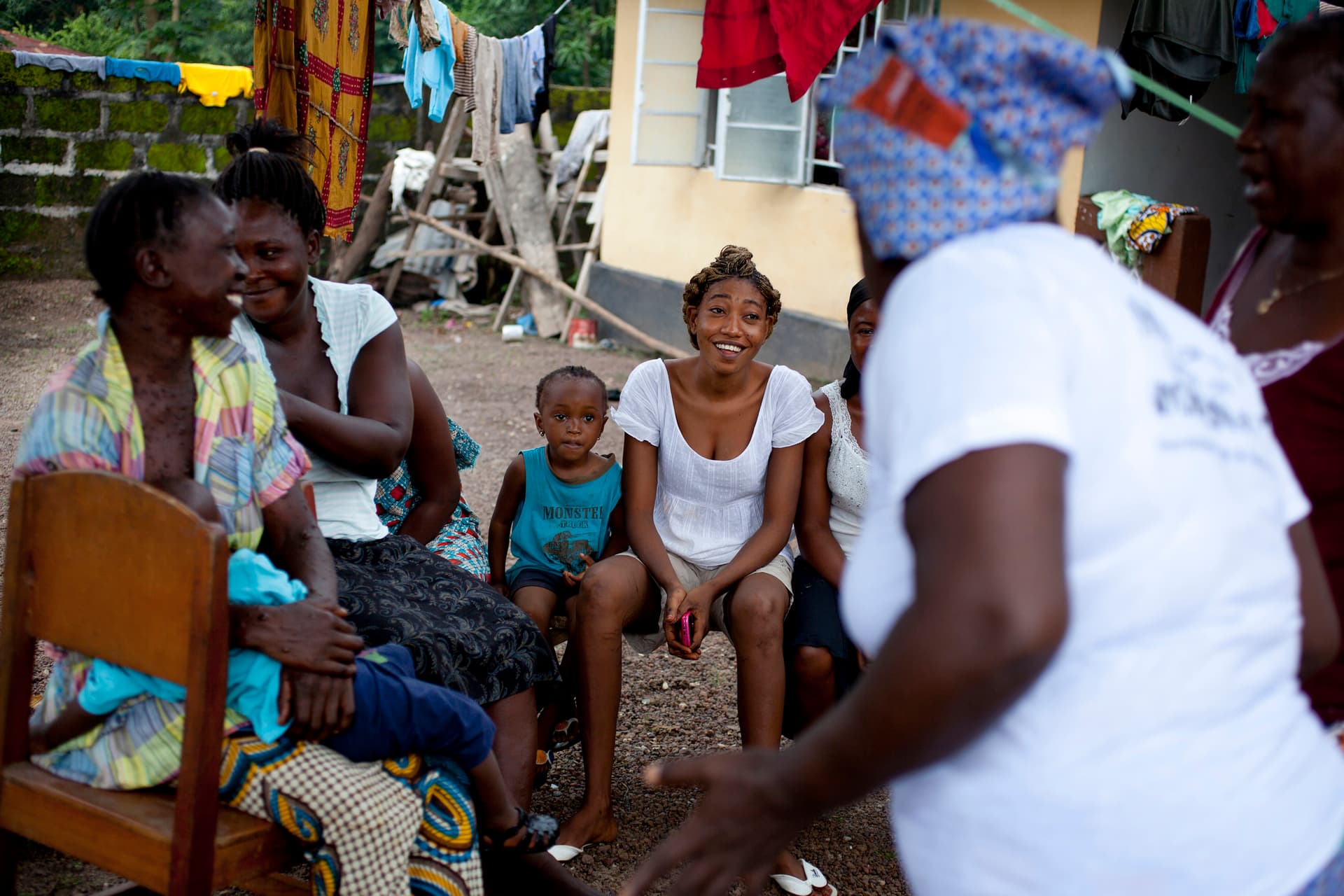
Reproductive health peer educators in Sierra Leone. Photo: Abbie Trayler-Smith (CC BY-NC-ND 2.0)
An ambitious goal alone cannot stop the spread of HIV. Eastina Taylor urges her country's leaders to take action.
We need to fight all forms of stigma and discrimination that contribute to this epidemic.
In 2015, on World AIDS Day, the government of Sierra Leone launched a strategy toward a bold commitment: zero new HIV infections. A year later, as World AIDS Day once again approached, I began to wonder why I wasn’t seeing the action needed to make that goal a reality.
Where were the efforts to curb infection rates? I Just wasn’t seeing them. In fact, the only update I had heard from the National HIV/AIDS Secretariat was from an official who called in to a radio program to refute a story about an increase in HIV infections. And, a visit to the official website of the National HIV/AIDS Secretariat revealed that the last posted activity was on December 1st, 2015—last year’s World AIDS Day.
The government’s goal was starting to look like an empty promise. This is dangerous because when commitments are made in speeches that are not backed by action, it gives false hope to citizens who are infected and affected by the epidemic.
I decided to call the Secretariat myself to learn what progress, if any, has been made towardachieving a Sierra Leone with no new cases of HIV. Abubakar Koroma, the policy advocacy and information coordinator for the Secretariat, assured me that HIV prevalence in Sierra Leone has stabilized around 1. 5% of the population. And according to the strategy laid out in 2015, all HIV/AIDS services are delivered free of charge at government health facilities. Mr. Koroma said the Secretariat is engaged in outreach programs in districts with the highest HIV rates, and he also revealed that the government has recently committed additional resources to the fight against AIDS in the country.
While prevalence has stabilized in the population, this number still represents 51, 000 people living with HIV in Sierra Leone—and we are a long way off from the goal of stopping new infections. In some populations, HIV rates are actually increasing. The Secretariat acknowledges a 6. 7% infection rate among sex workers and a 14% infection rate among homosexuals. Mr. Koroma explained that it is difficult to target services to LGBT people because of laws in Sierra Leone that outlaw some expressions of homosexuality.
In positive news, new advances have reduced the rate of children born with HIV in my country. It used to be difficult to test newborn babies in Sierra Leone but now they have machines that can test babies as soon as they are born. Also, more women living with AIDS are taking effective treatments that save their babies’ lives. Still, 2 out of 10 pregnant women living with AIDS will give birth to children who are infected.
This is two too many.
If we are serious about ending the AIDS epidemic in Sierra Leone, we need to look at efforts to reduce stigma, provide education, and raise awareness.
I have been tested three times for HIV. The last time, I vividly remember sweating profusely as a healthcare worker looked at me with one terrible eye after reading my laboratory request form. If even medical personnel discriminate against those seeking HIV testing, who is going to want to get tested? It Is not surprising many Sierra Leoneans, especially our youth, are unaware of their HIV status.
Adolescent girls and young women need access to education and appropriate HIV and sexual and reproductive health services. All people need full access to health services delivered with dignity and respect—including those who inject drugs and those who are transgender, lesbian, gay, and bisexual. We need to ensure that all children are born HIV-free and that they and their mothers are set up to not only survive but thrive.
We need to do more. The citizens of Sierra Leone expect the HIV/aids Secretariat to train medical personnel to handle patients in a non-discriminatory manner. And most importantly, we need the government to support and prioritize including HIV and sex education in the school curriculum. I agree with the perspective of the Secretariat that the private sector needs to do more as well. Companies should finance HIV/AIDS programs for their employees and clients as part of their corporate responsibility.
Earlier this month, we marked another World AIDS Day. This year, we don’t need more promises. We need action. We need to fight all forms of stigma and discrimination that contribute to this epidemic. I am pleading for a renewed commitment from all sectors to make smart, achievable plans that will work—not just on paper, but in the lives of all Sierra Leoneans affected by this devastating disease.
- Health
- First Story
- HIV/AIDS
- Africa