
Short Term Loans; Long Term Solutions
Mar 26, 2019
story
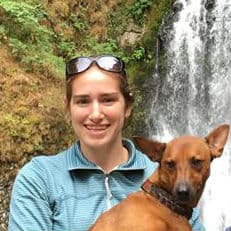

Q&A with Mamamoni founder Nkem Okocha of Nigeria.
Like many successful microlenders, Nkem Okocha checks in regularly with the recipients of her loans. Unlike traditional lenders, she also checks in with their kids. Pegging interest rates to children’s school attendance and improved performance is all part of Nkem’s plan to to break the cycle of poverty in her neighborhood in Lagos, Nigeria.

Nkem, (who goes by Novine on World Pulse), began her social enterprise, Mamamoni, in 2013. After training over 1, 000 women in her community in vocational skills, she expanded her offerings this year to include microloans. The lending program is nearing the end of the pilot phase with the first five loans, and Nkem is already overwhelmed by demand for the innovations she’s introduced to her community, such as mobile phone banking and incentivized microloans. As Nkem prepares for the next batch of loans and the next phase of her program, World Pulse caught up with her to discuss the successes and challenges of her work.
How did Mamamoni come about?
When going to my office, I would see women; they are just sitting around idle. Most of them, their children cannot go to school because their mothers and fathers are not able to afford their education. After I resigned from my job in banking, I said to myself, what can I do for these women? Some Of them used to come to my house and I would give them food items.
I said, this cannot continue. How many people am I going to give money? It’s Not that I have much money. I have to think of something. What I did was to start empowering them with vocational skills. First we taught them how to make liquid soap, how to make bags, how to make different handicrafts. Then I said, we throw these women out to start a business. Most of them need funds and these funds are not forthcoming. I said, okay I have a little background in mobile money. I decided tostart making them banked through mobile money, turning their phonenumbers into bank account numbers.
After that I thought if they can make financial transactions with their mobile phones, we can use the mobile phones as a tool to give them loans. So after I enrolled in an incubator for six months I started the lending phase of my program.
What motivates you to do this work?
I lost my father 18 years ago. In my culture, when a man dies some feel it is the mother that killed the father. So my mother was left alone. She wasn’t working when my father died. She had to start fresh; she had to educate us. It was really a huge challenge. I saw what she went through. Later someone gave her a little cash to start a petty business. It was through that petty business that she was feeding us, and we were going to school. She was selling tomatoes, vegetables, palm oil. If not for the little business she was doing, if not for the person who gave her that little cash to start that business, I don’t know where we would be.
She was not educated, and she said if she had gone to school our whole lives would have been different. She made sure we went to school.
My bachelor of science in banking and finance was done part time because I had to help the family. A lot of women, I’ve seen other women in my community, most of them go through these challenges—even those who have husbands, because of the economic situation in Nigeria.
Can you tell me more about your approach?
Before we give women the loans, they must come to our vocational training. You need to start with soft skills, you build the capital, and you can start up something. Most of the skills we teach them are skills you can learn in a day or two. We teach them to make products needed in their community that everybody uses almost every day. We teach them financial literacy. Then, we give them the loans.
In our pilot we gave out five loans through their mobile phones. They pay back weekly to the leader of the group. Also, these loans are given with certain conditions. We are going to give you a reduction in interest rates if you commit to making your children read their books daily. You must ensure that your children go to school; don’t send them out to hawk in the street.
How do you determine whether women are meeting these conditions?
Most of these women stay in my community. They are women I see almost every day. I go to check up on them. When I go there in the morning I see the children are not in the house. They have gone to school. Most children don’t lie. I can ask the children, “Did your mother get the book? Let Me see the literature book your mother bought for you. ” In Nigeria here, we do three terms in a year. To know if there is an improvement in the performance of the child, we are going to compare their last term results with the present results.
Did the loan recipients have any form of banking before Mamamoni?
They had no form of banking. Maybe they had money they kept in their purses or in the house. They had no bank account. Other lending institutions, when they give them loans, they ask them to go there physically to give money to the leader. With our form of lending we don’t need to do that. With the mobile phone we just send the money they are paying back weekly to the leader and the leader forwards to Mamamoni.
It sounds like mobile banking has been key to your successes.
yes. Normal banking requires you to go to the bank to open an account. They will tell you to bring a form of identification. They tell you to bring a utility bill and a passport photograph. Most of these women don’t have any form of identification. Most of these women are illiterate. And some, they don’t pay utility bills. It’s a barrier going to the bank. With our program, all we need to open the mobile accounts for them is just their first name, last name, and their phone number.
What impact are you seeing so far?
It’s one thing to have a skill, you know how to do something, but the funds to start a business has always been a challenge for these women. The loans help them to expand their business, or to start their business. I have a woman—she’s a widow, she sells food daily in the street. When she got this loan, she used it to buy foodstuff materials in bulk. We also have a younger lady, she’s a hairdresser. She used the loan to buy materials for her hairdressing shop. We have another lady, she sells kerosene for cooking. She used the loan to get more products to sell.
It has made a huge difference in their lives. Before there was nobody ready to give them money because they did not have collateral. And if you go to the bank, the bank will tell you that you need transaction history and these women don’t have that.
Are the women repaying the loans?
They pay back weekly and they pay on time because the main thing is that these women, we have a relationship. We are hoping to partnerwith different organizations to bring more incentives. This might be educational materials for their kids, or it might be cooking materials. The women want to belong to our ecosystem because they know what they are gaining will be more than the interest on the loans. Because of this, they will not abscond with the loans. They don’t want to hurt me because they know me. It’s my community.
What have been your main challenges?
Initially, I had challenges finding someone to mentor me. When I started I was just doing it on my own. Going to an incubator program really helped me a lot. Another challenge is finance to run this business. The initial capital came from me and my mentor. I’ve been running the vocational skills for two years using my personal funds. I contribute funds I get from building websites and other work.
After empowering them with skills, women come to me saying we need capital to start our business. Because of limited funds, we cannot give loans to all the women who make a request.
Another challenge is how to scale. When we post about our trainings on our social media pages, we have people from other parts of the country telling us, we need your program here. Why are you in Lagos only? It Goes back to the limited funds. We had people telling us, we need you in Kenya.
We need partnerships to reach more women. We need that distribution network. I believe if I had the right mentors, the funds, and the right partnerships, then we could empower more women.
Also, the government should do more to help. We need more innovative programs to help lift women out of poverty. When I started this work people were like “these women, are they your family? Why Are you helping them? ” We Cannot just leave women like this. You need to see the joy on women’s faces when you teach them skills. Many are older, but after learning these skills you’ve given them a fresh start on life.
Is there anything else you’d like to share with the World Pulse community?
Education is key. I believe if I had not gone to school I would just be one girl in one village selling vegetables like my mother used to. Since I am educated now my mother no longer sells vegetables. She has her own shop where she sells clothes and all the children are educated now. A burden has been lifted off her shoulders.
Also, women should stop waiting for people to push them to become who they are destined to be. When my father died and everybody abandoned me, I said “Oh. I’m not waiting for anybody. ” I learned different skills. Basically women should have more than one skill to help them generate income. We need to stand up and fight for ourselves.
Editor's note: You can connect directly withNkem Okocha on World Pulse. If you are interested in microfinance and the issues raised in this story, join the Economic Empowerment Groupand add to the discussion.
- Economic Power
- Technology
- Northern America