
SAUDI ARABIA: Claiming Our Right to Drive
Aug 9, 2020
story


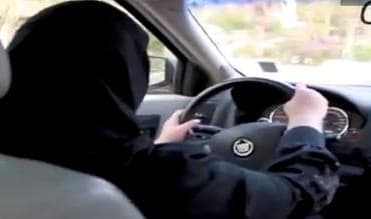

Today—June 17—women across my country will drive through the streets in what may be the largest act of defiance against Saudi Arabia's ban on women drivers. Last night a few women revealed through social media the locations where they plan to drive, exposing themselves to possible arrest.
In 1990, during the height of the Gulf war, 47 women drove around Riyadh in the last major protest of the ban. I was one year old at the time. Some of the women were arrested and a few lost their jobs. They were widely characterized as immoral, and the male members of their families were deemed 'failed men,' unable to control the women of their homes.
Now in 2011, Saudi Arabia is still the only country that bans women from driving, and the same arguments still dominate the debate. Inspired by changes sweeping throughout the Middle East and North Africa, women in my country have unearthed our buried dreams yet again.
This time we are much stronger. Saudi women’s rights activists have been building a campaign for months, calling on women to begin driving on June 17. I have been inspired watching young women join with older activists like Madiha Ajrousha, a psychotherapist and one of the drivers arrested in 1990. Ajrousha is now using social media for her activism—a tool that wasn’t available to her 20 years ago.
As the energy around this campaign grew, so did efforts by authorities to stop it. On May 21, Manal al-Sharif was arrested after posting a video online that showed her driving with her brother and his wife as passengers. She did not violate the ‘guardian law’. She did not violate the dress code. She did not violate the traffic law. A woman driving a vehicle is not considered a legal crime, but a moral crime. The traffic police called on the Promotion of Virtue and Prevention of Vices police to escort al-Sharif for questioning. She was released and then re-arrested the next day.
Al-Sharif, a 33-year-old IT consultant and single mother, is one of the organizers of the June 17 'Women2Drive' initiative. She was released from detention the second time only after she signed an affidavit declaring she would cease participation in the campaign.
But her message is already out. And today, despite the threat of arrest, many Saudi women intend to start driving on their own.
The Road Ahead
As the first woman in Saudi Arabia to achieve her high level of IT certification, Manal al-Sharif is an example of the recent success of girls’ access to education. It was once taboo to talk about educating girls in our country. Now women surpass men in higher education, excel in many areas, and enthusiastically give back to our community. Today’s arguments against women driving are frighteningly similar to the arguments of previous decades against women’s education. I have grown up listening to excuses like, “If women are allowed driving today, tomorrow they will ask for nightclubs.”
I do not have any brothers, and our family cannot afford a driver or maid. My dad has driven all six women members of our family throughout our lives. We all coordinate our schedules and adjust them according to my father’s availability. It’s a daily ritual in our family. Since my sisters got married three years ago, the pressure has lessened, but my father still drives my sisters whenever their husbands are unavailable. Although I enjoy my dad’s company, it sometimes becomes a source of tension in the family. I like that men in Saudi Arabia share responsibility in running a family, but I hate to see my father—who is in his late 50s and works fulltime—having to drive us around everywhere.
[paging]
In 2005, a member of the Shura Council (Saudi parliament) proposed removing the ban on women driving. He was instantly met with ferocious opposition by fellow Council members and citizens alike. He argued that women drove camels during the time of the last Prophet and if he lived in this era, his wives would be driving a car. Many prominent Saudi scholars agree. Former Saudi information minister Iyad Madani was also very vocal in supporting women’s driving, and once called on women to apply for driving licenses.
Prince Talal, the King’s half-brother, hired the first Saudi female pilot for his private jet, yet she cannot drive her car by herself to reach the airports. We are having the wrong conversations.
Even the king agrees that women will eventually need to be allowed to drive, but his lack of a time frame is frustrating. We have been waiting aimlessly for too long. Will women be given the right to drive in my lifetime?
Road Blocks for Activists
Some women who plan to participate in the June 17 campaign have posted their intentions on social networking sites. Others have kept their plans quiet, out of fear of being tipped off by neighbors or colleagues. I spoke with one woman who wishes to remain anonymous, and she told me she plans to drive on June 17, but is trying to remain as discreet as possible until then. She doesn’t plan to post her experience on video sharing sites.
Women own the titles to a large percentage of Saudi Arabia's cars, but due to the driving ban, few women know how to drive. I come from a middle class family. I don’t own a car in my name. I have only traveled outside the country once in my lifetime, and I don’t have an international driver's license (which campaign organizers emphasize is needed to participate). I am deeply disappointed I won’t be able to participate in this historic opportunity.
Jaber, a 32-year-old married woman, doesn't have a license either, but she unequivocally supports and encourages women to participate.
“While we have our own car parked in the garage, I find myself going in taxis just because there's no man available to drive my own car,” she says. “Men say they want to treat us as diamonds by giving us chauffeurs.” She says that men can’t swallow the fact that a woman can function independently.
Prominent activist Wajiha Al-Huwaider won’t be driving a car on June 17 because she doesn’t own one. “I refuse the law that requires bringing a guardian in order for me to buy or rent a car,” she posted on a social networking site. “I refuse to be humiliated like this... I refuse the unfair male guardianship law that deprives women from their basic rights. But, I will support the campaign in my own way.”
Another woman I spoke with wishes to drive, but says she “just can’t.” Because of her foreign nationality, she believes she is more likely to be intimidated or even deported.
There are also women who support the right to drive but disagree with the tactics of the campaign. Sara, a prominent business woman asks, “How about laying the foundation first? Can we meet with the minister of transportation to see how we can get better transportation options for women—especially those that cant afford drivers or buying their own cars? lady only buses?” she suggests on her blog.
I agree that we are a car-obsessed nation and we need a better variety of transportation options. It breaks my heart to see a transport infrastructure that does not cater to women—as if planners never imagined a public transport system would be used by women as well as men.
Not Afraid
The organizers of the June 17 campaign say the goal is to retrieve our rights as women; it’s not just about driving a vehicle. The group aims to take on other issues as well, like creating the first Saudi female soccer team. Women driving cars will inevitably lead to calls for appointing female public police, paramedics, and more women in the judiciary system—and this scares many.
Although detractors have attempted to sideline the driving campaign by characterizing participants as members of \"third parties,\" organizers say the action is not political. “We will drive on June 17 carrying pictures of our king and flags of our country.”
[paging]
The group criticizes local media reports for spreading false stories of members being arrested and interrogated. They released a statement saying, “Such attempts by the press are aiming to scare public away from the idea. Little do they know our women fear none but Allah.”
Women driving openly in the streets will break barriers of fear that have prevented us from seeking rights in our society. The guardian law in Saudi Arabia states that a woman cannot obtain a passport, report a birth or death, or open a bank account alone. She must seek permission from her male guardian, who may even be her own son.
I remember how surreal it felt when I was asked for my dad's permission when I applied for a local university: In my family, we inform each other and seek each other’s permission for things—I don’t see the need for my father's official signature.
Along with the driving ban and guardian laws, Saudi women are seeking to reform laws that disadvantage us in the workplace. Recently the government announced new plans expected to create at least 70,000 new jobs for Saudi women; the Shura Council issued a well-timed statement saying women can participate in future, unscheduled municipal elections; and King Abdullah bin Abdul Aziz al-Saud issued a decree that men will no longer work in lingerie shops, which could help create thousands of jobs for local women. Until the decree, women had to buy undergarments exclusively from men, often facing harassment. The moment has finally come when we no longer have to be embarrassed to buy our bras. But I am only cautiously optimistic. Women were given permission to work as cashiers in supermarkets only last year. Then, a few months ago, that permission was revoked. I will only believe in my country’s reform when I can see it and touch it.
Shifting Gears
My father taught me the basics of driving, and I continued studying on my own because I believed the wait would be over by the time I turned 19. I am now 21 and still waiting for the government to issue local licenses and open driving schools for women.
If I could drive, I would take my father to clinics and pharmacies to keep him from having to drive while in pain from bladder and kidney stones. I would drive my mom to work so she won’t have to spend half her salary on hired drivers. I would drive my sisters around so they won’t have to wait for their husbands. I would travel with my female friends to explore the natural beauty of my country.
Instead of filling women’s minds with fear of rape and harassment, and men’s minds with rage, scholars and policy makers should be promoting Saudi values of peace and security. Instead of warning women against violating the ban on driving, the interior ministry should be warning men against committing violence against women. Why do we always talk about foreign values taking over our country instead of propagating our own values when we most need them?
Saudi Arabia plays a vital economic and religious role that influences the perceptions of the world's one and a half billion Muslims. We are the only Muslim country that bans women from driving. I hope we will one day become unique for a different reason—for setting the example of women's rights and social development for other Arab and Muslim countries.
- Human Rights
- South and Central Asia