
Sanitary pads and poverty: my story
May 12, 2023
story
Seeking
Visibility
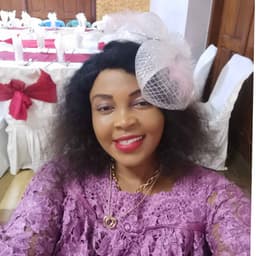

I am going to write about my menstrual story and how this has paved the way for me to become a menstrual right activist.
Growing up in a poor home is not always easy for a young girl. Every girl has the right to some basic needs which will keep her dignity and well-being. A girl needs bra, pants, toiletries and other necessities. In most poor homes in Africa, the above mentioned are usually hard to come by. Even when it is available, it is difficult to have them in sufficient quantity. If it is not pants that are not enough, it will be another basic need. Most girls just try to cope with the little they have until they get out of the poverty bondage.
I remember thag growing up and managing my menstrual hygiene was not an easy task. My first menses surprised me as it happened out of the house. The moment I saw blood on my pants, I ran home. Having had enough education in school about how to handle the first menses, I easily overcame this step. I rushed home and requested for pads which I used for that first month.
After that first month, My greatest worry was to get enough sanitary pads to last my whole cycle. Coming from a very modest home, my parents couldn't afford sanitary pads every month. Sanitary pads are expensive in my neighborhood so they are not easily accessible.
Fear of going to school and get stained, or moving about without sanitary pads. I designed a very creative strategy of getting one though not very hygienic and healthy. But I had no choice. It was either I use it or I get stained.
I will take my old panties or any other cloth that was available and make my pad. I used a cloth and a plastic paper. I will sew the cloth on the plastic. The plastic was sewn below the cloth. The role of the plastic was to prevent blood from passing through and staining my uniform. The thread was loosely sewn. I succeeded in sewing two of such. When going to school, I will use one and keep the other at home. When I return home, I will loosen the stained pad, wash it, sun it and resew it again. In the morning, I will take the second pad and leave the other one to completely get dry. Given that the duration was 5 days, every day I will loosen it, wash and resew it. It was very disgusting because I had to wash blood everyday. My flow was really abundant. I will wash and rewash and rinse with lots of water to make sure I got rid of blood and the pungent odour of blood that has stayed for long. The pad I put in the morning, will only be changed in the evening when I return from school. So it was really heavy with blood and smelly too. You know the smell of rotten meat or stale meat, that is the smell I will get when washing the self made pad. I kept battling with vagina itches frequently but I never knew it was the result of the pad. I did that for many years.
It was a terrible experience but I would rather do it than indulge in immoral acts with men inorder to get money for pads. This experience lasted for years.
Now as a menstrual health activist, I advocate for the rights of poor girls who can not afford pads. I created a Non profit association named Dr Tumasang Swiri Foundation in Cameroon. In this association, I educate young girls and carry out health awareness programmes. My aim is to let the world know the problems of young girls especially those who are living in poor conditions and who can not afford basic needs. Through advocacy, many lives can be touched.
Many girls are in the situation I found myself years ago. The luck I had was that I never got a serious infection. But many girls do get infections out of using pièces of cloth as pads. Some girls even stay at home during menstruation because they can't afford protection during menstraution. For the fear of stigma related to stains due to menstraution in school, some girls prefer to stay at home. Imagine the consequences of such on the girls life.
I advocate for every girl to have access to sanitary pads and to have a safe menstruation cycle free from stress.
During one of my outreach programmes in a rural settlement, I got testimonies of girls which made me shed tears and even see myself many years back. A little girl told me how she will use the baby's used napkin and cut it into little sizes and use it. She told me in confession that she has vagina infections due to that but her parents can't afford proper medical follow up so she uses salty water to wash her vagina and also inserts some herbs to help with the infection. If this situation is not properly taken care of, this girl might get fertility problems in future. Many girls are victims of poverty. This shows the extent to which menstrual poverty can damage lifes.
I advocate for every girl to have access to sanitary pads and to have a safe menstruation cycle free from stress. Every girl should have access to sanitary pads. Poverty should not stop girls from having menstrual pads. I call on NGOs and Non profits to work hand in hand in order to provide girls in poor countries sanitary pads.
My story is just one in a million and I hope it creates empathy in the readers so they can help girls. If we rally our efforts, we will be able to change the narrative. Together we can end menstrual poverty. We can help girls avoid stress, embarrassment, illnesses and stigma during menstraution. A menstrual period should be a blessing to girls and not a curse.
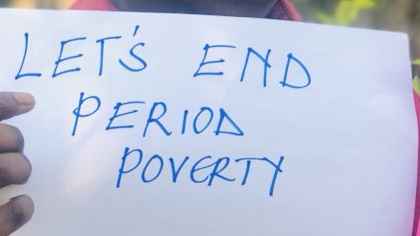
Together we can end period poverty.
One girl one pad
Solange Swiri Tumasang
Cameroon
- Girl Power
- Global