
PHILIPPINES: There is Beauty in Our Differences
Sep 24, 2020
story

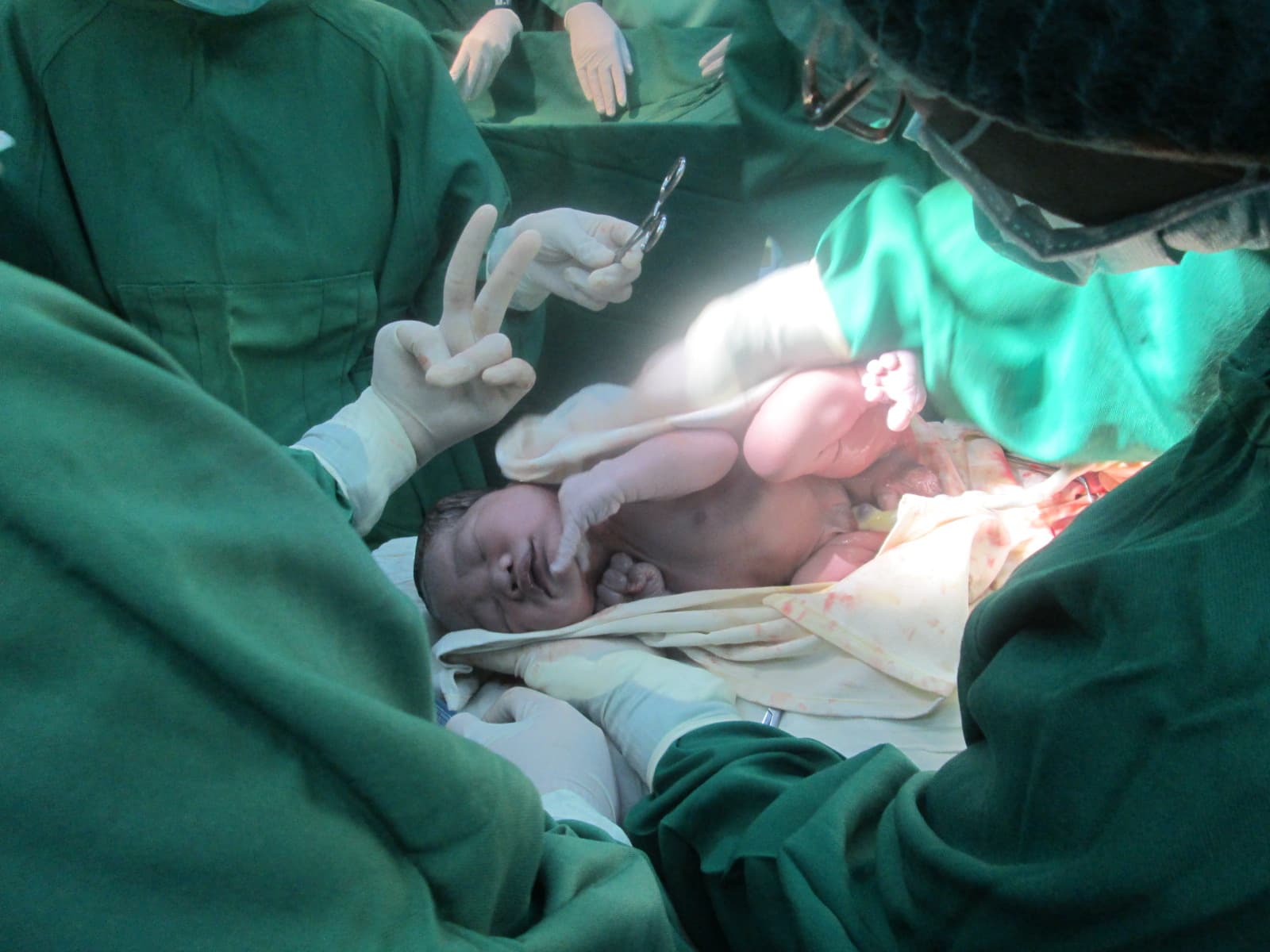
Photo Courtesy of Karen Axalan
After a difficult birth led to a cesarean section, Karen Axalan was shamed and judged. She reminds us that, as women, it is the uniqueness of our experiences that give us power.
I blamed myself for not trying hard enough. But every time I recalled my labor, I knew deep down that I had.
As women, society tries to put us in boxes.
We are to be flawless models on a magazine cover; trophy wives with beauty, body, and brains; super moms who balance home life, career, and child-rearing with ease. Or we are to be perfect mothers who give birth naturally, use all organic products, and exclusively breastfeed our babies.
If we fall short of these categories—if we were born with shorter legs, larger body frames, or less-than-picture-perfect faces; if we choose career over family; or if, like me, we give birth via cesarean section and struggle to breastfeed our newborns—society tells us we are less than worthy of praise.
When I was pregnant, my husband and I prepared for a normal delivery. We enrolled in a Lamaze class; I practiced my breathing exercises, walked, squatted, used evening primroses, and did all that my OB-GYN and Google suggested.
When my due date arrived, all I had were cramps. I exercised more and pushed myself harder so the baby would come out. Nothing.
I labored for more than 36 hours. Like a good student, I used my Lamaze breathing like a pro. Still, my cervix would not dilate. I had a dry labor for 27 hours until the fetal monitor showed that my baby was in distress. In total, I was laboring for more than 72 hours.
After all the inhaling and exhaling to relieve the labor pain, I was rushed to the operating room for an emergency Cesarean section. I gave up my dream of a natural birth to save my baby.
A few hours later, I held my son in my arms, but they took him away immediately for observation. He stayed in the neonatal ward for five days. It was not the birth story I imagined.
It pierced my heart when nurses injected antibiotics into him, and when they collected a portion of his blood for another round of tests. My baby's hands and feet were left bruised as needles were jabbed in and out of his small body. At the same time, my breasts did not produced milk. So the nurses fed him with other mothers' milk while he struggled to nurse from me.
My baby wanted to be near me all the time, and he was always crying and never sleeping. I was so exhausted. I did not know motherhood was so hard. I certainly did not witness the same from my mother who has five children. My siblings slept well and cried only when hungry, wet, or sleepy.
Six weeks after he was born, my baby was weak and lethargic. His skin turned bluish. For six weeks, I decided to breastfeed exclusively, refusing offers from my mothers and in-laws to feed him with formula. I waited for my milk to arrive just like the experts said.
My nipples got sore. Eventually, they cracked and bled. I felt so confused as to why my milk would not come in huge volumes despite frequent feeding. My baby became dehydrated.
My mother could not stand the frail state of her grandson. She, a breastfeeding advocate, immediately bought him formula milk. She quickly made him a bottle and he sucked with all his might. In seconds, he finished it and he finally got satisfied. For the first time, he slept soundly. My mother and I cried as we witnessed that event. I questioned why my milk did not satisfy him.
When we learned I was pregnant, my husband and I bought books on pregnancy and motherhood. We equipped ourselves with knowledge. The plan was a natural birth. The plan was to breastfeed. I felt I was a failure at both.
It did not help when people learned I gave birth via C-section. They asked me why I did not push harder. It did not help that most of the mothers I know gave birth naturally and breastfed successfully. In their eyes, I chose the easy way out. They told me that there are no C-sections in the mountains. There, in rural areas, women push with all their might until they hear their babies cry. They did not say that there are also high rates of maternal deaths in those areas. I knew someone who died from pushing with all her might, refusing to undergo surgery.
Still, I blamed myself for not trying hard enough. But every time I recalled my labor, I knew deep down that I had. I even vomited black liquid as I labored. It looked and tasted bitter like black coffee, but it was not coffee. The medical team tried to induce me multiple times to force my cervix to open. However, my son was way too high, stuck inside my pelvic bone. He came into this world with an almost pentagon-shaped head.
I cried silently when people judged me for delivering via C-section and giving my son formula. I hurt when people looked down on me before they had even heard my birth story. They did not bother to ask me why I did not give birth naturally, and even if some of them listened, they still concluded that I did not try hard enough.
I would hide from those people when I fed my son formula. They didn’t know how much I wanted to feed him breast milk. Years later, I read an article about a mom who lost her son because she refused to give him formula. He became dehydrated, then days later succumbed to death. That baby could have been my son.
It wasn’t until recently that I remembered I have a medical condition that makes natural childbirth difficult. I have Lordoscoliosis, a rare medical condition in which there is a combined backward and lateral curvature of the spine.
I forgot all about it. I was diagnosed during my early twenties; a doctor told me I would have a hard time conceiving a child due to the abnormal curves of my spine, and the complications that came with it. He even added no man would want to marry me if he knew I could not give him a child.
My body frame is deformed; my internal organs are affected. That explains the hardship I went through during childbirth. I now realize I am not less of a woman because I gave birth via cesarean, nor because I struggled to breastfeed.
Roses may be the most exalted of flowers, but they are not the only type of flowers. And all flowers are beautiful. It has taken me a long time to realize that this metaphor applies to our experiences as women, as well.
As women, we struggle with depression at alarming rates. It could be because society places a very high one-size-fits-all standard on everyone, but especially on us. A woman should be this and that. If not, we are put down, bashed, and bullied.
Our beauty lies in our ability to give life—biologically, or through our artwork, our careers, our ministries, or our advocacies. Our beauty lies in our talents, whether we are able-bodied or differently abled. Our beauty lies in our skin, whether it is brown or black or yellow or red.
The world would be dull if there were no diversity in humanity, or if the colors in a rainbow were only green and violet.
Let us embrace our uniqueness and beauty, and let us stop apologizing for our skin color, our height, our weight, our civil status, our menstrual cycles, our moods, or our birth stories—or our lack of a birth story.
We are flowers that bloom in the plains, up in the mountains, along the rivers, within the rainforests, in the deserts, and under the vast ocean. We complement the roses in a garden of flowers.
Let us stop measuring ourselves from the scales of mass media and societal expectations. The world might only exalt the roses. But let us bloom as daisies, chrysanthemums, tulips, petunias, irises, lavender, lilac, sunflowers, orchids, lilies, dandelions, poppies, sampaguita, edelweiss, marigolds…
Let us celebrate our differences; let us celebrate and bloom together.
STORY AWARDS
This story was published as part of the World Pulse Story Awards program. We believe everyone has a story to share, and that the world will be a better place when women are heard. Share your story with us, and you could be our next Featured Storyteller! Learn more.
- Health
- South and Central Asia