
PAKISTAN: My Father, My Hero
Dec 19, 2019
story
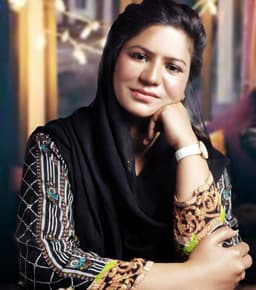

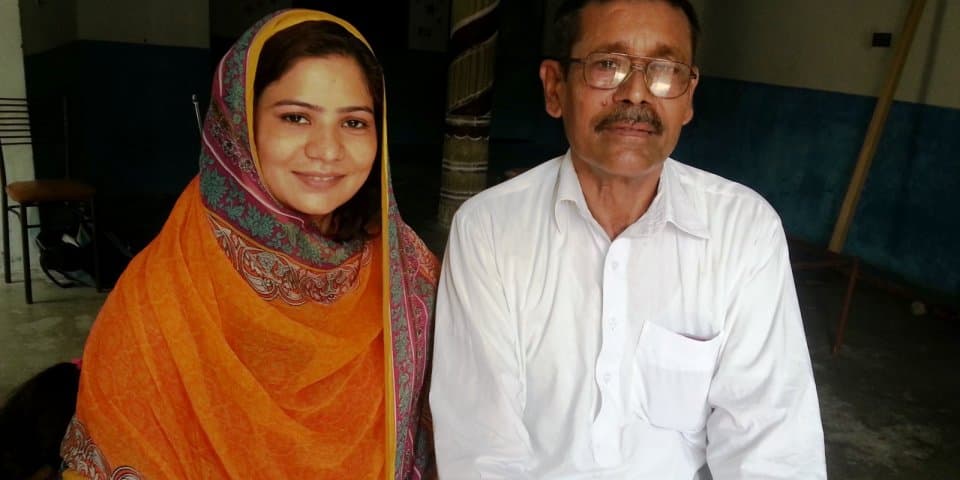
When Sister Zeph receives threats for teaching girls in Pakistan, she remembers the lessons her father taught her.
In a world where girls have no right to their own identity, my father has allowed me to live a life of my choosing.
I am the third born in a family of four daughters. I was 3 years old when my youngest sister, Ashi, was born. When she was just one day old, my father’s younger brother, my uncle, came into our home and started beating my mother.
He pulled her hair and threw something heavy at her head. The blood flowed from her head to her legs, to her feet, and then to the floor. No one stepped in to control my uncle, and he beat my mother badly. Still, she did not cry, as she already knew this would happen. She had given birth to a fourth daughter, and in a society that favors boys, only women who give birth to male children are given respect. The culture believes daughters cannot be strong.
Ashi was crying a lot, and my mother tried to reach her so that she could feed her. Then, my uncle turned his attention to me. He took me in his hands and ran towards the roof of our house. He wanted to throw me off the roof. We were four sisters, and he wanted us to die. In his mind, we were a burden on the family.
But when my father, who had been away, entered the house and saw what was happening, he shouted at my uncle and demanded he stop right there. I was safe. My father brought my mother to the doctor, and we stayed for a night in my father’s friend’s home. Then we all went to stay at my mother’s parents’ house for our safety.
After a few days, my father left his parents and brothers and stayed with us in another city. He told my mother that they would not try to have any more children in expectation of a son. Instead, they would bring up their four daughters as if they were sons.
And so, when I was about 5 years old, my father taught me to read the newspaper, to listen to the news on TV, to watch cricket matches, and to improve my English speaking by watching BBC and CNN.
He would say, “By watching films and dramas, you will waste so much time. But by watching these things, you will increase your knowledge, and it will shape your future. ”
He was right.
Today, women who had been university students take lessons from me, although I have never been to school beyond 7th standard. I have knowledge of history and current events because of what my father taught me. He even showed me how to smell the future of our world.
My father was the first person on this earth who understood me. He supported me when, at 13 years old, I made a choice to leave my school because I was facing discrimination.
He taught me to keep love in my heart. He said, “If you will hate those who hate you, you will increase hate. But if you love those who hate you, you will multiply the love. ”
That year, he allowed me to open my own school in the courtyard of our house, even though everybody else made fun of me. I was just 13, but I decided to build my own school where girls could learn without having to face religious discrimination, beatings, and disrespect. I created a place where all students can have equal opportunities to learn and to explore whatever they want.
Then, in 2006, nine years after the creation of my school, gunmen attacked my house. I was 22 years old. Policemen told us to leave our village for our own security. My father refused. He was the one who came back to the house with me and helped me start the school back up. He brought my mother and my sisters back home and convinced them to go door-to-door with me to recruit students.
To this day, my father, who was badly injured in an accident years ago and cannot do any work, arranges water for my students. From his own money he buys candies and fruits for them. He sits in the streets during school hours to look for suspicious persons who may wish to harm my students or me.
In Pakistan, many think girls are born to get married, to produce children, and to do household work. They believe it is useless and a waste of money to educate them, and that it is a great crime against culture to send women outside of the home to do a job. They fear that if a girl is educated, she will become clever and will go against the family’s honor.
In 2013, when people attacked my house, my father was the only man in the whole village who stood up to them and tackled them. Even after that, he told me, “You will not stop doing your work. Our government cannot solve all of our country’s problems alone; we common people have to take a stand with our government. Those who threaten or attack us cannot do anything bad to you. They are cowards, and they are afraid of you because you are educating girls. ”
Today, only one of my mother’s sisters and one of my mother’s nephews like to spend time with my family. All of our other relatives have boycotted us. They think my father has given too much freedom to his daughters.
As an educator of girls in Pakistan, I regularly receive threats. People make up stories about me, they attack me; they think I am too bold. They think I threaten the Christian community because 99% of the girls I teach are Muslim.
My father tells me to keep going. He says, “Sister Zeph, you are the only hope. You are a candle who has to enlighten all lives in this country through education and empowerment. Never give up, I am with you. ”
In a world where girls have no right to their own identity, my father has allowed me to live a life of my choosing.
My father is an example for our world. If all men supported their daughters in the ways my father supports me, more girls would be able to achieve their goals despite difficult circumstances. More girls would be courageous and empowered to take the bold steps needed to support women and girls in our communities.
If all fathers stood up for their daughters, more girls would be inspired to do as I have done.
How to Get Involved
You can follow Sister Zeph and her school for girls via her website and on Facebook and Twitter. You can also help fund Zephaniah Free Education to continue to support women in rural Pakistan.
- Girl Power
- Positive Masculinity
- Education
- South and Central Asia