
PAKISTAN: I Am a Fighter
Apr 30, 2021
story
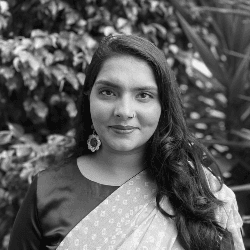

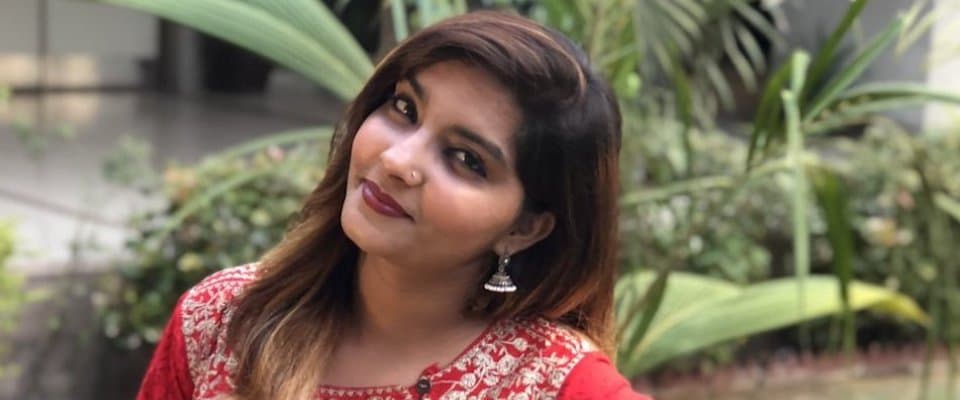
Vlogger and journalist Laiba Zainab has been blackmailed, harassed, and threatened for daring to stand up for women’s rights in Pakistan. She refuses to be silenced.
Within three days of publishing the vlog, I received death threats.
I am a woman who lives in Pakistan. This year, I turned 23, and the past few years have been nothing short of a roller coaster ride. I have seen good, bad, and worse times in my life. No one in this universe can invalidate my experiences as a woman living in a society deeply rooted in patriarchy.
Today, people know me as a strong, bold, and blunt journalist, but this wasn’t always the case. The path was never easy, and it still is difficult because many people living in our subcontinent don’t feel comfortable with the idea of a woman who gives voice to not only her suffering, but to the suffering of others as well.
When I was in 8th grade, I wanted to be an RJ (radio jockey). I still remember how I used to practice my opening lines at school before my first class began. Back then though, I chose the sciences and did my intermediate in pre-med. It was my family who wanted me to be a doctor, not me. After failing the entrance exam twice, I somehow convinced them to let me try my luck in a field I was interested in. I took admission in BS Communication Studies in Bahauddin Zakriya University Multan, one of the largest public sector universities in South Punjab. This was a turning point in my life.
My family had a hard time accepting my choice, as most of them were doctors. As the saying goes, “Doctor k bachon ko Doctor bn’na chahiye”: kids of doctors should become doctors. My mother and my sister, however, stood by me and gave me the strength to pursue my dreams. I joined a performing arts organization called “Makhotay” and started performing theater on social issues. This was radical because, in our part of the world, women who perform theater are not considered “respectful”. According to societal norms, “Women belonging to good families don’t indulge in such activities. ”
I broke another taboo when I started my journey in the NGO sector. Society also says, “You know, good women don’t work in ngos either. ” These common norms in our society spurred on my rebellious soul, and I never gave up. There were numerous times when my loved ones let me down, insulted me, shattered my soul, and made me believe that I was not a good woman. .. But then I thought, who really needs a certificate from them? “Log Kya Kahein Gay. ” What people say, should not, and cannot define me at all.
In my 7th semester I started a job as a junior reporter for a national broadcast channel. I was never convinced by the idea that women “should be confined to soft stories only”. Breaking this unwritten law was not easy at all, and those working as my seniors had a hard time digesting it. In my first month there, I got a complaint from my head office that there are very few female reporters associated with the media house and I don’t “talk like a female” and “don’t report like them either”.
I was heartbroken, but I am thankful to my former boss. Jamshaid Rizwani told me that I am not supposed to conform to anyone’s standards, that I should be myself, and report the way I want to. After that, I never stopped. One day, he told me that I am one of those reporters who reports on everything with confidence, one of those reporters who is not afraid of any place or any crowd. Getting this compliment from a person who is an institute himself meant a lot to me and made me feel so proud. It still gives me goosebumps.
But, in this country, a woman’s achievements come with a price: My bold and blunt nature has resulted in attempts at character assassination by some of my colleagues and even their family members. I used to work for a Ramzan Transmission from 2pm until 5am. A lot of people took issue with the fact that “a girl stays in the office all night long”. It was unheard of in the media market in Multan. The wife of a fellow reporter who worked on another channel even ridiculed me. According to her, good women shouldn’t work all night.
To be honest, I didn’t let that incident impact my work or my thought process. I wanted to prove myself, not only for my own satisfaction, but to pave the path for the women who have joined the station after me.
The backlash against me intensified after 2018’s Aurat March, a protest organized in observance of International Women’s Day. Four days after the event, I made my first vlog. At that time, no other woman in South Punjab was vlogging.
The Aurat March was a demonstration against patriarchy, and there women voiced their sufferings. One poster declared that men should “Khana Khud Garam Kar Lo”—or “warm their own food. ” There was backlash on social media, and that backlash became the topic of my first vlog. I had no idea that it would go viral. Within three days of publishing the vlog, I received death threats, rape threats, abuses, and character assassination not only from men, but from women as well.
There were a lot of people who appreciated my effort, but the backlash was unbearable, AND I was not prepared for it. After a few days, I regained some strength. I am thankful to my loved ones who stood by me at that time.
After this year’s Aurat March, I faced similar backlash. This time, however, I was expecting the abuse, and I had more strength to fight back. The abusive behavior of social media users actually gave me more strength to fight back against patriarchy. Now, I am associated with a digital platform and my vlogs there are my voice against patriarchy and the oppression that comes with it.
I am a woman who was blackmailed, and mentally, physically, and verbally harassed. I am a woman who complained about the incidents of harassment and faced the consequences, a woman who succeeded in setting new trends for other journalists, and a woman who is still struggling every day.
For me, every new day is a new fight, but I gather my strength because in the end I have to win this battle—not only for myself, but for those who stood by me, and those who will join this path after me. I don’t believe in the characteristics of a good woman as this society defines her. I know who I am, and I am proud of myself.
This story was published as part of the World Pulse Story Awards program to commemorate the 16 Days of Activism against Gender-based Violence. We believe every woman has a story to share, and that the world will be a better place when women are heard. Share your story with us, and you could receive added visibility, or even be our next Featured Storyteller! Learn more.
- Gender-based Violence
- Human Rights
- South and Central Asia