
OMAN: Why Are Periods Such a Taboo?
Jun 7, 2023
story
Seeking
Visibility


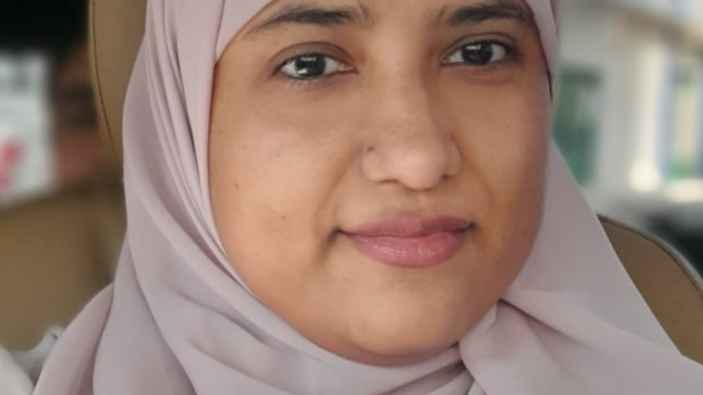
Samina Namoji believes education can break the silence and stigma around menstruation.
“It is rightly said that to make the change, we must be the change. Hence when I became a mother to two boys, I decided to educate them about periods instead of treating them like a taboo topic.“ – Samina Namoji
As we stood in line for our school assembly and the sun shined brightly in our faces, I heard a gasp. "Oh no, look at her dress,” the girl standing in front of me said. “She's got it.” She pointed to a girl a line or two ahead of us, and her friend leaned forward and also gasped. Suddenly everyone whispered and pointed in that direction.
Curiosity got the better of me, and I stood on my tiptoes. To my horror, this girl's white PE uniform had a big blood stain on it. Older students jumped into action and informed the teachers, who promptly whisked the girl away. Over the next few days, this incident became a hot topic of conversation. It was also my first introduction to periods.
New to all this, I had no idea what had happened or what all the commotion was about. All I could think of was whether this poor girl suffered from a deadly disease and if she would die or overcome it. When I saw her healthy and well a few weeks later, I breathed a sigh of relief.
I could only fully comprehend what had happened to the girl much later in my life when I got my first period. As I embarked on this journey and my mom handed me my first sanitary napkin, I remembered when I had stumbled upon her secret –– her stash of sanitary napkins hidden under her clothes. While I was trying to make sense of the sanitary napkin, she quickly pulled it out of my hands and put it away. “This is not something to play with or take outside the room,” she said.
I didn’t understand what my mother shrouded in secrecy at the time. But once I got my period, I had the freedom to ask her all the questions I had tucked away for so long. And I asked one after the other!
I was mortified when my mom told me she, her mother, and other women used cotton cloths before the sanitary napkin was widely available. After washing these cotton cloths, they hung them in designated areas of their laundry rooms to dry. When I asked her how they managed their periods during school, trips, or special occasions, she smiled and said they didn’t go out during their periods.
Menstruation taboos linger today. Some countries prohibit women from attending religious functions and entering places of worship during menstruation.
In other places, a menstruating woman moves into a separate room for the duration of her cycle, and someone will bring her a special meal devoid of spices or salt. Scientifically speaking, menstruating women and girls are asked to eat food devoid of salt and spices, as this kind of food can cause water retention in the body, further leading to bloating. It can irritate your stomach and aggravate cramps. But I firmly believe this shouldn't be imposed as a strict law.
Elsewhere, people think they can be contaminated just by touching pickles with a menstruating woman. As this food is considered sacred, menstrual blood is believed to contaminate the pickles.
It comes as no surprise that girls seldom seek help or support with their periods. Many girls haven’t had the luxury of someone explaining menstruation or how their bodies change during puberty. Rather, people often tell them how impure and sinful they are.
It’s taboo to talk about periods. They're called everything from “chums” to “Auntie Flo” to “that time of the month.” Women and girls will simply say, “I have my P.” The challenge lies in overcoming the stigma surrounding menstruation and making people understand that it is nothing shameful but a natural biological process of the human body.
It is rightly said to make the change, we must be the change. Hence when I became a mother to two boys, I decided to educate them about periods instead of treating them like a taboo topic. We openly discuss every question they have about the human body, ensuring they get all the correct facts rather than listening to some old wives' tales.
Our open conversations have significantly impacted my boys’ perception of periods. My monthly cycles are marked by more empathy and care from them. They don’t shy away from making me as comfortable as possible, taking over my household chores, and giving me more time to rest. I hope and pray that they will continue to shower the same compassion and care to other women around them. If they can do so, I would consider my parenting to be a job well done.
Tearing down the stigma surrounding periods starts with proper education. Teaching boys about periods will help them understand and empathize with what women go through during menstruation – for example, many boys think that periods are gross and that girls should control their bleeding. Constructive discussions help eradicate these preconceived notions.
When we provide long-term solutions like proper education and a better understanding of menstruation, all people will be able to thrive and not just survive. Nongovernmental organizations must impart proper menstrual hygiene and safe disposal practices at the grassroots level.
Schools and homes should be equipped with toilets and proper sanitation to ensure that no girl misses school because of her period. Countries must address the value-added tax levied on tampons and other menstrual hygiene products.
Let’s shed taboos and spread awareness in our communities to normalize periods.
STORY AWARDS
This story was published as part of World Pulse's Story Awards program. We believe every woman has a story to share, and that the world will be a better place when women are heard. Share your story with us, and you could receive added visibility, or even be our next Featured Storyteller! Learn more.
- Health
- Positive Masculinity
- Salud menstrual
- South and Central Asia