
Oh what a ride it has been!
Jan 21, 2015
story
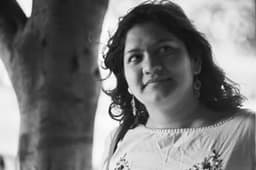


I joke with my friends that I am a product of colonisation. My mother is of British descent, born in India in 1947 – the year India won her independence from the British Raj. And my father is of Sindhi descent, whose family migrated from the Philippines to Sindh (Pakistan) to India in 1947, as refugees in the newly partitioned India.
My mother is strong, having raised four of us kids on her own as a ‘phirang’ or foreigner (as White people are called in India), since my father worked abroad as a ship’s captain most of the year. I was raised differently from other Indian girls around me and found myself more vocal about gender matters.
As a teenager in Bombay in the early 90s, I noticed the strong impact that the onset of cable TV had on everyone's lives. Simultaneously, I noticed how dispassionate middle class urbanites had become about the extreme poverty around us and I decided that I wanted a career that somehow used media for good.
I got a scholarship to study mass communications and theatre at Gustavus Adolphus College in Minnesota and later worked at Berkeley Community Media, as a manager for 6 years. At BCM, I became inspired by the idea of people making their own media and broadcasting their programs on local public access TV. This made me research whether community media existed in India and I learned that the concept was still nascent with community radio policy having only been recently publicised. From my experience at BCM, I felt that community media could be transformational in India and decided to move back so I could contribute to its development.
After spending some time on the flip side, working for corporate media companies in Bombay as a producer, I yearned to get back to the non-profit world that I was more meaningful to me. I began working with Video Volunteers, who were friends in the community media field in India, and got a glimpse into the challenges of training rural communities that lacked experience, education and technical skills in media.
Shortly thereafter, I was thrilled to learn that a proposal I had written earlier, won the 2009 Digital Media and Learning competition, sponsored by the MacArthur Foundation. Women Aloud Videoblogging for Empowerment or WAVE was born, and I started working around the clock to implement my experimental model. With the help of the $100,000 grant, we were able to recruit one young woman from each of India’s 28 states, buy video cameras, and train them to regularly ‘blog on video’ about social issues that mattered to them.
The website we set up at www.waveindia.org and the project has been more successful than I had imagined, and has deepened my conviction in what I do. Naturally, I was drawn to apply to the Voices of the Future training program because there is so much synergy between the missions of World Pulse and WAVE, and I am keen to expand my knowledge of citizen journalism so I can be a better trainer.
- South and Central Asia