
NIGERIA: My Story Proves We Must Invest in People with Disabilities
Apr 20, 2022
story
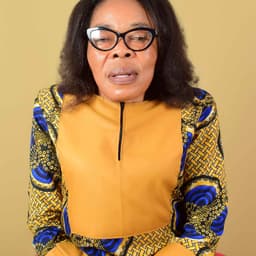

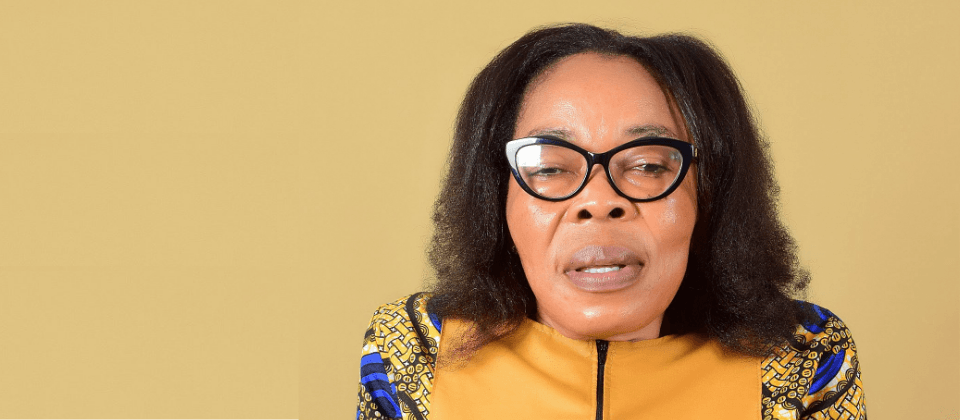
Celine urges the Nigerian government to protect, educate, and invest in women with disabilities so that they can lead lives with dignity.
Social justice can only be achieved when the world becomes fully inclusive and protective of people with disabilities, especially women like me who are in rural communities and the most vulnerable.
I developed angular kyphosis in my childhood after a protracted sickness. All my life, I have faced immense challenges — from stigma and bullying to the threat of kidnappings. But I have also persevered and now advocate for the lives and dignity of people with disabilities.
This is my story.
When I developed my disability in childhood, my widowed mother was advised to throw me away in the evil forest or withdraw her care and allow me to slowly die.
I was told that people with disabilities have been cursed by God; that my disability was because of my sin. This was hard for me as a child, and it took a lot of time for me to understand that they were wrong, that God was not punishing me. People with disabilities are created by the same God and our existence portrays the diversity of God’s creation. Religious communities must refrain from misleading people that disability occurs because of the sins of individuals.
Growing up with a physical impairment, people bullied me and called me names, even with my mother and elder brother protecting me. When I walked on village roads, people pointed at me scornfully and children avoided me. Most times I went deep into thought and silently cried, “Why me? ”
I questioned my mother why I looked different from other children. She told me not to mind what people thought or said each time. She reassured me of her love and that of my elder brother, Emeka. My brother always carried me on his back and was ready to physically confront the children who bullied me. Their love and care helped me throughout my childhood.
Still, the trend of targeting persons with angular kyphosis for ritual killing loomed over me. My disability means I have always been a target. Growing up, my mother often received warnings not to let me out of the house because of this risk. Yet, we defied this advice, even when we knew these evil killers trailed me.
When I was 16 years old, two kidnappers cornered me with their van. When the van stopped in front of me, I sensed danger. All I could do was summon courage. I quietly said a few words of prayer and moved a few steps. After a few minutes, one said to me, “We are warning you for the last time: never come out or walk alone on this road again! ”
They retreated into the van and zoomed off as if someone was pursuing them. I became frightened and started running, returning to my home shaking.
Many women and girls with angular kyphosis disappear from the villages and cities of Nigeria, and no one raises an eyebrow. Very few with this condition leave their homes, they are not to be seen in public, and it’s like they don’t exist because no one sees them or hears their voice.
I have shared my experience of encounters with ritual killers on various platforms, but to date, no security provisions have been put in place to protect us.
Nigeria’s federal government passed the Discrimination Against Persons with Disabilities (Prohibition) Act in 2019 and established a national commission that has begun addressing the education, health care, social, economic, and civil rights of persons with disabilities in Nigeria.
This is a start, but until all our needs are met, the truth is that people with disabilities like me experience all the negatives that societies throw at us. Our lives are important and need to be protected. In the absence of government and community support, we care for each other. My experiences as a woman with a disability have led me to advocate for others.
The Power of Education
I formed the Divine Foundation for Disabled Persons in 2009, supporting persons with disabilities through direct support, training, research, writing, inspirational and motivational talks. My organization also provides relevant community-based programs and services aimed at empowering persons with disabilities. Through our work, we have impacted more than 1, 000 people. One thing I’ve learned through my work and life is that access to education is key.
My government and my village offered no educational support for children with disabilities when I was young. My mother had five other children to look after, making it difficult to prioritize my education. Many children with disabilities were used as objects of charity to beg for alms on the streets. The money realized from the begging was not used to care for them but for others.
I was determined to pursue an education, even though my mother didn’t have the money for my school fees. When she realized my ambition, my mother begged the headteacher of Central School in my village to let me attend school and reached an agreement that the school would not send me away.
I passed the Common Entrance examination, a qualifying examination for high school, when I was 10. Yet, when I enrolled at an all-girls secondary school in Orlu, I was rejected because of my disability. Consolation from my mother could not stop me from crying. I went on a hunger strike, thinking that I would just die in the process.
Thanks to my mother’s advocacy, I was eventually admitted some weeks into the first academic term. Other children with disabilities who had the same experience of rejection in various schools gave up hope for an education and resorted to begging on the streets.
It is said that education is a basic right for girls and women. Yet, each year tens of thousands of girls with disabilities are rejected from schools; education is not yet inclusive and women and girls with disabilities need an education to build their confidence and accord dignity to their lives.
A free education can change that. I urge the Nigerian government and schools to rise up and raise awareness about disabilities, help disabled children access education, and protect them from rejection and discrimination.
When I hear people talk about social justice, I think that it can only be achieved when the world becomes fully inclusive and protective of people with disabilities, especially women like me who are in rural communities and the most vulnerable.
Little things can make the unexpected difference. I am the person I am today, creating change because of the support of my mother, my brother, the headteacher, and the drive to see past bullying and stigma. Let us rally around disabled children and women and ensure that they too can thrive.
This story was published as part of World Pulse's Story Awards program. We believe every woman has a story to share, and that the world will be a better place when women are heard. Share your story with us, and you could receive added visibility, or even be our next Featured Storyteller! Learn more.
- Disability Justice
- Featured Stories
- Africa