
NEPAL: I Choose to Heal By Sharing My Story
Mar 26, 2021
story
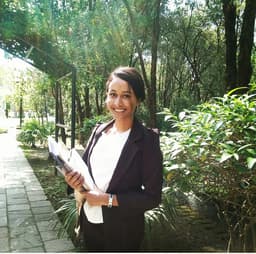

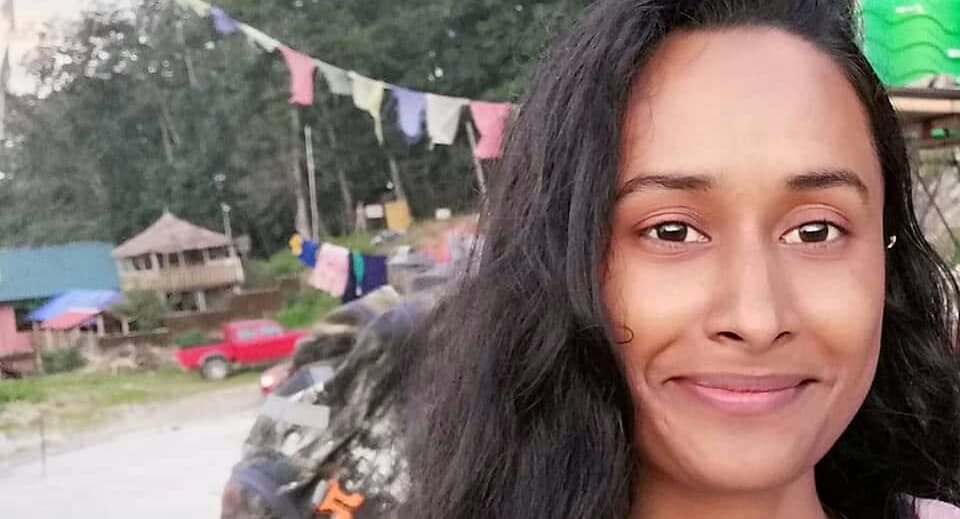
After a stranger illegally took her photo, Narayani Khadka sought justice but found a legal system compromised by patriarchy.
I alone dealt with all five men who were doing their best to prove me wrong and assure the police officer that nothing had happened at all.
I am inside a room of the police station. My mother is beside me. A man in his fifties sits opposite us. He has a tika on his forehead. In Hindu belief, tika is a symbol of purity….
Every time the thought of writing this story entered my mind, I pushed it away immediately. Recalling it makes me feel awful, but I also realize that not writing it won’t help heal my wound. So here, I choose to heal by sharing my story:
I was sitting in a chair looking out the window of a public office waiting for some official work to be done. Suddenly, my eyes stopped a few meters away where an older man, whose face was covered with a mask, was holding his mobile phone pointed towards me. It looked like he was secretly taking my picture. Our eyes met and he walked away. I was not sure if he had been taking pictures or just using his phone. I gave him the benefit of the doubt because sometimes the elderly are not used to gadgets such as mobile phones. After a few minutes, though, another man came over to tell me that he saw a man taking pictures and videos of me. He told me he had made him erase them all.
I went searching for the man in the mask and found him. I had never seen him before, and chills went down my spine. Such pictures can be misused in many ways. I worried, what might his intentions be? Who Might be the actor behind this?
He denied everything and even gave me his phone to search for any pictures or videos of me. I couldn’t find any.
Later that day, I learned that this man lived in my neighborhood. Deep insecurity filled my heart and mind. I couldn’t sleep that night.
It is a crime in Nepal to take pictures of another person without their permission. Anyone found guilty of this crime can face a year in prison. Though I had no proof and was also feeling insecure, I decided to go to the District Administration Office to ask for legal action and security. It took me a whole day to complete the procedures necessary. Afterwards, with a certified letter in hand, I went to the Central Police Office to file a complaint against the person who took my photo.
Dashain, a major Nepali festival, was on the door, and public offices would be closed for vacation soon. After two days of hustling and bustling at both the District Administration Office and the Police Headquarters during the festive season, my complaint was finally registered and sent to the local police station of my neighborhood.
Both the perpetrator and I were called to the local police station. We were facing each other, but the perpetrator, the man in tika—a symbol of purity—could not look me straight in the eye. On his side were the community’s so-called social workers—his brother and four male supporters.
As soon as they entered the room, one of the “social workers” tried to console me, telling me that this man has had a very difficult childhood and often gets sick. I should show some sympathy toward him.
Then the perpetrator’s brother started the conversation by addressing me as a daughter: “Daughter, see we all live in the same community. You should have called me; I would have made him say ‘sorry’ in front of your feet. But it’s not okay for us to bring such a tiny matter in front of the police. ”
The police officer asked me about the incident and for the proof. I had no direct proof.
I stood and explained everything to the officer and reminded him how the perpetrator’s actions made me feel horror, fear, and insecurity. I explained how he could have misused my pictures on the internet, and that his act is clearly defined as a crime under Nepalese Law.
The police officer, who just moments ago was scolding a lady for getting drunk, was not sensitive enough to understand my case.
All supported the perpetrator, and I was ridiculed for not having any proof and blaming an old, sick man. They accused me of defaming an innocent man. And my mother—the woman who had taught me to fight back—was beside me telling me to remain silent. In that moment all my faith and hope broke into thousands of pieces, my eyes teary.
I asked one of the men, “What if I was your daughter? Would You still deny the fact? ”
He replied, “My daughter is a decent girl; she doesn’t get involved in this sort of thing. ”
I vividly remember asking them, “Are all of you against me because I am a girl—a girl your daughters’ age who caught one of you committing a crime and has dragged you in front of the police even without any support to prove you wrong? Your Male egos are hurt, aren’t they? ”
I alone dealt with all five men who were doing their best to prove me wrong and assure the police officer that nothing had happened at all. That the issue was not big enough to bring to the police. That I could have ignored it.
I yelled at them, “So are you all waiting for something more interesting to happen? You Won’t take this crime seriously until a girl is defamed on social media, until a girl is raped or killed! ”
After a lot of discussion, the police officer drafted an agreement that stated that from that date forward the perpetrator would be responsible for any physical harm to my body. Both parties signed the agreement. I felt a sigh of trifling relief in my heart with clouds full of anguish and anger.
My anger was not against any person but against the system where the rule of law is fragile enough to be weakened by patriarchy. My anger was also against the society that blames and shames the victim and against men of my father’s age who will not tolerate me telling them how they are wrong.
That incident taught me a big lesson—i should always stand up for myself no matter what.
I was hurt by mother’s reaction, and that day I cried in front of her, but tears should never be mistaken for a sign of weakness. Those were tears of transformation and change. In that moment I grew far stronger.
I brought the perpetrator under legal scrutiny, even without any support. I stood up for myself and didn’t let the fear of being judged by my community compel me to swallow pain and injustice.
I appreciated my persistence, my bravery, and my strong spirit, even if nobody else did. I felt, and continue to feel, like a caterpillar transformed into a butterfly—a butterfly with the strongest wings.
That day I promised myself two things: First, if I ever witness another woman facing injustice but compelled to remain silent, I will speak on her behalf as if she were my own sister. Second, if I ever have a daughter, I will teach her to make noise, shout, cry…. I won’t silence her. I will stand by her even if the whole world is against the two of us.
My experience proved that justice is costly for women, even for a woman like me who is educated and aware of her rights. Dear sisters, the world is always going to be wild—it will always try to silence us sisters, but we have got to make some noise, fight back, and build our own paradise.
This story was published as part of the World Pulse Story Awards program. We believe every woman has a story to share, and that the world will be a better place when women are heard. Share your story with us, and you could receive added visibility, or even be our next Featured Storyteller! Learn more.
- South and Central Asia