
My Community: A Wealth of Gender Discrimination
Feb 19, 2022
story


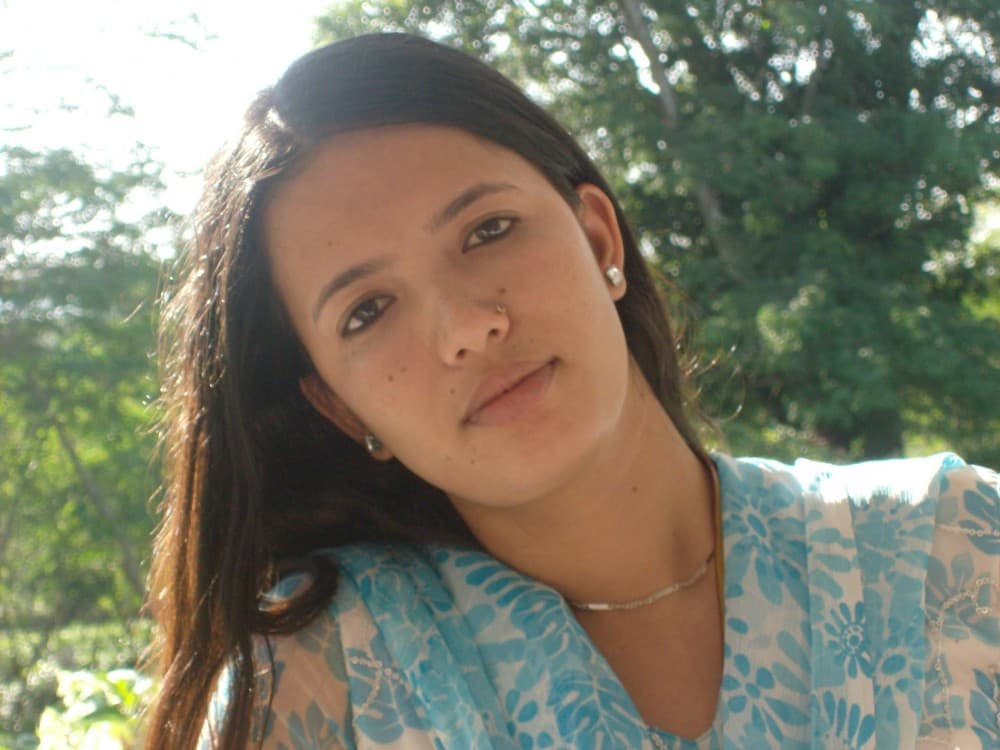

“You are a girl,” my mother and neighbors would tell me as a child. “When you grow up, you should be soft like a doll. Your husband will dominate you. He will control your path in life. You cannot go outside without his permission. You will have no male friends. You should not burst out in laughter because you are a woman.”
I was compelled to accept these restrictions—though I did not believe them—because I live in Nepal, a society where, as a woman, no one hears my screams.
When I was young, I used to go to a nearby pond to swim with my friends. I never asked my parents’ permission. I knew if I asked them, they wouldn’t allow me to go. When my mother found out, she locked me in a room and beat me with a bamboo stick. After that, my freedom was bound inside the home, looking after my four sisters. For Nepalese women, their family is their world, their husband is their power, and their children are their fate.
Although I was born in a low-middle class family, people often tell me that I am very lucky. We have a little piece of land in a village, where we grow our own crops and survive. My father owns our house and land. He is a farmer and my mother is a housewife. My mother is in her forties, but she never looks her father in the eye when she talks to him.
I have been lucky. My father has supported my decision to go to school. In Nepal, educating a daughter is considered a no-return investment, while educating a son means investing in his ability to look after his ageing parents. When a daughter marries, she becomes another family’s asset. We don’t have any schools in my village so he sent me to a school called Janta School, Bhutaitole, to study. I remember my first day. We studied sitting on the cold floor below an open roof. We had no female teachers. In Nepal, 40% of primary schools lack women teachers and there are strong social and political barriers obstructing female recruitment.
At Janta School, we used the bank of a nearby pond for a toilet. UNICEF reported in April that Nepal has the highest rate of open defecation in the world and that about 61% of Nepalese still lack access to toilets. Poor sanitation in Nepal causes diarrhea and kills many Nepalese children. \"The dearth of toilets in schools across Nepal—where poor sanitation remains a major obstacle to development—is tied to increasingly high drop-out rates for girls,” says OneWorld.net, referencing recent UN reports.
My friends Sangita and Apsara dropped out of school due to the fees and the long distance from their village. When they turned sixteen, they got married. According to UNICEF, the rising cash costs of schooling, along with high opportunity costs, are locking thousands of girls out of school. I am a firm believer that education must be made free and compulsory for all, should take place in adequate facilities, and should be in accessible locations, so that everyone can receive an education.
Ever since I was a child, I have been very curious about the outside world. I wanted to be involved in every program and activity in my school. I joined student government in 10th grade, against my mother’s warnings about getting involved in meetings, seminars, or rallies. I was the treasurer of the Nepal Student Council where we organized weekly meetings. One time, when our meeting ran an hour long and I arrived home late, my mother scolded and beat me. She told me I shouldn’t get involved in politics because it’s a bad game and only bad people play it. She also said that politics would not provide food, and we cannot live without food.
Nonetheless, the political environment, especially during the war, was a huge influence in my life. Nepal’s Civil War started in 1996, when I was only 9 years old. I saw female victims caught in the crossfire. Women were raped and killed by the Nepal army and the Maoist rebels. On April 25, 2006, the armed forces opened fire on a crowd of about three thousand civilian protestors in Belbari, Morang district. Seven protestors were killed and 50 others were injured. A woman named Sapana Gurung was raped by three security officers and then shot.
In 2005, I joined the Human Rights Journalism Forum and met many people who have suffered from the war. When my parents found out that our journalism forum president, Deepen Neupane, was injured in the Belbari incident, they yelled at me—this was not the work they wanted for their daughter. However, the work of ordinary people like us, along with the government, is what is needed to change Nepal’s situation.
Just last year, after years of civil strife, my country held elections and instituted a Maoist democracy. Nepal won political freedom, but there still exists a huge gap between men and women when it comes to gender equality. [paging]Men continue to gain power while Nepalese women still live like they did 59 years ago. Their voices are ignored and they are discriminated against in every sector. Rural women are especially disadvantaged. Ninety percent of Nepalese people live in rural areas and depend on rural agriculture. Nepalese women represent 63% of farming labor, but only 10% of women own their own land.
It is the worst for widows and for Dalits, who are known as “low caste” or “untouchables.” I recently talked to a woman named Maiya Katwal from Mirgouliya Village Development Committee, who became a widow 10 years ago. Her home community ignored her after her husband’s death, prompting her to move to Mirgouliya in order to survive. There she made a small house out of bamboo, where she lives now with her three children.
“I wanted to work,” she told me. “But when people knew about my situation, they ignored me. They believe that if they see me, they will have a bad day. How is that my fault?” Widows are considered bad luck in Nepal and therefore are forced to stay indoors. According to superstition, seeing a widow venturing out brings bad luck.
Enough is enough: gender discrimination must be stopped. We want to live like we are part of human society, not tamed animals. We want to set the example that women in Nepal can do anything. We want to fly in the sky like birds, but we don’t need wings because we don’t want to fly away from our country. Small changes are beginning to emerge as the number of educated women increases in Nepal. I believe this is the greatest hope for bringing equality to the country. Literacy and education, however, are only the beginning. Even if all women become literate, will they be able to work and support their families? Unless women become economically powerful, we will not be the decision-makers, and we will continue to lag behind men. I want to walk in the way of light and build an enlightened world. The international community can lend their support through education, awareness, and women’s empowerment programs.
- Leadership
- South and Central Asia