
MORE GIRLS NEED KNOWLEDGE ON HYGIENE
Jul 24, 2023
story
Seeking
Action


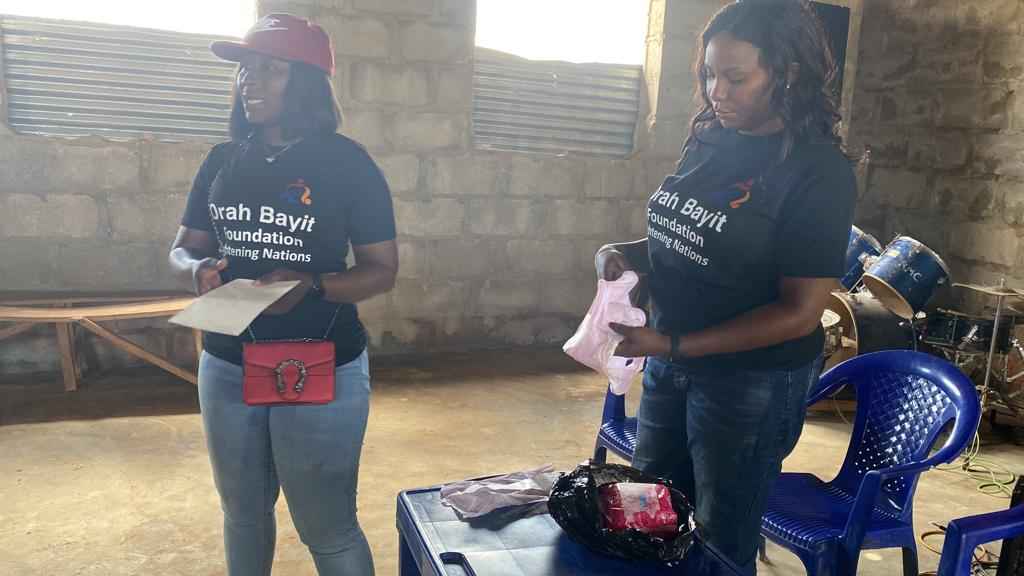
Showing the women and girls how to fit a sanitary pad for use at IDP camp in Gonin Gora, Kaduna
It was a powerful and eye-opening experience during our visit to the Internally Displaced Persons (IDP) camp in Kaduna, Nigeria. One of the girls shared with us how she had seen sanitary pads in shops and on billboards, but she didn't know how to use them. This statement emphasized the lack of knowledge and education surrounding menstrual hygiene in the camp.
We had planned this visit during the Menstrual Hygiene Week, allowing us enough time to prepare and ensure a safe journey to the camp located in Gonin Gora, a suburb of Kaduna. As we arrived, the women and girls eagerly awaited our presence in a small hall constructed during times of security challenges in the area.
The initial expectation was that the discussion on menstruation would be a matter solely for women, as dictated by the traditions and beliefs of the community. The camp leader insisted that the men should excuse themselves, emphasizing that this was a topic concerned primarily with women. Despite my efforts to highlight the importance of involving men in the conversation, my pleas were disregarded. I acknowledged that this matter required a separate approach and decided to shift the focus to the girls and their bodies.
During our interaction, it became evident that many women and girls at the camp had never touched or unwrapped a sanitary pad. Some had only seen them in shops, and only five confirmed that they actually used them. This lack of familiarity with menstrual hygiene products was alarming. It made me realize that in addition to teaching them about maintaining cleanliness during their menstrual periods, they also needed to learn about the availability and use of sanitary pads, as well as alternative options when pads were not accessible.
To engage the girls and provide practical education, I decided to involve them in a game. They had to unwrap pads and properly attach them to their panties, simulating the process of preparing them for use. Sadly, out of ten girls, only one successfully completed the task. This highlighted the urgent need for education and guidance in this area.
We seized the opportunity to demonstrate how to use sanitary pads, discuss alternative options, and emphasize the importance of overall hygiene for women. The question and answer session that followed was not only informative but also captivating. In fact, one of the girls asked us to return because some of her sisters and friends were not present during our visit.
This experience served as a reminder of the work that still needs to be done. It is crucial to understand that even women and girls in communities near cities and towns may lack essential knowledge about their bodies. We must not overlook the challenges faced by girls in rural communities, imagining what they go through and how they are treated during their menstrual periods.
It is imperative that we continue to reach out and educate as many girls as possible about their bodies. This education can help them maintain hygiene, boost their self-confidence, and face these challenges with resilience. Our educational systems also need to play a more active role in introducing puberty and menstrual hygiene education to both boys and girls at an appropriate age. Governments and civil society organizations should persist in their efforts to engage rural communities and shed light on the implications of inadequate hygiene practices, as well as ways to address these issues.
Together, we can strive for a future where all women and girls have the knowledge and resources they need to maintain their health and well-being.
- Girl Power
- Human Rights
- Education
- Health
- Indigenous Rights
- Our Impact
- Our Voices Rising
- Salud menstrual
- Shout Your Vision
- Sexual and Reproductive Rights
- Digital Ambassador Events
- Global