
Mental Health Awareness Month: Preventing and Healing from Burnout
May 28, 2023
story
Seeking
Encouragement


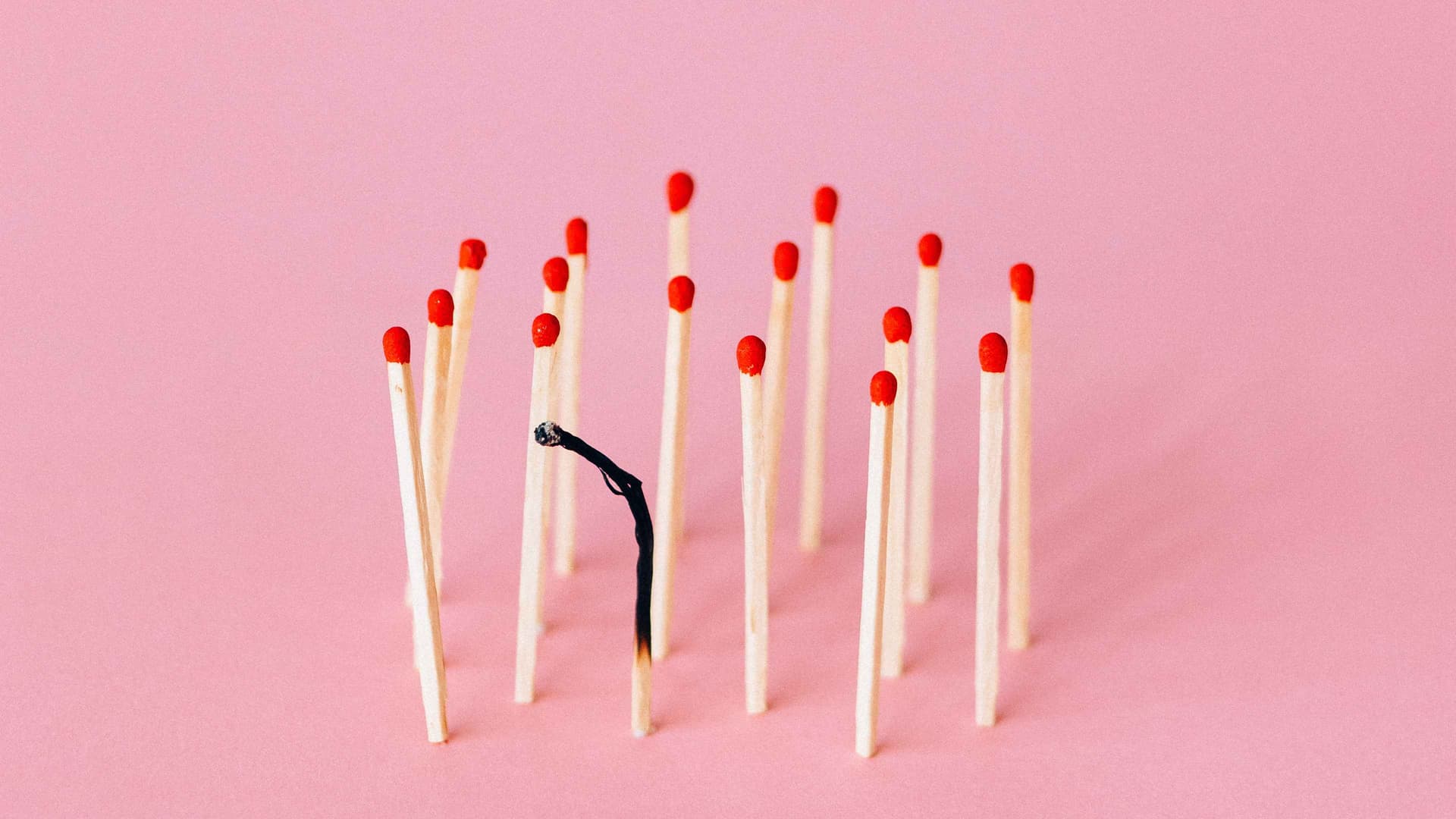
Photo Credit: Photo by Nataliya Vaitkevich: https://www.pexels.com/photo/pink-surface-with-matchsticks-6837625/
Let's reframe burnout as a systemic issue we can challenge and heal
Hi folks. Today as we begin to discuss mental health stories on World Pulse, I want to talk about women and the topic of burnout.
I will first name, removing the shame as I write, that I have experienced two "burnouts" from work. I write "burnout" in brackets because in my experience, this word is often a cue that something deeper is going on. In my case, it was a path to start to learn more, heal complex trauma in my own life, learn my boundaries, and understand more on the trauma of oppression.
In both my burnout experiences, I was working in positions where I was helping others in need facing discrimination, harassment or mental health distress, like so many of us on World Pulse. I experienced re-triggering without yet being aware of it, both in taking on the problems of my clients, and feeling minimized by the responses of those organizations.
Through my experience, I learned of the phenomenon of the “glass cliff” – young ambitious empathic women hired to fix broken systems and teams, and when they reach the inevitable road blocks, being blamed for the team's failures.
I know I cannot speak for all women, and all of us will have unique experiences. From my experience, here are my ideas on what we need to change to support women changemakers experiencing burnout.
Burnout is not just an individual issue, but a systemic one:
As a start, we need to remember there are systemic issues that lead to burnout for women, as well as for gender diverse people and others who experience oppression. Women, particularly those working in helping professions or in social justice movements, are often also survivors of various forms of violence/trauma, as I was. Those who are showing signs of burnout need to be treated not only as an individual accommodation for anxiety, depression or some other medicalized condition (which may be pathologizing for some), but rather also connected to the systemic issues that lead to burnout in this line of work for women. We need to understand that this is not only individual responsibility, but an organizational and systemic one.
Organizations need to build skills to respond:
Like many who have survived trauma/burnout, supportive responses can make all the difference. Words like:
“We hear you."
"This work can be so hard” “It is not your fault” “We believe you”
“We want to work together to support you, what could this look like for you?'
And then...be transparent in actually sharing how they implement those ideas to avoid "lip service".
Acknowledge burnout risk factors for women:
We need to acknowledge the risks inherent in helping work. Women are disproportionately represented in helping and care work, both at home, and in the workplace, for example, as nurses, personal health workers, and often on the front lines as equity champions like all of us on World Pulse in some capacity or another.
Women are often socialized to be the “helpers” and put others' needs above our own, so often give 110% to any job they have, and may resort to self-blame or to judge our pain as an "overreaction" when we cannot meet unrealistic expectations at work, which is a risk factor for burnout. How many of us have felt those voices inside that both say we are “not enough” but then…”too much" or ask ourselves if our pain "counts" after being invalidated or silenced repeatedly?
Harassment/bullying at work:
To top this off, we may experience daily microaggressions/harassment/subtle bias within our own teams or with our clients. Women, particularly those who have experienced SA or other violence like myself, may have the experience of their having their agency and autonomy taken away somehow, whether it be overt, or covert, which can be reinforced by daily microaggressions, like someone speaking over them, taking their idea, or coercing them into certain things, including sexual acts in situations of power imbalance (eg. boss and younger employee). Put all this together and you often have a toxic cocktail of potential risk factors for burnout.
Does any of this sound familiar to you? If so, know that you are seen, held and validated. Your pain is real. If no one ever told you, burning out is not your fault.
This is a topic I am passionate about, and why as part of my work I offer workshops to organizations on building both individual and collective well-being and building a culture of respect, supporting people to learn to respond, rather than react, to complaints and problematic behaviour at work. I am grateful to have shared my wellbeing workshop with the World Pulse changemaker's lab.
How about you? What are your experiences with the concept of "burning out" as an equity champion? What more suggestions would you offer to my list? How can we continue to mitigate the risks of burnout? I would love to hear from you!
Until we meet, take care of yourselves, and each other.
- Health
- Gender-based Violence
- Leadership
- Human Rights
- Education
- Disability Justice
- World Pulse Changemakers Lab
- Stronger Together
- Northern America