
Menstrual Hygiene challenges of adolescent girls
Jun 14, 2022
story
Seeking
Collaboration


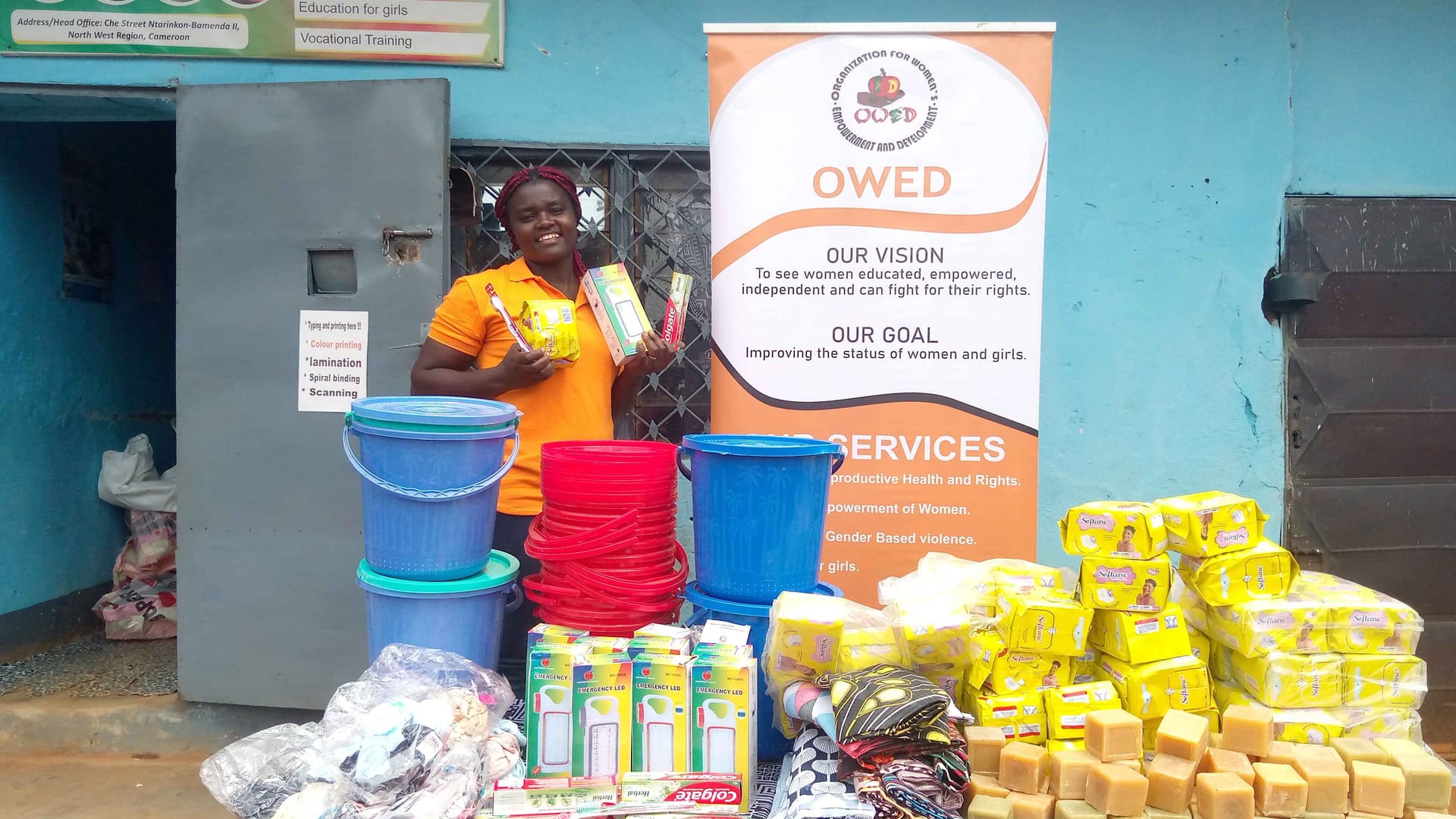
The 5years ongoing crisis turned to war in the North and South West Regions of Cameroon, has aggravated the vulnerability of adolescent girls and women. They lack shelter, food, basic knowledge on menstrual hygiene management(MHM), access to basic wash facilities like toilets, affordable sanitary pads, and soap to use during their flow while in the bushes or even in their host communities is a great call for concern to humanitarian actors, organizations, donors and the International Humanitarian Community at large..
Lum is a young girl of 12 years old. Their village was attacked by one of the armed groups engaged in the war in the North West Region of Cameroon. Many houses in her village were set ablaze and her father killed in the course. Lum together with her mother, her siblings and other relations and neighbors ran and sought refuge in the near by bush. They had to live in the forest for three good months. It was during their stay in the forest that Lum witnessed her first menstrual flow. Confused and scared, not knowing what has suddenly happened to her, not knowing what to do and who to confide in since her mother has never mentioned anything of the sort to her, the first thought that came to her mind was that ‘maybe what she is going through is as a result of the too much gun shots’ As a solution to her predicament, Lum decided to isolate herself when ever she feels wet by leaving the make shift hut where they have sougth temporal refuge to go further into the forest with the pretext of searching for fruits to eat. While a distance away, as the flow continues Lum will use leaves of trees to clean up and pad herself. Lum will have to go through this ordeal for as long as her period lasts and for the next two months of their stay in the bush without letting anyone know what she has been going through.
It is often said that ‘your difficulties and challenges may eventually push you towards your destiny helpers’, This is exactly what happened to poor Lum. By the third month of their stay in the forest, they were once again attacked by one of the armed groups who mistook their huts for the camps of an opposing armed group. Lum has to finally separate from the mother and siblings as they ran away in diverse directions. She accompanied some of her peers and as destiny will have it they ran from one bush to the other, from one village to the next until they found themselves in Bamenda town as internally displaced persons.
The Organization for Women’s Empowerment and Development (OWED) has this tradition of celebrating World Menstrual Hygiene Day every year with adolescent girls. It was in the course of one of these celebrations in May 2022 that OWED social workers came in contact with Lum and many other adolescent IDP’s too like her who have never heard nor had any basic knowledge on menstrual hygiene management (MHM). Most of them as well as the men still believe in these taboos and myths surrounding menstruation. The topic is considered a taboo subject and hardly discussed even among parents. Most adolescents and young girls like Lum grow up without knowing about menstruation only to discover their first menstrual flow as a surprise and as a consequence don’t know how to manage it.
Lum was so bewildered and happy at the same time having to learn that what happened to her while in the bush was something natural that every mature girl and woman must go through. In addition to the education she had had, she and her peers were given some menstrual hygiene kits which she learned how to use for the first time. This was thanks to a donation from IRC.
As if to make a bad situation worse, the crisis has highly contributed to this vulnerability as it has created a heavy IDP community that seeks basic needs. We highly recommend partner organizations and individuals to be engaged in regular sensitization and education on menstrual hygiene management and provision of sanitary pads, and affordable wash facilities to the vulnerable communities of the North West and South West Regions of Cameroon. This will go a long way to empower the vulnerable community and help promote their health rights
To promote menstrual hygiene management (MHM) to improve on the health situation of vulnerable adolescent girls and women, OWED equally trains young girls on the production and use of reusable menstrual pads. This is thanks to the training received from Seema Khandale and Cho Ngafo Foundation. Every year as part of celebration of menstrual hygiene day. OWED carries out sensitization, education on MHM and distributes menstrual hygien kits to some adolescent girls and young women in the community. From the experience so far gathered over the years, we have come to realize that most adolescent girls and women lack basic knowledge and access to menstrual hygiene management Kits. Also compounded with our limited resources, we are hardly able to reach out to and meet the needs of the ever increasing number of vulnerable adolescent girls, and women in Bamenda, talk less of the other towns and villages in the North West Region with equally a huge vulnerable population. We remain open and willing to partner with other Organizations and Donors to meet this challenge.
- Economic Power
- Girl Power
- Gender-based Violence
- Human Rights
- Africa