
Meet 5 World Pulse Members Breaking Menstrual Hygiene Barriers
May 25, 2023
story
Seeking
Collaboration

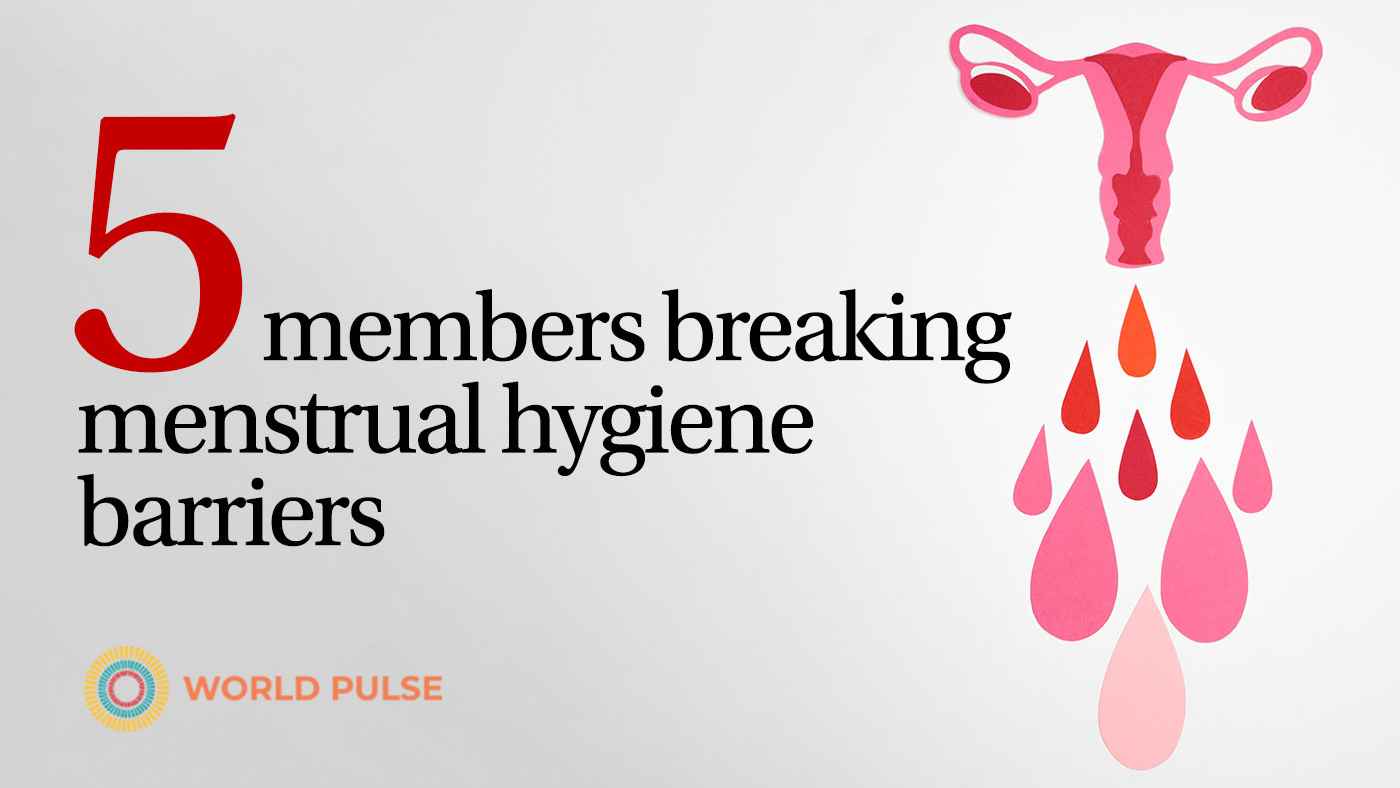
Their relentless efforts are reshaping societal norms, empowering women and girls, and ensuring access to safe and dignified menstrual hygiene practices.
May 28 marks Menstrual Hygiene Day, a global day of action that raises awareness about menstrual health and breaks the silence and shame surrounding menstruation. On World Pulse, members have been logging on to share their period stories, track the impact of their changemaking initiatives, and to connect with each other to change the narratives surrounding menstruation.
From Nigeria to India, Cameroon to Mozambique, and Pakistan, these five women are leading the way when it comes to menstruation. They're raising awareness on the importance of menstrual health, advocating for policy changes, providing resources to women and girls, and creating supportive environments for all.
In Nigeria, she says, “Let’s talk periods!” to help every girl get the knowledge and resources she needs.
“I look forward to that day when the menstruation conversation is normalized, when access to clean, safe places are abundant, and menstrual sanitary products are cheap and easy to buy.”
Jefiter Mang helps girls in her community — including her daughters — have healthy, safe, shame-free periods. Over the past four years, she’s reached more than 400 people with her menstruation message. In honor of Menstrual Hygiene Day 2023, Jefiter is conducting outreach to four schools to break the silence and help end period poverty by debunking myths, providing tips on how to manage periods, and distributing pads to girls and women. Connect with Jefiter.
This activist and global campaigner mobilizes men and boys in India, ensuring menstruation isn’t just treated as a woman’s business.
“The [‘Men Take Lead Ride’] aims to demonstrate how menstruation is not just a woman's business but should be a concern for every citizen in the society.”
As Founder and Director of Breaking the Silence Worldwide Foundation, Urmila Chanam uses advocacy and training to impact policy and programs on menstrual health and hygiene, training and sensitizing more than 20,868 individuals in India, Asia, and Africa over the past decade. She has also worked to build men’s leadership in advocating for stigma-free menstruation with the “Men Take Lead Ride” bike rally on Menstrual Hygiene Day. Connect with Urmila.
Channeling her personal story, this menstrual rights activist is on a mission to end period poverty in Cameroon.
“If we rally, we can change the narrative. We can help girls avoid stress, embarrassment, illness, and stigma during menstruation.”
Solange Swiri Tumasang created the Dr. Tumasang Swiri Foundation in 2020 to help educate and empower women and girls in Cameroon. She conducts workshops in schools and communities, educating adolescent girls about menstrual hygiene and teaching them how to make and care for reusable sanitary pads. Each year, she educates more than 2,000 girls and donates 500 sanitary pads. She also has a WhatsApp group of over 130 women where members share menstruation stories and make sanitary pads more accessible. Connect with Solange.
In Mozambique, this sexual and reproductive health activist earned global recognition for her poem about menarche.
“In my country, premature unions are still prevalent in some regions, even after the Law for the Prevention and Combat of Premature Unions was passed at the end of 2019.”
Activists, NGOs, and the government have joined forces to end the practice of premature unions, which Laurinda Juma says have destroyed girls' dreams and violated their rights. Laurinda’s award-winning poem, "Menarche - An Intervention Against Premature Unions,” portrays a girl who curses menarche for appearing – one of the criteria for a premature union. Connect with Laurinda.
This community member from Pakistan makes the case for offering free, sustainable menstrual hygiene products.
“By providing these products at no cost, we can help to remove the stigma surrounding periods and ensure that everyone has the resources they need to participate fully in all aspects of life.”
Melihajaved shares how a lack of access to period products can lead to missed school or work and feelings of embarrassment and shame. “...There are also environmental considerations to consider,” she says. “By making these products free, we may be able to encourage more people to switch to reusable options, such as menstrual cups. These reusable products not only reduce waste, but they can also be more cost-effective in the long run.” Connect with Melihajaved.
Get Involved
As we commemorate Menstrual Hygiene Day, these stories remind us that by working together, we can make menstruation a normal fact of life by 2030 and create a world where everyone can embrace menstruation without shame. Click the links in the story to connect with these members or encourage them in the comments below! You can even create a new post and share your own menstruation story on World Pulse.
*World Pulse recognizes that not everyone who menstruates identifies as a woman and that not all women menstruate.
- Health
- Salud menstrual
- Global