
KENYA: We Have a Right to Say No to Mercury
Oct 25, 2022
story
Seeking
Visibility
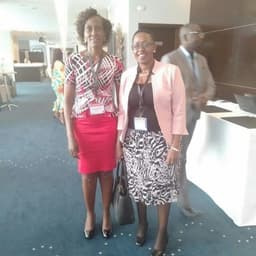
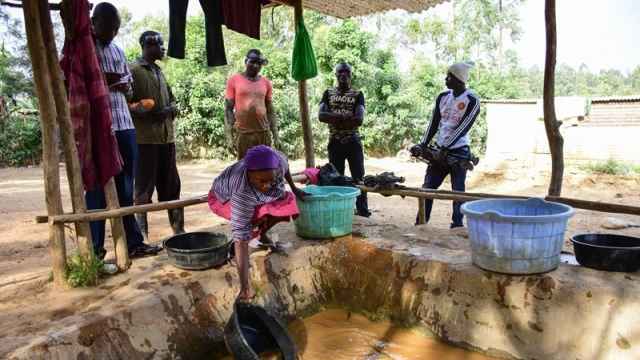
Photo Credit: Kristine Yakhama
A woman fetches water to clean gold using mercury.
Kristine Yakhama of Kenya trains women on land rights and the effects of mercury, co-develops land leasing agreements, and connects them with alternative sources of income.
“Initiatives like mine seek to make mining safer for everyone and ensure women can pursue economic opportunities.”
Kristine Yakhama
When Mary, a widow in my community, discovered gold on her land, she saw an opportunity to finally provide for her children. The family had scraped by on subsistence farming while her husband was alive. After his death, Mary learned from prospectors that the soil on their farm in Shigondo Village contained gold. She decided to mine it to pay for food and school fees for her children. But she quickly realized she wouldn't be able to move forward. “As a woman, I am not allowed to do mining or approach the site; this is according to the community's cultural norms,” Mary says.
Mining for gold can provide a solid livelihood for many living in Kenya's Kakamega County. But traditional beliefs prohibit women from entering the mines, even on their own land, forcing them to either lease the land or leave the precious metal in the ground. And when women can engage in this work, it’s often dangerous, with far-reaching effects on their health and the environment.
I am a community health volunteer with the Shinyalu Model Health Center. In 2019, we held a monthly community dialogue where the Sub-County Ministry of Health reported high rates of malaria, tuberculosis, and silicosis. Afterward, we carefully mapped out the area and held a community meeting to determine what was causing these health crises. We learned that miners who work on women’s land don’t cover entry holes, allowing mosquitos to proliferate and spread malaria. The women assisting the miners separate gold from dirt using mercury without protective gear, exposing them to silica dust. These particles became trapped in the women’s lungs, leading to tuberculosis and silicosis, a long-term lung disease caused by inhaling large amounts of crystalline silica dust.
This is how I came to raise awareness about the toxic toll gold mining takes on women in Kenya. My Right To Say No To Mercury initiative trains women on land rights, co-develops land leasing agreements, and connects them with alternative sources of income. We also seek to educate women on the effects of mercury and train them in mercury-free processing systems.
Two-thirds of Kenyans have lived below the poverty line since the country gained independence from Britain in 1963, earning $3.20 per day. The situation is particularly dire for women and girls. There is a large gap between the rich and poor, with approximately 70 percent of Kenyan families chronically vulnerable due to poor nutrition, food insecurity, and preventable diseases. Meanwhile, a minority elite continues to capture and exploit their labor and resources.
Shigondo artisanal mining directly employs more than 10,000 people and indirectly supports six times as many people via the secondary economy created by the sector, according to sponsors of the mining. But at the same time, this robust industry exposes miners, communities, and local ecosystems to mercury's adverse health and environmental impacts. A lack of access to education, land titles, financial resources, and training hinders miners from switching to mercury-free gold processing methods.
And women face compounding barriers when it comes to mining. Any woman like Mary with access to land containing gold – a rarity in a country where only 1 percent of women own land individually – has the potential to make a decent living by mining the precious metal. Yet cultural prejudices deny many of those women the right to benefit from the resources of their own land. While the country's 2010 constitution grants women the right to own and control property and land, in Shigondo, traditional law still takes precedence.
According to traditions of the Waisukha sub-tribe of the Luhya community, women who have not reached menopause are not allowed to go near a mining site, as women are thought to bring bad luck and a bad omen for mining. Menopausal women can get close to a gold mine, though they receive lighter duties, such as separating the gold from the dirt and crushing ore. Unfortunately, this work comes with a significant risk of silica dust exposure. Meanwhile, mercury exposure in pregnant women can affect fetal development, causing congenital disorders in children.
Men are also frustrated by the effect of cultural beliefs on life in Shigondo. “We have seen many people buried alive while looking for gold, but none of those accidents were associated with women,” Michael, a village elder, says. “How can menstruation be associated with accidents? It is just a technique men use to keep women away from this cash-making activity."
In Kenya we have a constitution our people often do not read or know. Women have power and rights to be treated with dignity, something I try to train them about. Initiatives like mine seek to make mining safer for everyone and ensure women can pursue economic opportunities. At this stage in our work, we are looking for private organizations to test community members for mercury exposure, especially women, so that they can receive treatment. We are also developing and delivering a curriculum in coordination with local county polytechnic institutions to train miners on mercury-free processing systems. Additionally, our initiative is working with the county to protect and revitalize streams so that community members can access clean drinking water.
Today, Mary says her life is improving. The Right To Say No To Mercury has helped Mary and others develop alternative income sources through organic produce gardens. This process is called "Village Saving and Lending shares”. Mary has started organic farming, planting, and selling various foods. With her fellow women in mining, she has initiated the Mavuno women's group that shares and saves the interest they make through Village Saving and Lending.
I hope to help many more women like Mary. I envision a future where we recognize and support women’s beneficial contributions to mining and challenge gendered norms and practices within mining sites, a future where we protect miners from the harmful effects of mercury exposure. And where women have the autonomy and skills to pursue various economic opportunities.
STORY AWARDS
This story was published as part of World Pulse's Story Awards program. We believe every woman has a story to share, and that the world will be a better place when women are heard. Share your story with us, and you could receive added visibility, or even be our next Featured Storyteller! Learn more.
- Environment
- Education
- Health
- World Pulse Changemakers Lab
- Africa