
KENYA: The Unused Voices of Democracy
Apr 30, 2019
first-story


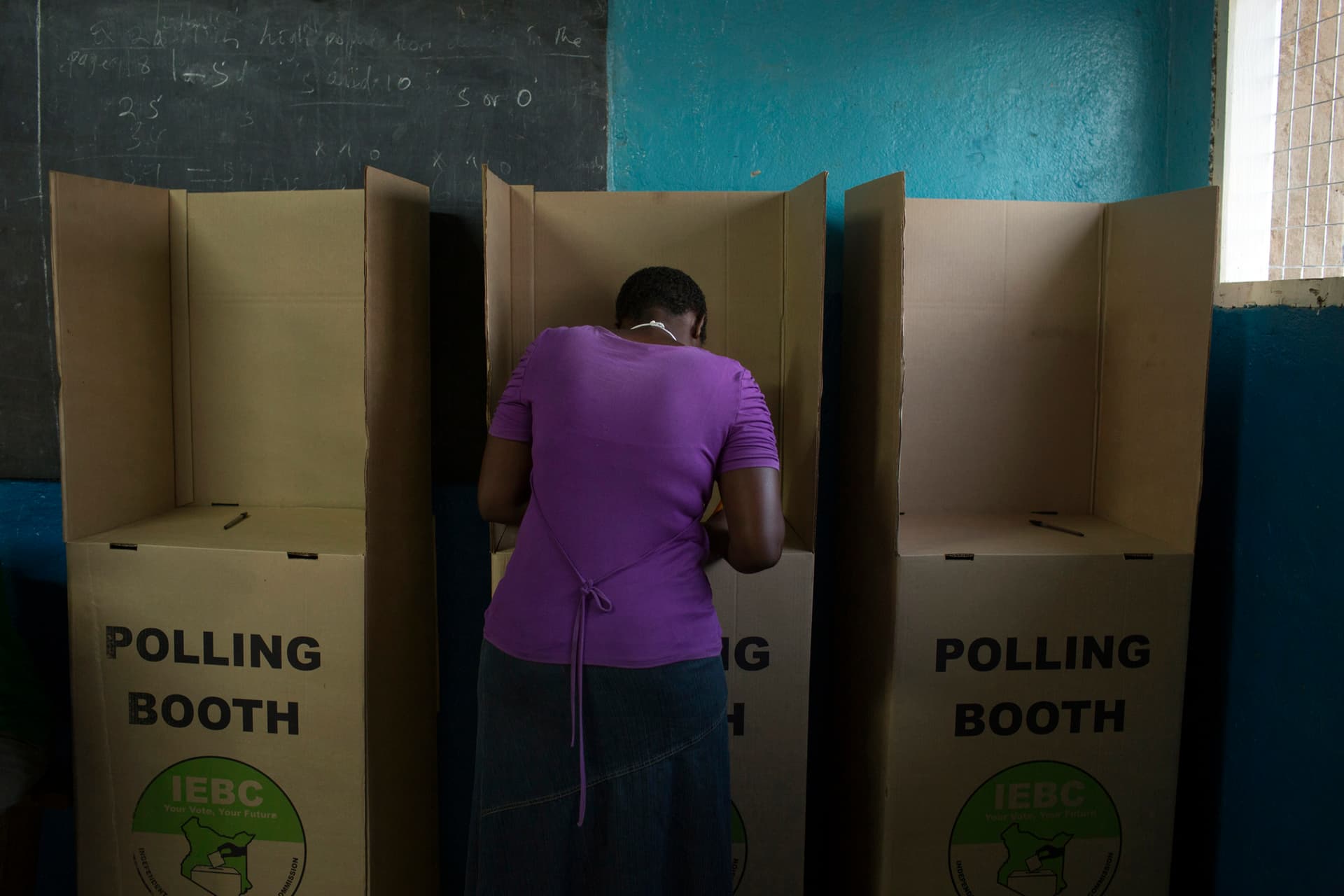
Photo © Reuters / Siegfried Modola
Troubled by voting apathy among Kenyan youth, Morode makes a case for participation.
I will not give up on my country, and I will not give up on its leadership.
Who is to blame when bad leaders are elected? The People who voted, the people who didn’t, or the democratic system itself?
This year, on 8 August, Kenyans will return to the polls to cast their votes for numerous government leaders, such as members of parliament, senators, and most importantly, the president. If the 2013 presidential elections are anything to go by, I expect at least eight candidates to run for our top seat, and each to promise an impressive array of development initiatives.
As of December 2016, however, less than 16 million of the over 25 million Kenyans eligible to vote are registered, leaving a gap of over 9 million potential voters.
Why have so many eligible citizens not registered to vote? I Can’t speak for all the 9 million plus Kenyans who haven’t registered, but I can speak for one whom I know quite well—my sister.
My sister was not eligible to vote in the last election because she was still under 18. Now that she is eligible, though, she sees no point in voting.
Voter apathy is common in my sister’s age bracket (18-24 years of age). The young people in Kenya feel their views are simply not represented in government.
When I think about what the leadership of our country has been up to over the last five years, I can sympathize. To name a few examples:
In 2013, despite the fact that our politicians are already among the highest paid in the world, members of parliament hiked their salaries to approximately $10, 000 per month within months of being elected. To add to this charming picture, over40% of Kenyans lived below the poverty line at the time, earning an average of $1, 180 annually!
In 2015, investigations conducted by the United Kingdom’s Serious Fraud Office revealed that officials of the independent regulatory agency responsible for carrying out elections in Kenya had pocketed hundreds of thousands of dollars in bribes.
In 2016, $48, 000, 000 went missing from the Health Ministry, even while doctors were on strike over lack of pay and poor working conditions within state health facilities.
In 2017, doctors were jailed following a failure to reach consensus with the government over the strike.
You might think events such as these would fire up young individuals like my sister to register to vote in order to elect better leaders, but instead they have had the opposite effect on our youth.
“I feel like my vote won’t make a difference, ” my sister told me. “The masses will always elect bad leaders. ”
It hurts me to hear this from my sister and from the mouths of so many of her generation. I think of all the people who lost their lives in the name of the Republic of Kenya—people who died to ensure that we have a vote today.
I believe that voting is a privilege and a duty for every citizen. It is the difference between living in a democracy and in a dictatorship.
In a democracy, government is runbycitizensforcitizens. It is therefore our responsibility as citizens to help put the right leaders in place to work for—and not against—us.
That’s why I am determined to help my sister understand that if she doesn’t vote, she has no voice. If none of her friends or her friends’ friends vote, democracy in our country will slowly be silenced.
I do ask myself, though, how I can convince my sister to vote when I myself do not have full confidence in the Kenyan voting system.
Voting patterns in Kenya have traditionally been along tribal lines. Ethnic populations with the highest numbers carry the election, no matter the quality of the leader representing them.
However, I see this slowly changing, as millennials such as myself vote for good leadership rather than their own tribe. The more we do this, the more legitimacy we will bring to the system, which will in turn restore our faith in it.
A leader must have a number of positive traits, but I believe the four most important are:
- Integrity—doing the right thing, especially when no one is watching.
- Vision—making the lives of the voters better; for example, improving infrastructure or health facilities.
- Insight—understanding that their actions, or lack of action, have real consequences.
- Accountability—taking responsibility for their own actions.
It seems to me that many elected representatives in Kenya are missing these very traits, but that does not mean that other leaders with these traits aren’t out there.
I believe that my sister and her peers cannot afford to be apathetic. After all, they will soon have the power to successfully vote in the leaders they want. Even if the baby boomer generation continues to vote along ethnic lines, the next generation will eventually take over.
Here are the steps I suggest she and her peers take to get involved in their own governance and bring about change:
First, they need to find out who their representatives in local government are.
Second, they should acquaint themselves with the government’s budget and see what it spends on the services they make use of every day.
Third, they need to accept civic education as their obligation and teach the people around them what they learn.
Fourth—though this is seldom done today in Kenya—they should start organizing debates on social and political issues among their local leaders.
Finally, they must register to vote.
For me, voting will always be mandatory even if I don’t get the outcome I want or expect. I will not give up on my country, and I will not give up on its leadership.
Until all options are exhausted, I cannot say, “My vote won’t make a difference. ”
STORY AWARDS
This story was published as part of the World Pulse Story Awards program. We believe everyone has a story to share, and that the world will be a better place when women are heard. Share your story with us, and you could be our next Featured Storyteller! Learn more.
- Leadership
- First Story
- Africa