
Industrial Agriculture: The Dracula in African Food Systems
Feb 24, 2023
story
Seeking
Feedback

According to the Food and Agriculture Organisation, Africa owns 2.38 billion hectares in arable land. The bulk of the continent can produce food for the population naturally .However , Africa is a new frontier in terms of markets and food is the new multi-million dollar business. In the food chain multinational corporations are selling their fertilisers and seeds to African countries and this is often backed by narratives that say that African soils do not have nutrients hence farmers are advised to pump more and more fertilisers into their soil .From soil to harvest , farmers are being sold the narrative that they need to put chemical additives on soil and even at harvest. Using multiple advertising methods , farmers are duped into buying these chemicals and many a times the farmers have not gone to school, the instructions on how these chemicals are to be used are written in English , and many farmers lack protective gear to use when spraying crops. The baffling question then is , if it good enough for me to eat , then why should I cover my legs in boots, my hands in gloves and my face in a mask?.
In my engagement on food justice , I have been carrying out community dialogues on food justice and training farmers on how to grow food anchored on agroecology. Agroecology is a science, a practice and a movement. Simply put , it is where one growns their food in tandem with the environment .It is being cognisant of planetary boundaries , it is about understanding your soil , what crops you can grow , it is proper timing of farming activities such as weeding .Agroecology is about reducing external inputs on your farm and using locally available resources .It is the recognition of indigenous knowledge and creating spaces for co-creation of knowledge as well as intergenerational knowledge transfer .Agroecology is about understanding biological interaction between flora and fauna and creating a balanced ecosystem .It is about proper land management , use of contours , prevention of soil erosion and use planting cover crops as well as nitrogen fixing crops such as legumes.
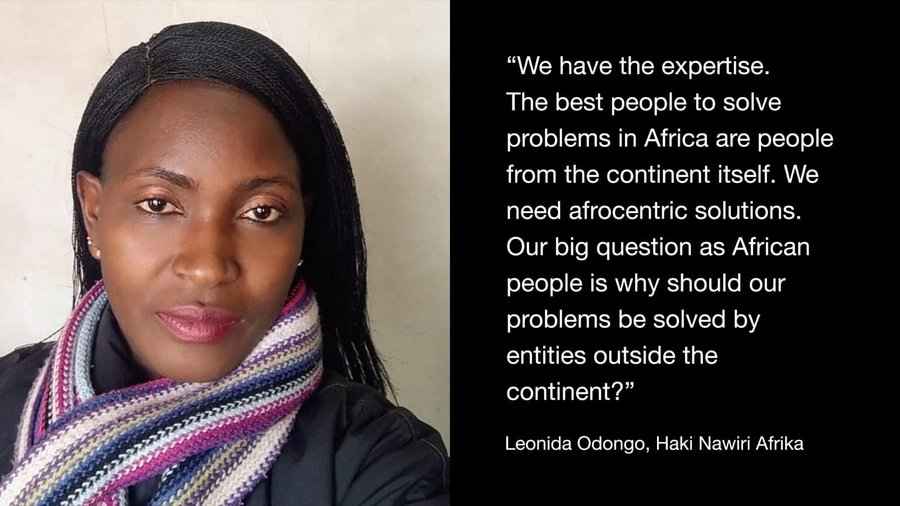
I participated in an online advocacy campaign to lobby for funders targeting Africa to redirect their funding to agroecology , which is sustainable instead of funding industrial agriculture. My view during the press conference was that African farmers understand their terrain, what they want to produce and have been farmers all their lives, as such decisions on what should be produced in the continent ought to lie with the Africans themselves and not foreigners.
The online campaign involved a press conference bringing together Civil Society Organisation and 99 journalists from all over the world .This press conference was a day before the African Green Revolution Summit took place in Kigali -Rwanda from 5th -9th September 2022.Through speaking out , I echoed the realities of millions of smallholder food producers in Kenya and across Africa whose farms have become unproductive over the years because of synthetic fertilisers and genetically altered seeds who in essence feed the world but because of an economic system that puts profits in the hands of multinationals are unable to feed their children and afford the most basic necessities of life .By speaking out , and being African , I brought to the fore , the resilience of African indigenous seeds especially in the wake of climate crisis which is an everyday reality in my part of the world , with rising temperatures, prolonged drought , farmers' crops are wilting in the field and families are left to rely on relief food.
Through the Press Conference , several articles were written by journalists present .The Press Conference was also a push back against green revolution that is being pushed to the continent. The campaign was also a way of bringing to the attention the realities of impacts of industrial agriculture in Africa and why it is important to fund a food system that protects the environment and ensures sustainable and health diets and is also affordable to the farmers. After the press conference I engaged in social media media through tweeting , hence amplifying the local realities within the African continent and bringing out the issues raised during the Press Conference .This was also a way of bridging the information gap in relation to food systems.
A summary of the articles written after the Press Conference are as follows:
AGRA’s Green Revolution has Failed, Critics say https://www.theelephant.info/features/2022/01/22/agras-green-revolution-has-failed-critics-say/
Why Criticism Against Green Revolution is Growing http://expression.africa/why-criticism-against-green-revolution-is-growing/
Group calls to Stop Funding AGRA as Hunger Worsens in Africa
http://expression.africa/groups-call-for-stop-to-agra-funding-as-hunger-crisis-worsens-in-africa/#
Bold Actions for Resilient Food Systems?
Gates Funded Green Revolution in Africa has Failed https://www.seattletimes.com/seattle-news/gates-funded-green-revolution-in-africa-has-failed-critics-say/
Our Africa , Our Agriculture
- Training - Online Advocacy
- Africa