
INDIA: Why I No Longer Fast for My Husband
Apr 30, 2019
story

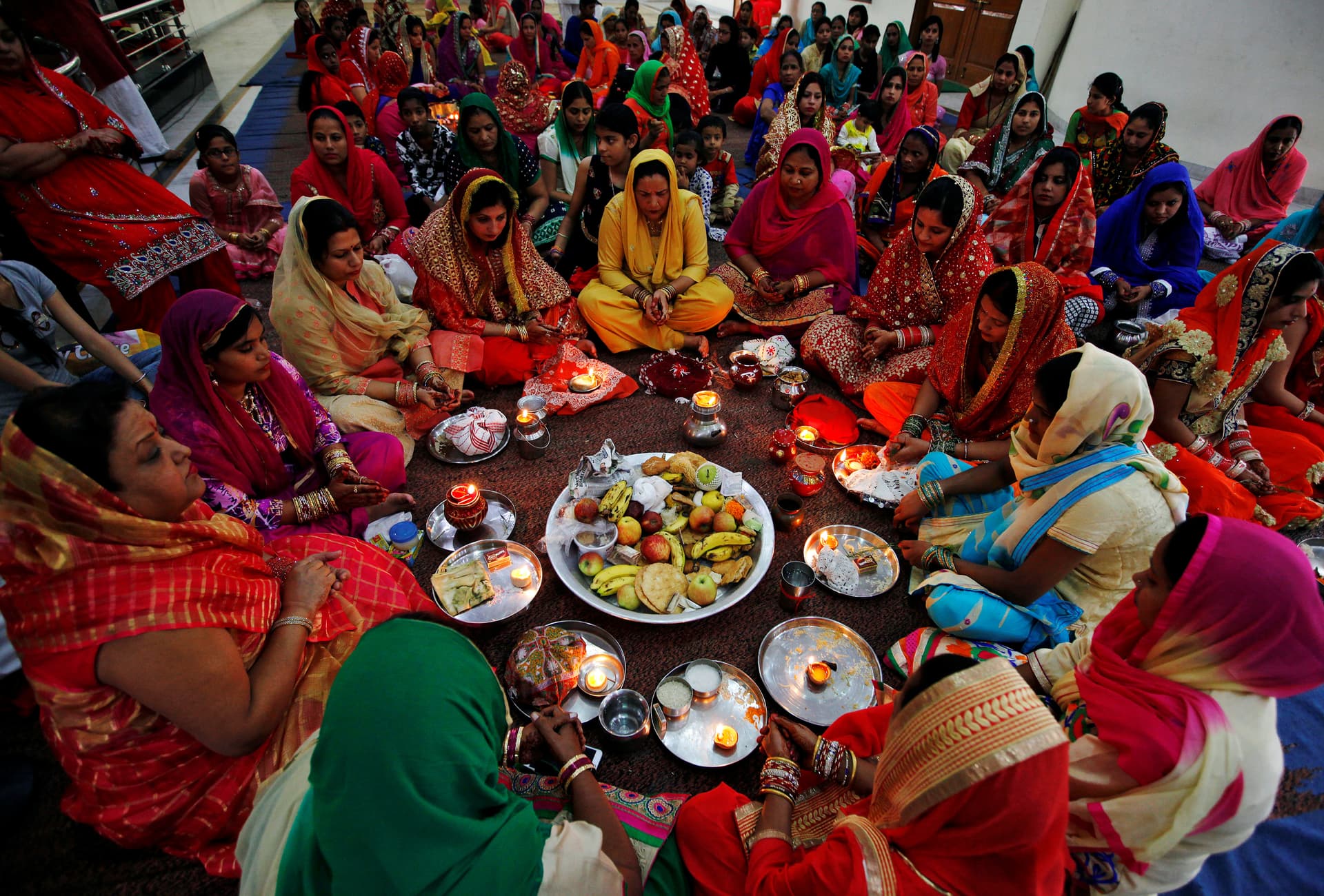
Photo © Reuters / Ajay Verma
Dr. Shruti Kapoor on why she's breaking with a tradition she's practiced all her life.
I will challenge customsthat I feel are harmful in order to set a strong example for my daughter.
I grew up observing Karva Chauth, a one-day festival Hindu women celebrate in northwestern parts of India. For this October tradition, millions of married women fast from sunrise to moonrise for the safety and longevity of their husbands.
There are many legends surrounding this custom. The one that sticks with me the most is that of Queen Veeravati.
Her story goes like this.
On the day of the festival, Veeravati fasted for her husband’s long life. By evening she was suffering from hunger and thirst, and her seven brothers couldn’t bear to see her plight. They showed her a fake moon, tricking her into believing it was time to break her fast. Veeravati drank water and ate. Just at that moment news arrived that her husband, the king, was dead. Heartbroken, Veeravati wept the whole night. Her tears invoked the goddess Parvati to appear before her. When the queen shared how her brothers had tricked her, Parvati asked her to repeat the fast with utmost dedication. Veeravati did as she was told, and Yama, the god of death, restored her husband back to life.
This story was always in the back of my mind when I was growing up. I would watch as my grandmother, mother, and aunt would fast for the whole day (they would not even drink water). In the evening, they would sit together to hold a prayer service and exchange karvas (or earth pots) filled with small gifts. Since I was a small girl, I was the fourth wheel in their karva exchange as three is considered an inauspicious number. I didn’t fast but went through the whole prayer ritual year after year until I finally moved away from home for college.
I got married six years ago, and as per tradition, I began fasting on Karva Chauth. It was a given; no questions were asked. The night before the festival, my mother-in-law and mother gave some instructions on how to manage the upcoming day. They assumed that I would fast as they always had.
For years, I thought about the absurdity of it all and even joked about it. Still, I would fast from morning until moonrise. I did it out of fear—fear of the consequences of breaking an age-old tradition.
Usually the day was an excuse to gather with friends and do the karva exchange. Each woman modified the tradition a bit to suit her needs. I did too. Unlike my mother and grandmother who fasted without water, I would drink a cup of tea in the evening after the prayer ritual.
By evening, most women have a bad headache and are dying of hunger waiting for the moon to arrive. I know many who take pride in this tradition and follow the rituals to a T. There is nothing wrong with that. It is their belief system and I respect their decision. But it is not for me.
This past October I decided to break with tradition. I did it for various reasons—the primary being that I don’t believe fasting will prolong my husband’s life. (I Believe he will live a longer life by following a healthier lifestyle. )
In a country like India that struggles constantly with gender equality and respect for women in the most basic sense, traditions like these further perpetuate patriarchal notions of men’s superiority and women’s sacrifice.
Where is the equality in fasting for your husband’s life? What About your life? Is That not important? Is He fasting for you too? If The tradition truly celebrates love and the bond of marriage, it would call on all married couples to fast for each other.
My friend Namrata loves Karva Chauth because her husband fasts with her, for her long life.
“For us, Karva Chauth is a day where we spend time on ‘us’, ” she tells me. “Before our kids came along, this day was all about fasting together, going for an evening movie to distract us from our hunger and thirst, coming back home to do the puja together before heading out to a fancy place for a dinner date. ”
Smita, a resident of Atlanta, a career woman, and a mom of two young girls says, “For me, it’s more about the tradition. I dislike fasting but like the festivity that comes with it. I grew up seeing my mom do it every year. As little kids we would run up to our terrace every year, to check if the moon came out. Living here in the US, thousands of miles away from India, I do whatever I can to stay connected to my culture. I have two small girls; I want to pass on my traditions to them. So I make an extra effort to celebrate these festivals and traditions. It creates a festive atmosphere in the house. My kids are drawn to it. \"
For me, my decision to not fast for Karva Chauth was welcomed by my family. My husband said it was up to me. My mother-in-law and mother both supported me, reiterating that they did it because it was habit. After doing it for over 35 years, they didn’t want to give it up. But they were happy for me that I was going another way. The choice was purely mine.
It is not always easy to break a tradition, no matter how regressive it may seem. Like millions of Indian girls, I too have been conditioned since childhood to follow traditions without questioning them. Festivals like Karva Chauth and Rakhi (during which a sister ties a thread on her brother’s wrist and asks him to protect her) perpetuate patriarchy. They signal that men are superior and more important than women. Challenging that belief is not easy, especially when you grew up with it.
Guilt may surround you, fear may disempower you, and society will make you feel like you are doing something wrong by going your own way. One has to believe in oneself and have a strong sense of equality to be able to challenge and break regressive customs.
As a mother of an 11-month-old baby girl, I want my daughter to grow up with a sense of equality. I will challenge customs and traditions that I feel are harmful in order to set a strong example for my daughter.
As she grows up, I will encourage her to celebrate our culture and to be proud of our traditions. But I will also encourage her to challenge those that hold her back.
- Leadership
- South and Central Asia