
INDIA: What is in a Name?
Sep 26, 2022
story
Seeking
Encouragement
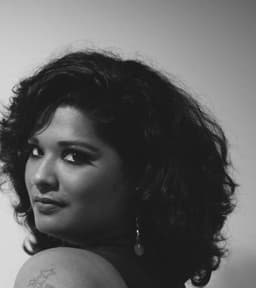

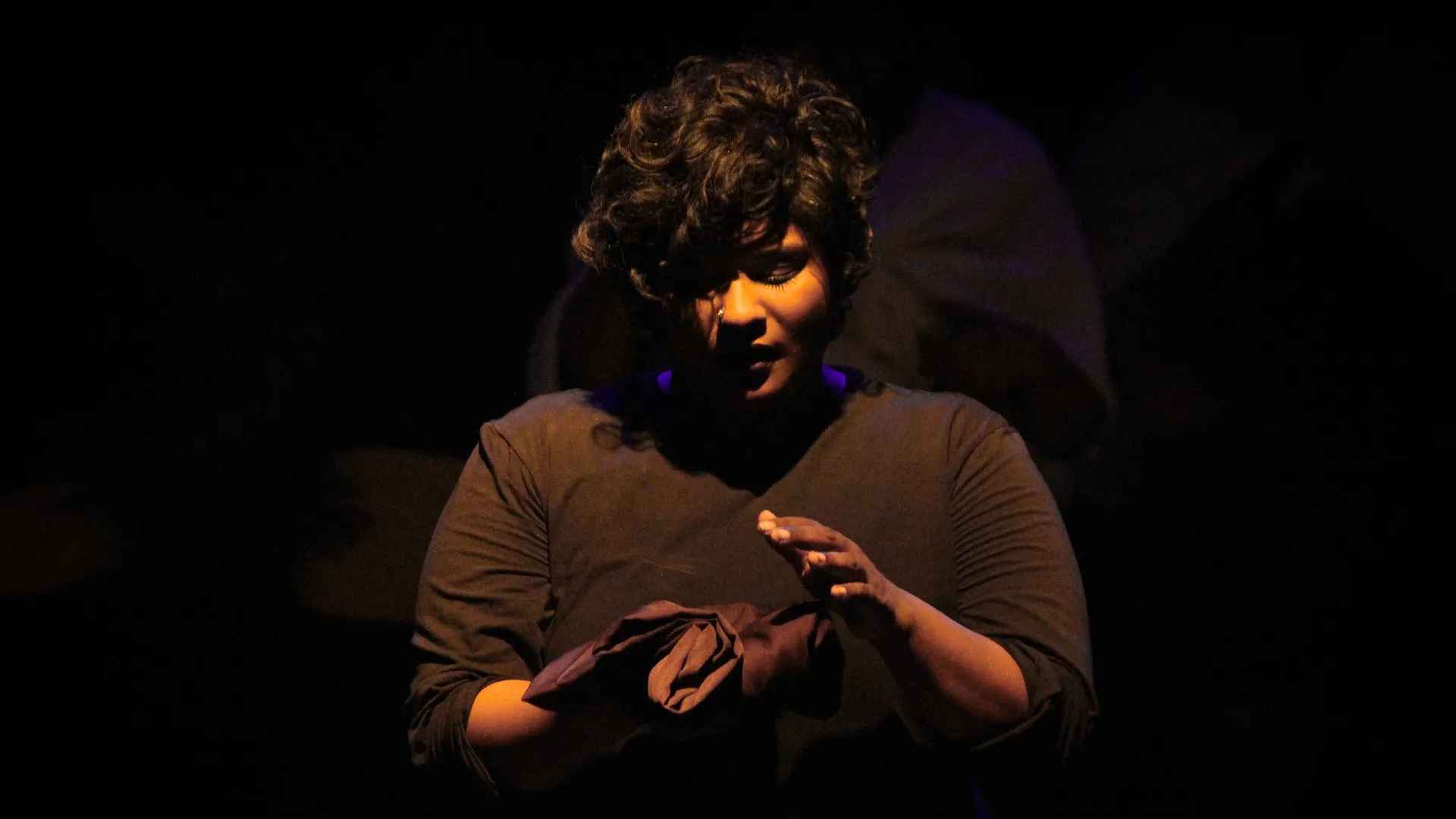
Photo Credit: Shivanee Shashi
Skin - A dance theatre production by Aparna Nagesh.
Aparna Nagesh shares why the world needs to hear everyday women’s stories and how Women in the World – A Digital Timecapsule will capture them.
“A documented record of women’s stories across cities, countries, ages, and intersections will inform our daughters and granddaughters with accuracy and a personal perspective.”
I was 10 years old when my great-grandmother told me the story behind my name. While working on a school project, I was asked to write an essay on the meaning of my name. She told me that when I was born, my father took one look at me and said, “her name will be Aparna and she will achieve everything she sets her mind to.” Aparna, translated from Sanskrit, means “the leafless one.” It is another name for Goddess Parvati in Hindu mythology. A mere mortal, the mountain princess Parvati performed rigorous penance to attain Lord Shiva as her consort. Her penance was harsh. She had nothing to protect herself from the furious elements and ate nothing (not even a leaf). This earned her the admiration of the ascetics in the forest, who named her Aparna; A (without) - Parna(leaf) – without a leaf. Ever since I heard this story, my name has evoked tenacity and resilience within me. Even at my lowest moments, when I feel the weight of failure, I recollect this story and the conviction in my mother’s voice every time she recounted it.
My father passed away when I was 3, and my mother joined him last year. In the immediate aftermath of our mother’s death, my sister and I were overwhelmed by the sheer number of people whose lives my mother had touched. They all had one thing in common. They all felt like they had a special relationship with her. Everyone (students, friends, colleagues) said they had a unique bond with our mother. She listened and understood them in a way no one else had, without judgment. The bond my mother built with all these people was a significant factor in opening my eyes to her magic. To us, she was always Amma. But seeing the impact she made on so many lives got me thinking about her personal story and how many people were aware of the difficulties she faced.
She was widowed at 28, after seven blissful years with my father. With two young girls in tow, my mother had to navigate the obstacle course that was conservative South India in the 80s and 90s. It didn’t help her that my sister and I chose offbeat paths, questioned everything, and were generally rebellious hellions. Her journey was not without its mistakes and faults; however, her calm, steady nature and her sheer grit and tenacity enabled us to take life by the horns. Her twenties and thirties were fraught with loss. She lost her brother, her husband, and her father within 12 years. She also had to care for older relatives consistently throughout our teen years, and well into her 50s. Only in the last four years of her life could she focus on herself and have the means, health, and mental space to do the things she loved. Reflecting on her life trajectory, I am in awe of her resilience. Through it all, she held on to her childlike curiosity and enthusiasm for life, people, and experiences.
I was 15 when I decided to pursue dance and performance professionally. Despite my mother's misgivings, she stood by me and supported me throughout my performing arts career. When I decided to expand my knowledge after 12 years in professional dance, she encouraged me and helped me travel to New York to study dance. She was also a consistent audience member at every production I staged after returning to India and setting up my dance company.
When I created one of my most successful dance theatre productions in 2016, I staged a piece that depicted 12 significant women in history whose contributions to the world were either relegated to a few sparse lines in history textbooks or not shared at all. As the daughter of a social sciences teacher, I inherited my mother’s passion for history. But the creation of this piece opened my eyes to how woefully limited our knowledge and understanding of women’s contribution to world history. The statistical data on women’s representation in history is riddled with omissions, biases, and distortions. And this cold, hard numerical data does not take into account sociocultural, political, and economic intersections of context in its presentation.
One of the women we featured was Nangeli from Kerala, South India. Nangeli protested against the unjust “breast tax” levied on Dalit women for covering their breasts by cutting off her own breasts. Her historic sacrifice enabled this unjust tax to be revoked. Despite growing up in the neighboring sister state, I had never heard her story before. It did not feature in any of the history textbooks that we studied. Nangeli’s story is a strong representation of women’s power in protest; however, its omission from mainstream education is a classic example of how women’s stories and experiences exist in the shadows. Numerical data and statistics chronicle the female birth rate, women’s decision-making power in the household, and women owning property. However, this data does not represent the contexts, struggles, and stories behind the percentages. Understanding these contexts is paramount to informing policy-making and advocating for equality.
Award-winning filmmaker, writer, and educator Nora Bateson introduced me to the concept of warm data, a lens I find helpful for approaching women’s historical representation. She says: “Information that does not take into account the full scope of interrelationality in a system, is likely to inspire misguided decision-making, which compounds already “wicked” problems. Warm Data is not meant to replace or in any way diminish other data, but rather it is meant to keep data of certain sorts “warm” — with a nest of relations intact.”
As a species, we live within complex structures and systems of interrelationships that are influenced by numerous factors such as sociocultural background, family, peer groups, and economic status. Our understanding of ourselves, our fellow beings, and the world we live in with all its wildness then depends completely upon our perceptions and cognition of the patterns that unify, connect, and separate us.
Stories become how we listen, record, document, understand, and make sense of these patterns and interconnectedness. Women’s stories within this context become even more important, simply because not enough record remains of women’s lives from her/their perspective. Most of what we know is a representation of women in society, as viewed through the lens of the patriarchal model. While the women’s history movement has given a lot of visibility to the documentation of women’s contributions, this remains largely partial to women who have significantly invented, discovered, pioneered, or have achieved what is deemed important or path-breaking within the arts, sciences, anthropology, and activism.
However, we must remember that the majority of women who live “ordinary” lives continue to create and maintain the supporting systems that these path-breaking women have been able to depend upon. The documentation of these “ordinary” stories is required for the world, and for women themselves to develop a deeper understanding of the self, the community, and the global family.
Women in the World – A Digital Timecapsule was born out of these intermingling ideas and thoughts floating in my head. A documented record of women’s stories across cities, countries, ages, and intersections will inform our daughters and granddaughters with accuracy and a personal perspective. Women’s stories are wealth, wisdom, and warmth. They can carry a survival guide alongside a hearty homemade recipe. They can represent patterns of violence shoulder to shoulder with pathways filled with love. Women’s stories build networks of belonging around narratives of personal growth.
In 2017, I had the good fortune of meeting an inspiring woman named Saraswati. She was a domestic worker who came to my house to help with housekeeping and cooking. I had just started living alone again, as my mother had moved to my sister’s town to help her with my niece. Saraswati Akka (big sister), as I called her, was a smiling, bright-eyed woman who was only a few years older than me. However, she had two grown children, whom she had managed to educate well, despite economic hardships, and a husband who was unemployed for most of their married life. Her problems were many. Her experiences came tumbling out over the course of the next four years as we cooked together or chatted over a cup of tea, and I found myself enthralled with her outlook on life. I also discovered that she had an almost photographic memory, could learn processes fast, and her intelligence was at genius levels.
There was such an underlying sadness in me that this woman, who was in the same age group as me and possibly far more capable, had not had the opportunities I had received. She emphasized, “I don't care that I couldn’t study. But I get to tell you my story and share this part of me with you, and that is so important to me.”
If you are a woman reading this, what part of your story do you want to share? What wealth of knowledge did you receive from your mother, grandmother, or great-grandmother? What is the story of rebellion that paved the way for your freedom? What story built that core of steel within your soul? What are the songs, dances, poems, and proverbs that resonate within you? What is your story of strength, survival, and sisterhood?
There can be no doubt that the way forward into the future for a world riddled with looming crises is community-led connectedness that empowers us to learn, analyze, ideate, create and rebuild upon the narratives that we women carry from our mothers and grandmothers to the stories of our present lives. Let your voice be heard loudly, confidently, and firmly when you share your story with the world, and occupy the space that is your birthright.
STORY AWARDS
This story was published as part of World Pulse's Story Awards program. We believe every woman has a story to share, and that the world will be a better place when women are heard. Share your story with us, and you could receive added visibility, or even be our next Featured Storyteller! Learn more.
- Arts & Culture
- Leadership
- Education
- World Pulse Changemakers Lab
- Featured Stories
- Global