
INDIA: Wearing a Hijab is My Choice and My Right
May 12, 2022
story
Seeking
Visibility

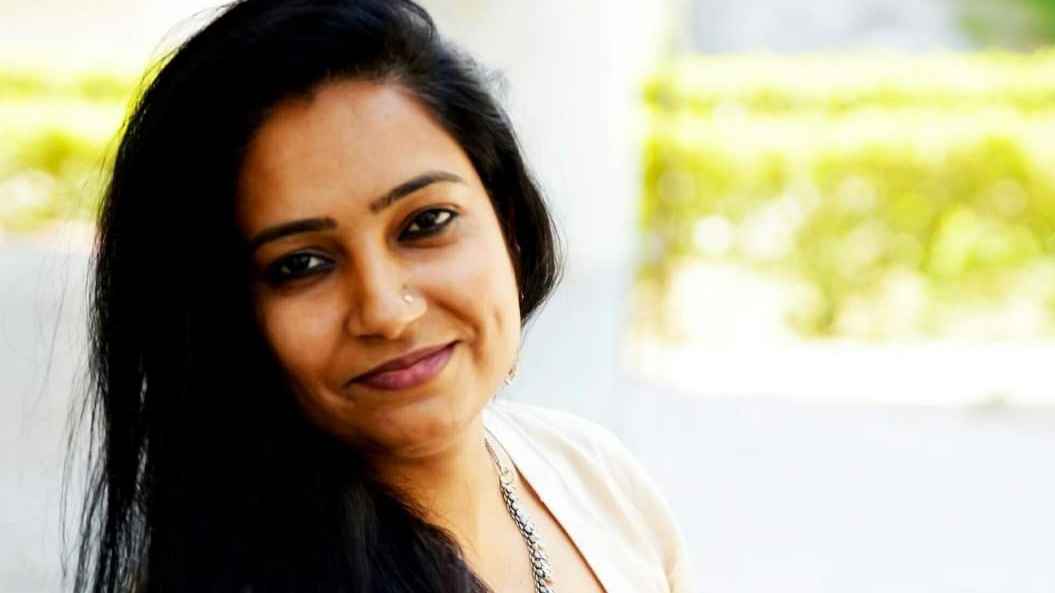
Religious clashes in India disrupted Naheda Shaikh’s life 20 years ago. After a hijab ban in schools sparked protests in 2022, she says students must learn to coexist in peace.
“We should embrace religious diversity by teaching tolerance and freedom of choice.”
Naheda Shaikh
I started the new year with hope. With a peaceful mind, I switched on the television to watch the news. On the screen, a girl walked on a college campus shouting, “Allah ho Akbar.” My eyes fixated on the TV as I wondered what had happened. That’s when I learned Muslim girls had been banned from wearing the hijab on the Mahatma Gandhi Memorial College campus in Karnataka, India. The news station was covering their protests. Hindu boys stood in counter protest of the Muslim girl, waving a saffron flag and shouting “Jai Shri Ram.”
I was shocked to see young people fighting like this in 2022. It took me back to 2002 when the communal riots – religious violence between Hindus and Muslims – shook my community. I was 22 and unable to complete my one-year fashion design course due to the clashes. My commute was 50 kilometers every day, and my instructors told me not to come to class because it was too risky for me as a Muslim woman. The riots broke my dreams and destroyed my plans. These unsettling memories from 20 years ago resurfaced as I watched girls face discrimination while undertaking their education.
The clashes in January broke out at Mahatma Gandhi Memorial College after right-wing Hindu students at the college demanded authorities order Muslim girls not wear the hijab. Many of these students believe that Muslim women have been coerced into wearing the hijab by their families and culture, while many Muslim women like me see wearing the hijab as a personal choice and an expression of our religious traditions.
During the past couple of months, the clashes gradually spread all over the state. As a result, the government of Karnataka issued an order stating that students must wear uniforms at schools where dress policies exist and no exception could be made for wearing the hijab. Several colleges cited this order, denying entry to Muslim girls wearing the hijab.
As news spread, protests by Hindu and Muslim students erupted across Karnataka. The government closed local high schools and colleges for three days for fear of violence. By then, the issue had become national and reached the high court. In mid-February, the high court temporarily ordered all students and teachers to remove hijabs and burkas outside the schools and leave them on the gates.
The high court’s ruling sent a message that the hijab is not an essential practice of Islam.
It is not only a matter of wearing a cloth; there are the psychological effects this ban has on young people who want the right to choose how to observe their religious traditions. As time has passed, the hate between Hindu and Muslim young people in this region has only intensified.
As a Muslim woman, I have never worn a hijab. Still, the ban affects me. If someone puts pressure on you for your personal matters, it is mentally distressing. I wouldn’t want to be forced to wear a hijab while wearing comfortable clothes, just as I wouldn’t want someone wearing a hijab to be forced to take it off in front of others. I think the hijab ban is not only an issue of dress choice but a way of marginalizing specific communities. These communities are not allowed to do what they want, which also happened in 2002 when Muslim people were asked to leave their places, unable to work, and forced to move away.
I reached out to a few experienced professionals on this topic, to help make sense of what is happening and to contextualize the court’s decision.
“The hijab ban further marginalizes a minority community,” says Midhat Moini, a Unicef consultant. “As a development professional, I feel it is a move which will further alienate a sizable section of the society and ensure they cannot participate in mainstream education. As a feminist, I am appalled. For heaven’s sake, when will we stop patronizing women? When will they have the autonomy to choose for themselves? When will the society clergy people or government and men in general stop deciding for us? It’s tiring and sad.”
“The hijab may not be essential to participating in Islam,” says Gazala Shaikh, an international development professional. “But banning it to appease the majority is surely an essential element in the disintegrating values of the secular fabric of India, which has had a myriad of hues living together in harmony.”
When Dev Desai, an activist and trustee of the ANHAD organization, visited families in Karnataka, girls shared how they had worn the hijab since their childhood and felt comfortable in it. The families did not believe it was the courts’ place to intervene in something that personally affected them. Dev says that the situation became worse when political parties became involved and started provoking students.
ANHAD stands for Act Now for Harmony and Democracy, an Indian socio-cultural organization established in 2003 as a response to the 2002 Gujarat riots. Organizations like ANHAD advocate that schools should teach students to coexist in peace – not violence.
I know ANHAD from 20 years ago during the riots when we fought to get our rights. I found the organization to be supportive as we faced these difficult issues. Years later, I’m happy that so many young people are involved in the organization and advocating for inclusion.
Isha Memon, a media professional and Muslim woman, discusses how traumatic something like the hijab ban can be to young people. “Overnight, you are trying to uproot a tradition,” she says. I agree with Isha that you cannot banish a practice like wearing the hijab, especially so quickly. It’s a fundamental part of who people are and how they practice their religion.
We must embrace religious diversity by teaching tolerance and freedom of choice. Girls will have to continue fighting for their rights. This fight will give them strength and courage to stand in front of anyone, whether an individual or a community, and demand inclusion and the respect we deserve.
This story was published as part of World Pulse's Story Awards program. We believe every woman has a story to share, and that the world will be a better place when women are heard. Share your story with us, and you could receive added visibility, or even be our next Featured Storyteller! Learn more.
- Peace & Security
- Human Rights
- Featured Stories
- South and Central Asia