
INDIA: We Are Reshaping our Economic Destinies
Dec 20, 2022
first-story


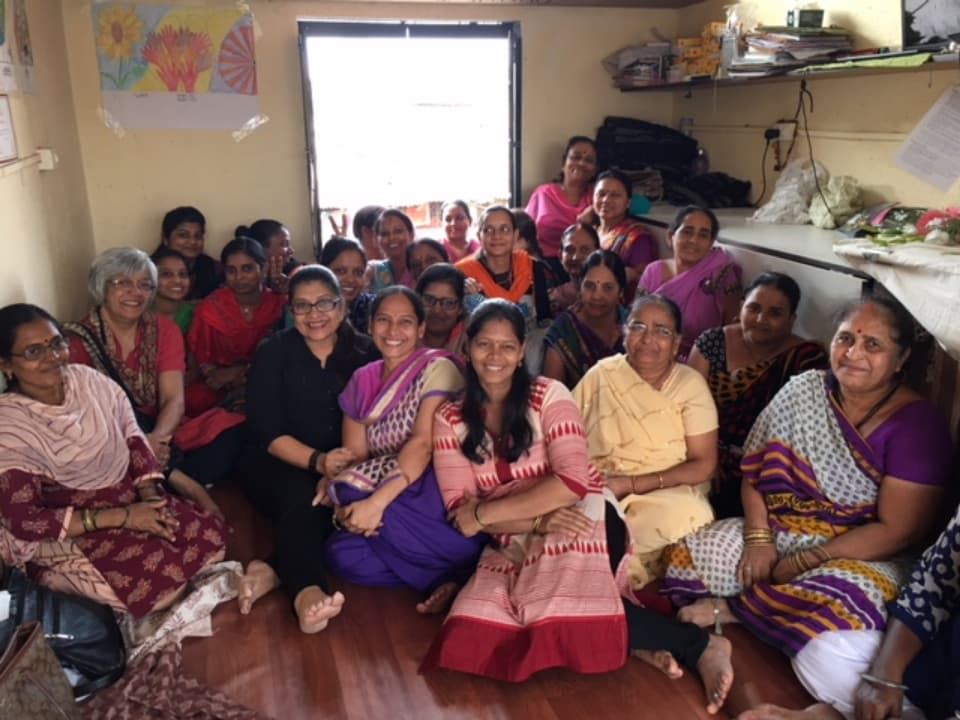
Photo courtesy of Pushpika Freitas.
When Pushpika Freitas returned to her home in Mumbai, she didn't set out to reshape women's economic realities. But that's exactly what she did.
This is more than economic development; it is a cultural revolution in which women have found their voice, power, and pride.
Back in 1980, I did not specifically set out to challenge tradition and re-make women’s economic destinies.
I was back at home in Mumbai after I had been away at college in India and graduate school in Chicago, IL. Inspired by my mother’s social work, I was developing a program for people in the slums suffering from leprosy. Two women from that area, who knew about me and my work, approached me to ask for help.
Their husbands had a history of getting drunk and selling whatever they could get their hands on to obtain money for more alcohol. When the men started drinking, the women would bring me their small kerosene stoves for safekeeping. These were meager household riches, but if they were sold the women would be unable to prepare food for their families.
They did not have money to buy new stoves, and it was uncertain when or if their husbands would give them money. This insight into the economic insecurity of women, and their lack of power in marriage and society started me on a path that led ultimately to the founding and success of the nonprofit and fair-trade organization marketplace: Handwork of India.
This “path” has had a lot of twists, turns, and dead ends because we were learning as we grew. At first I was the social science grad who thought I should dictate the program. But I quickly learned a vital lesson: listen to women. Learn from them about their abilities, desires, and priorities. There was no shortage of women in the neighborhood who needed to work and earn. Their husbands often were unemployed or working at menial jobs such as rickshaw drivers or laborers, where earnings were irregular and never very much. The women had to make do with whatever portion their husbands gave them. Often this barely covered food for the family, let alone new clothes or medicine or household improvements.
The women dreamed of being able to pay for not only necessities, but also for what they considered a prime goal: paying for their children—sons and daughters both—to stay in and finish school. They, however, faced many obstacles. Challenges included a lack of education, as many women had been taken out of school, often for early marriages. They also often had to deal with opposition from husbands, in-laws, and religious leaders who did not think they should work outside the home.
We began by teaching a very small group of women to sew patchwork by hand, work they could do at home, on their own schedule, and without having to pay for childcare or equipment. We sold the throws at church and home sales in the United States. Within 4 years our group had grown to over 75 women artisans.
Along the way we refined our product and marketing. We now sell a collection of women’s clothing and accessories produced by the women artisans featuring our own hand-dyed and hand-woven fabrics. The products are marketed through a professional quality catalog and website. Sometimes the garments include patchwork, a nod to our origins (and a beautiful way to use up leftover materials). Almost always there is hand embroidery, because it can be quickly learned and done at home, giving new artisans a quick start to earning.
By 1992 the artisans numbered over 120 and marketplace was restructured to encompass multiple independent cooperatives. By owning and running their own cooperatives artisans obtain marketable skills and develop their leadership potential.
From my experience, I have learned that change is complicated and there is no magic button. Earning money is an important part, of course, but it’s only one component of economic and social development for women. Some of the women I have worked with have never taken a bus, learned to read, or been asked for their opinion—ever. Psychologists and social workers at Share, our nonprofit partner in India, collaborate with the artisans to develop programs and provide information and support in any area needed. These range from learning to open a bank account to organizing social activism. The women have learned about their legal rights and health issues. They have performed street plays condemning domestic violence. Programs for the artisans’ children provide academic support, counseling and extracurricular activities to help the kids succeed and fulfill their mothers’ hopes and dreams for the future. The cooperative structure itself serves an important function as a safe place where women find sympathy, encouragement, and tolerance as they become more self-sufficient and self-confident.
Today, marketplace works with over 400 artisans and counting. Our strong sales have enabled us to help establish new cooperatives outside of the urban slums. In semi-rural areas north of metropolitan Mumbai there are few income-generating opportunities for uneducated women. Picking flowers to sell to wholesalers is one option, though this back-breaking work results in very little money. Women in the area have been strongly motivated to organize cooperatives, get training, and become productive. They are joining a community of women artisans who have become role models, leaders, and mentors in their communities and decision-makers in their families. These women have seen their children graduate and even go on to professional schools. They have used money they earned and saved to buy new homes. Their status at home and the community has risen with their self-respect and confidence.
This is more than economic development; it is a cultural revolution in which women have found their voice, power, and pride.
Thirty eight years ago two women took the initiative to stand up and take control. Since then I have seen hundreds more take advantage of the opportunity marketplace offers to assume control of their economic, cultural, and social destinies. They are supporting their families, educating their children, realizing their own potential and investing in our future.
This story was published as part of the World Pulse Story Awards program. We believe everyone has a story to share, and that the world will be a better place when women are heard. Share your story with us, and you could be our next Featured Storyteller! Learn more.
How to Get Involved
Learn more about marketplaceindia at marketplaceindia. Com.
- Economic Power
- First Story
- South and Central Asia