
INDIA: The ‘Yes’ That Changed Our Lives
Mar 26, 2019
first-story
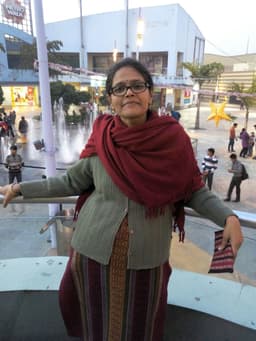


These young girls made me realize that learning is a joyous experience.
Before I met a group of young girls in a government funded NGO in my neighborhood, I had hardly questioned the world around me. I had heard that the NGO was doing great work and I was curious to interact with the young girls. My first interaction with these girls put a big question mark on my assumptions!

Most of the girls were engaged in Kantha stitching, a type of Bengali embroidery. I assumed that since they were working, they must be literate. I asked one young girl, “What do you do in the evening? Do You watch TV or read books? ”
The young girl angrily replied, “We do not have TV. Most of us are illiterate, how can we read books? ”
“There are programs for you, you can learn, ” I told them. “Learning has no age. ”
She asked me, “Who wants us to learn, our family or your government? These Programs are nothing but sheer mockery. Who would teach us? You? ”
For a moment I was quiet. I had no choice but to say yes.
I told them, “I can teach you, but you have to decide what you want to learn. ” To my utter surprise, they all together said, “We want to learn English. ” They did not know how to write the regional language, Bengali, yet wanted to learn English! I Did not know how to react, yet I promised to teach them beginning the very next day.
The head of the NGO tried to convince me that these girls were worthless; he told me I would only waste my time if I got into this kind of venture. As I listened to him, my heart could not ignore the twinkle in the girls’ eyes and their eagerness to relive life. I did not know how I would teach the girls without basic amenities, but I declined to yield.
I was taken aback to learn that all these girls were staying in a “distress home” because they were deserted by family members. These girls had no means of livelihood, no shelter, nothing to eat. To have two meals a day they were forced to do Kantha stitch for more than eight to ten hours every day. It only fetched them four hundred rupees per month (a little over $6 US). Their beds were crammed in one room, with barely any space to cook. The verandah was the only space available for our lessons, but this could not deter us from learning.
The first day is still fresh in my mind. I did not know how to start, but before introductions were over, we all were friends. Together we set our rules and decided on the subjects that we would study.
We went through my old notebooks and books on different subjects. I collected a few books from my neighborhood. Lack of resources never detered their interest.
In addition to English, they learned Bengali, mathematics, and science. Sitting on the floor, writing on the floor, we explored the world of the known and unknown. We transitioned smoothly from alphabets to words to sentences. I did not feel for a moment the fact that most of them were first generation learners.
Of course, some were very good in studies, they excelled; some were slow learners; some had interest in science, some in mathematics. Yet, all of us were learning in that small verandah.
After a few months, the girls showed such amazing progress that they wanted to organize a cultural gathering. They planned everything, from writing the invitation cards, to decorating the place, to creating the program. To my surprise, they wrote poetry and essays in Bengali; some tried in English. Some performed dance—all without taking anybody’s help. That evening they showed everyone they were not worthless girls, but human beings with potential, who deserve respect.
Within a week, the head of the NGO allotted a classroom with blackboard, books, pens, and notebooks for them. The girls rejoiced; they had everything they wanted.
After that, our learning was no longer restricted to the classroom and notebooks. I helped a few of the girls to sit for an examination to procure certificates for better jobs. I watched many girls decided to leave “home” to pursue their studies; some opted for vocational training in leather work, some in food processing. Gradually, the number of girls doing Kantha stitch started dropping.
The NGO administration was unhappy, but could not stop these girls from pursuing their dreams. Seeing girls preparing to leave, the NGO too began to provide them jobs.
I asked some of the girls why they were leaving the home where they stayed for years. What they said still echoes in my mind: “We no more need this ‘home’; we know what we want. You made us feel we deserve respect. Your simple ‘yes’ enabled us to read and write; it made us feel that education is the wind beneath our wings. Thank you for making us realize that. ” I was spellbound!
In the years since, I have reunited with a few of the girls while traveling; their beaming smiles tell me everything.
I do not know how much they learned due to my interventions, but I learned every day. Being a student of economics, I hardly had the opportunity to explore the world of education; these young girls made me realize that learning is a joyous experience.
I am grateful to these girls, who made me understand subtle nuances of education and empowerment. It was all possible because I listened to my heart that day.
About This Story
This story was written for the World Pulse and No CeilingsPath to Participation Initiative. With this initiative, we crowdsourced stories from World Pulse's global community to helpturnNo Ceilings: The Full Participation Reportinto a blueprint for action on the ground. Click hereto browse through the126 submissions we received from over 30 countries.

- Education
- First Story
- South and Central Asia