
INDIA: I Am Powerful, Beautiful, and Paraplegic
Dec 2, 2021
first-story

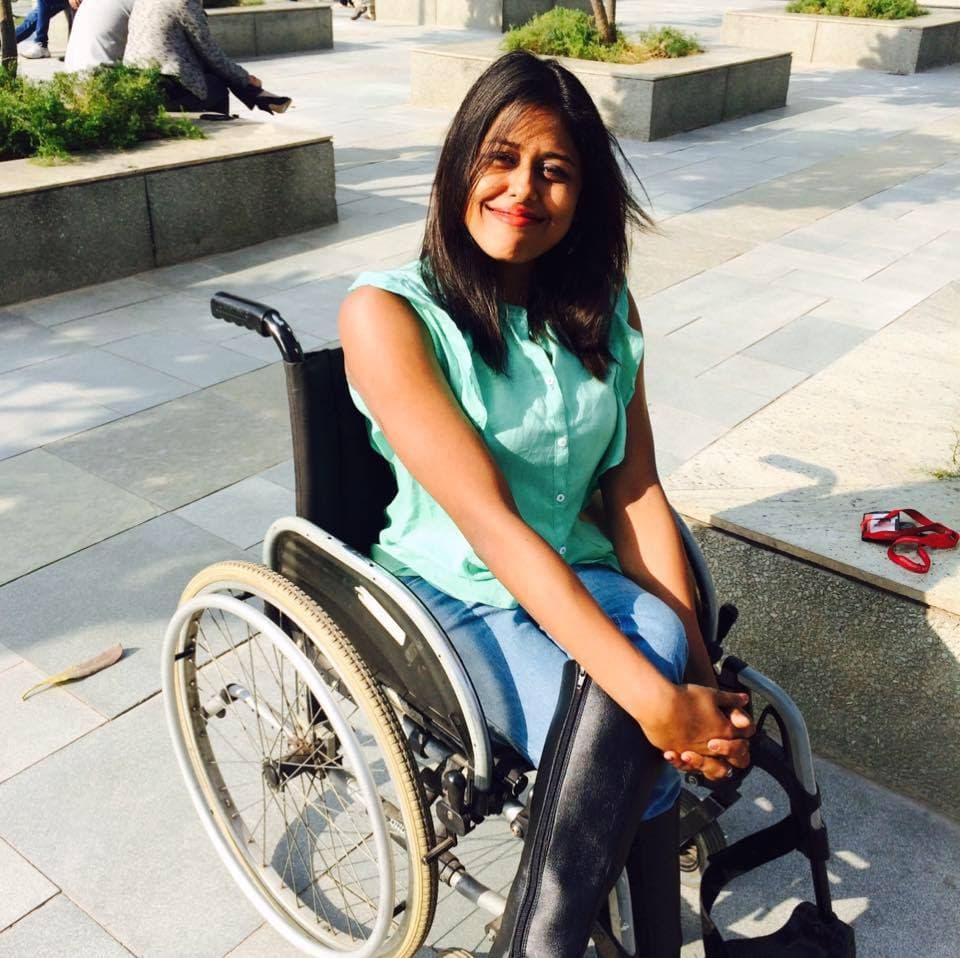
Driven by an unwavering belief in herself, Jolly spoke out for disability rights—and won.
I have had to fight to meet even the most basic of bodily needs at work—access to a clean, accessible washroom.
Karma didn’t make me paraplegic—a doctor did. I was born in Lucknow, India without a disability. But at the age of three, I fell ill and the doctor’s carelessness caused me to lose all feeling in my lower body.
Ever since then, I have battled with the widespread belief in India that being disabled is a sin or related to one’s karma. Today, I advocate for disability rights to help my society recognize that disability is a normal part of the human condition. In the process, I am smashing stereotypes and our society’s prejudiced, non-inclusive idea of beauty.
When I first became disabled, I was too young to understand what was happening to me. But as I grew up, I realized I was different from other children. As a small child I heard people trying to convince my parents that I was useless and had no future. Fortunately, my parents brought me up exactly the same as my sister who does not have a disability, and this attitude has shaped the woman I am today.
My father would tell people who doubted me that time would prove who I am and what I am capable of. I graduated college and started working, proving that I can achieve educational and professional success.
A few years ago, I married a man who has a visual impairment and is a fighter like me. At the time of our marriage, people made comments about this match with a “girl who cannot walk. ” Some people talked about my dusky complexion, my body, and overall looks. I pity such people for their narrow-mindedness.
Despite my success working at multinational companies, I have had to become thick-skinned. Coworkers feel embarrassed to have coffee or lunch with a person in a wheelchair, or even to walk alongside me. It hurts, but they cannot hold me back.
I have had to fight to meet even the most basic of bodily needs at work—access to a clean, accessible washroom.
When I first began working at my company, I discovered that the “wheelchair friendly” washrooms were not constructed for specially abled people. They lacked wall railings to help shift from the chair to the pot and the doors were heavy and impossible for a wheelchair user to operate alone. The height of the pot was too low, while the mirror and washbasins were too high for a person in a wheelchair to use.
Worst of all was the lack of hygiene. Imagine a dirty toilet with stinking water all around and nothing to hold onto. I started developing frequent urinary tract infections.
For seven long years, I kept this nightmare to myself. I worried thatif I raised my concerns the company would deemmy demands unrealistic.
I would sometimes wear adult diapers to avoid the hassle of using the washroom. I began drinking less water, which likely contributed to a kidney stone and infection that left me bedridden for four months.
Last December, I penned an article about these challenges on Youth Ki Awaaz. I wanted the world to know what it is like to be a healthy, young adult who still needs to wear adult diapers because we don’t make accessible bathrooms in this country. I wanted to help change mindsets.
It was not easy writing about such intimate details, but to my shock and surprise, my story made a difference. It was read over 200, 000 times. The best part is that my company took notice and made sure things changed. They corrected the doors and started cleaning the washroom regularly. They even installed a dryer to help keep my hands warm.
By advocating for myself and moving through the world with confidence, I am changing people’s misconceptions about people with disabilities.
In my heart, I know what I am capable of. I might not be able to walk. But I wheel myself around with attitude. I dress up to the nines, and live my life to the fullest.
I believe that only if we love our own selves can we also love others as they are. Today, I can proudly say that I am hot and sexy and I love my body, and myself, just the way I am. Do you?
STORY AWARDS
This story was published as part of the World Pulse Story Awards program. We believe everyone has a story to share, and that the world will be a better place when women are heard. Share your story with us, and you could be our next Featured Storyteller! Learn more.
- Health
- Disability Justice
- Human Rights
- First Story
- South and Central Asia