
In the Name of Women , Girls , Food and Nutrition: When Negotiations go Haywire
Feb 26, 2023
story
Seeking
Visibility


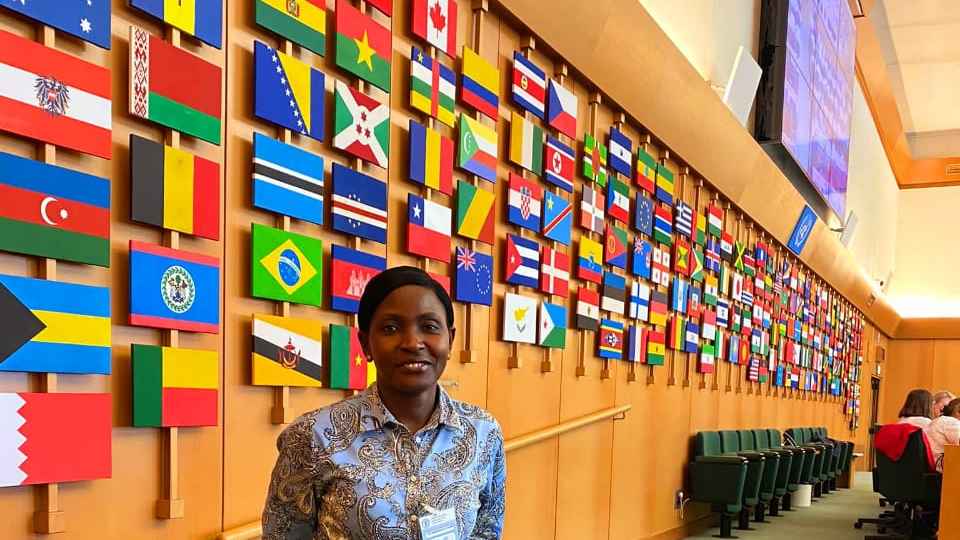
FAO Headquarters-Rome
“If you are neutral in situations of injustice, you have chosen the side of the oppressor. If an elephant has its foot on the tail of a mouse, and you say that you are neutral, the mouse will not appreciate your neutrality.”-Desmond Tutu
I had the honor to participate in negotiations on gender , women and girls in the context of food and nutrition for around three years, under the Civil Society and Indigenous Peoples Mechanism(CSIPM) .At the onset I was a passive follower in the negotiations , just listening to what was being discussed, partly because I was still learning and so new to this process. With time , I engaged more ,particularly because when the negotiations touched on issues that I grapple with on day-to-day basis in the informal settlements of Nairobi’s Eastland's area, and the meandering hills and valleys Muvuti-Machakos in Eastern part of Kenya. Yes , the subject of women , girls, food and nutrition.
The presence of African people in these negotiations is often hindered by various factors such as the cost of air tickets among other deterrents. Africa is a continent with 54 independent states , however when you get into the negotiation room in Rome , you find that the number of African countries or the global South in general is not well represented. If you are not at the table, it means you do not exist , it means your views and realities are not included hence never to be acknowledged.
I had often been an online participant, raising African issues from a computer screen , luckily come 2022 , I got the opportunity to go to Rome and negotiate, yes , negotiate as part of the African delegation. The responsibility was enormous , one has to really prepare , go through documents text by text. In negotiation rooms a word , a full stop can change the meaning of a sentence. There are also compromises to be made .Sometimes the negotiations go late into the night , other times you reach an impasse , especially when an issue is contentious , the negotiation room literally become hot and you can feel the tension.Some other times , the negotiators cannot move with a text until they consult with their capital cities , in the process of consultation and given the different time zones, you have to wait until they get feedback.
There are also those who come in to disrupt negotiation processes .They do not attend the negotiations in previous sittings and when they come , they take you back to what had been discussed .This means that a text will not be agreed until it is discussed again. And then there are those negotiators who are patriarchal in nature .Anything that can give women an ounce of power is rejected immediately. It gets even more ironical if the negotiator limiting issues affecting women is a fellow female. The question that forms in your mind then is in whose interest is this negotiation engagement?.
Language has a lot of power when it comes to negotiations. There is often a statement often repeated as ‘agreed language’ and in the negotiation process, one has to conform to the agreed language. Translation is also an issue , especially for those who due may not speak English. Sometimes words get distorted in the translation process and this inhibits effective participation and proper intervention through inputs. My grandmother in Siaya county , may have all the issues that she wants to bring in such a space, but since she onlys speaks Dholuo and some bit of Kiswahili, she may not have a chance to share her perspectives.
Negotiations are normally emotive platforms , it is about stakes, it is about jostling for positions , it is about power and interests. In the negotiation process , everyone fights to have their interest recognised and included and finally adopted as agreed text.
Within the Committee on World Food Security (CFS) , Voluntary Guidelines on Gender Equality and Woman’s and Girl’s Rights Empowerment in the context of food security and nutrition includes policies and strategic approaches, full, equal and meaningful participation , voices and leadership in policy and decision making, access to labour markets and decent work, involvement in food systems as producers and entrepreneurs, access to financial services and social capital , access to and control over natural and productive resources including land, water , fisheries and forests, access to formal education , access to extension and advisory services,, access to ICT based , digital and innovation technologies , empowerment across food security and nutrition in conflicts, humanitarian crises and emergencies.
Sometimes , the subject matter of the negotiations becomes contentious because each party has their vested interest on the issue. The negotiations often bring together member states, business sector, Civil Society , the Holy See , the UN Women , the European Union as a collective. For example, CSOs view issues from the lens of the people , the marginalised and oppressed of society. Their interest is on humanity and rights , the business sector may view the negotiations in terms of profitability and expansion of market share and how the outcome of the negotiations are likely to positively impact on their enterprises.
Sexual and Gender Based violence within food systems have often been a contentious issue .The main reason in my view is the fact that the negotiators come from different worlds and diverse realities .For people from the Global South Sexual and Gender Based Violence for example hinders women from controlling productive resources of which land , upon which food , a key subject matter of the negotiations rests. In some communities in Kenya, a woman cannot till the land without asking for permission from her husband, in others when women question the sale of farm produce by their husbands , they are subjected to physical violence. As shared by Getrude Kenyangi of the Support for Women in Agriculture and Environment ( SWAGEN) in Uganda , of a woman who had her hands chopped off when she questioned the husband on the sale of farm produce.
For women in the food chain , employed as workers in plantations, have to endure with sexual violence in their bid to eke out a living and example is the BBC expose[1] on tea plantations .This sexual exploitation also happens in flower farms as evidenced by research work previously done by the Kenya Human Rights Commission.[2]The other contentious issues has often been intersectionality. In African context one women or girl can suffer from multiple and intersecting forms of oppression. Take for example a woman with disability, who is widowed , has been evicted from her land and cannot produce food to feed herself and her children .The multiple oppressions this woman is suffering from include landlessness, homelessness, disability all experienced by the same person.
This makes it very important for meaningful representation of regions in the negotiation processes. My realities as an African woman when discussing ICT may be totally different from a fellow woman in Europe .In Africa we have places where ICT is a mirage because an entire village does not have access to electricity.
Access to and control of land for women in other continents may be based on equity , however in Africa , patriarchy subjects women to discrimination . In such a scenario during negotiations one has to bring out the local examples , the local realities.
[1] https://www.voanews.com/a/bbc-uncovers-sexual-abuse-on-keyan-tea-plantations/6970453.html
[2] https://www.khrc.or.ke/publications/63-wilting-in-bloom-the-irony-of-women-s-labour-rights-in-the-cut-flower-sector-in-kenya/file.html
- Training - Digital Storytelling
- Africa