
I Won’t be Silent About Gender-Based Violence
Dec 20, 2022
story
Seeking
Visibility


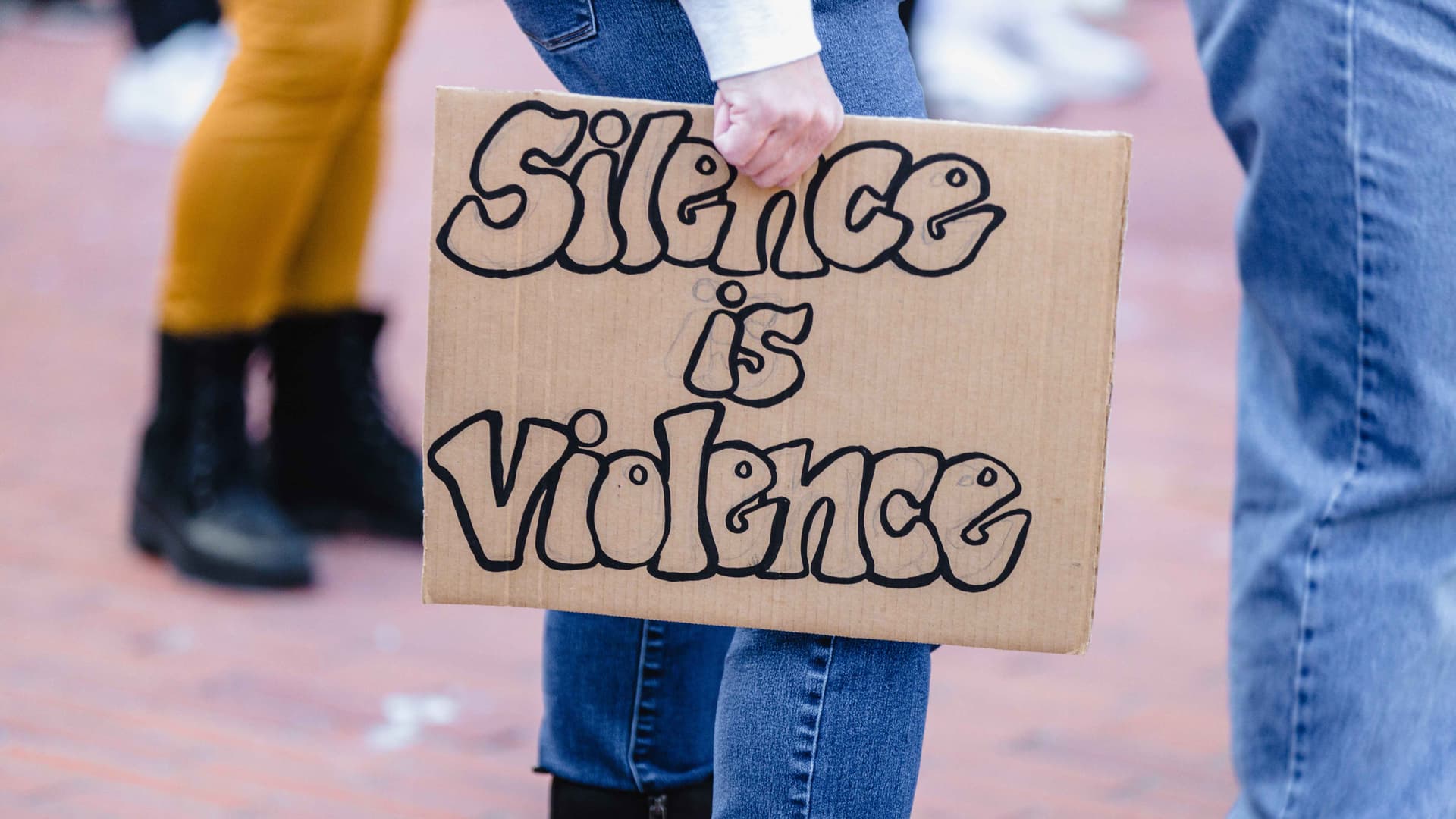
After a woman was brutally murdered in Trinidad and Tobago, Elizabeth Francis urges her community to move beyond normalizing violence.
We must do more to protect our women. Once we identify those at risk of being the next statistic, nothing should be left to chance.
Elizabeth Francis
Now that the 16 Days of Activism against Gender-Based Violence are over, I'm compelled to do some introspection. In November, our local newspapers detailed the latest headlines about a woman brutally murdered by her former husband after enjoying less than one year of wedded bliss. He also chose to end his life, refusing to face the consequences of his actions.
Our domestic violence numbers are increasing so rapidly, and yet this latest act of horror only evoked anger in the victim’s immediate circle and a few shocked voices in the broader community. As a nation, there seemed to be an agonizing silence.
Where were the women's groups? Where was the outcry from the churches? Where was the outrage from women seated in parliament? This was a woman who was a law professional, a teacher, and a well known community member. One would think she was in a great position to secure her protection – to have access to provisions made for women facing domestic violence. But no – even she wasn’t able to escape his fatal wrath.
In the aftermath of violence, we often hear about the horror a perpetrator unleashed on the victim over time, making their life a living hell. But in my country, we as women are raised to easily forgive and forget.
We will show love, are the first to assist those who only recently hurt us, and we always think that what has happened to our neighbor won't happen to us.
Women who are in the thick of abuse will say, “He is not the violent type; he may get angry, but he will never murder someone; he will never murder me.” We must do more to educate women about violence and equip them to leave violent situations.
I sometimes wonder if women at risk understand that there are people out there fighting for them – fighting to change laws, to keep them safe. I wonder if they know that we all feel the pain when a perpetrator violently snuffs out life, and we all wish for it to stop.
“Despite headlines describing the abuse and murder of women, unfortunately, most victims do not report instances of domestic violence to the relevant authorities, including the police,” a recent local article states.
The report continues, "Speaking at today’s Joint Select Committee’s second public inquiry into the State’s capacity to provide support for victims of domestic violence and family conflicts, President of the Coalition Against Domestic Violence (CADV) Roberta Clarke noted that she was unable to give an exact figure on whether or not reports of violence increased over the last two years as 'a lot of those go unreported.'"
And therein lies the problem. Culturally there is a misconception of what defines domestic violence. Are we such a violent society that we consider certain acts of violence the norm, just a way of life? Do we believe that conflicts are part of life and excess force is one option for resolution?
Despite the truth in many cases going unreported, I think the more serious ones reach the authorities and the courts. What I think should be of more concern is the nonchalant attitude with which that information is handled by those in authority and those advocating for an end to domestic violence. In my humble opinion, we must do more to protect our women. Once we identify those at risk of being the next statistic, nothing should be left to chance.
It’s a sad state of affairs when this is where we have reached as a nation. According to the article, domestic violence is the number one crime committed in Trinidad and Tobago. Clarke, the President of the Coalition Against Domestic Violence, said our country needs the political will to address the situation as “action taken by the state against such cases must meet the demands for the service.
At the end of the day, it takes all of us to make a difference in this fight. I pray the silence isn't a sign of defeat or acceptance that the battle seems lost, but rather a regrouping. I pray my initiative SETUP becomes a reality to fill some of the serious gaps in the system — to create a safe haven, a place of serenity.
STORY AWARDS
This story was published as part of World Pulse's Story Awards program. We believe every woman has a story to share, and that the world will be a better place when women are heard. Share your story with us, and you could receive added visibility, or even be our next Featured Storyteller! Learn more.
- Gender-based Violence
- 16 Days
- Latin America and the Caribbean