
I Miss who I was; The Cost of Survival
Jul 7, 2026
story
Seeking
Feedback


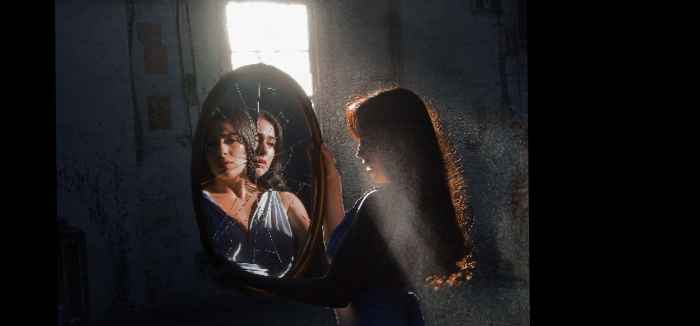
She stopped chasing perfection and embraced every fragment."
Ayesha , a young ,simple, energetic and lively girl had always believed her life would be different. Growing up in a small town, she carried dreams larger than the horizon—dreams of becoming a teacher, of shaping young minds, of standing in front of a classroom with chalk in hand and hope in her voice. Her notebooks were filled with lesson plans she imagined, and her evenings were spent tutoring neighborhood children who adored her patience and warmth. She was certain that education would be her path to freedom, her way of breaking cycles of silence and poverty.
But violence came like a storm she could not escape. It was not sudden—it crept in slowly, disguised as control, disguised as love. At first, it was words that cut deeper than knives, then restrictions that clipped her wings. And then, one night, it became physical. The bruises faded, but the fear did not. Gender‑based violence had entered her life, and with it came a shattering of the person she once knew.
Every morning after, Ayesha woke with a heaviness she could not name. She looked at her books, once symbols of possibility, now gathering dust in the corner. She tried to read, but the words blurred. She tried to write, but her hand trembled. The violence had stolen not only her safety but her sense of self. She no longer recognized the girl who once laughed freely, who once believed she could change the world.
Her dreams of teaching dissolved. She missed deadlines for scholarship applications, too afraid to leave the house. She stopped tutoring the children, ashamed of the marks on her skin and the silence in her voice. Opportunities passed her by like trains she could not board. Each one carried away a piece of her future, leaving her stranded in a station of despair.
A defining aspect of gender-based violence (GBV) is the use of control to dominate another person. Perpetrators may restrict a survivor's freedom, monitor their activities, control finances, isolate them from family and friends, or use threats and intimidation to maintain power. These controlling behaviors undermine autonomy, create dependency, and make it more difficult for survivors to seek safety and support.
The pain was not only physical—it was the pain of knowing she could have been more. She could have stood in classrooms, inspired generations, written books, led campaigns for education. Instead, she was trapped in survival, her potential locked away behind invisible bars. She felt betrayed by life, by the promises she once whispered to herself under the stars.
At night, she dreamed of the person she used to be. In those dreams, she was whole, she was strong, she was free. But waking up was cruel. Reality reminded her that she was broken, that her laughter had been stolen, that her wings had been clipped. She mourned not only the violence but the loss of herself—the girl who had believed in tomorrow.
Yet, even in the depths of her pain, a small ember remained. It flickered when she saw children walking to school, their backpacks bouncing with hope. It glowed when she remembered the joy of teaching letters to little hands. That ember whispered that she was still here, that though shattered, she was not gone. Survivorship was not the life she chose, but it was the life she carried.
Ayesha’s story is one of countless others—stories of women whose dreams are silenced by violence, whose potential is buried beneath fear. Her pain is not only personal; it is collective, echoing across communities where survivors struggle to reclaim themselves. She is a reminder that gender‑based violence does not end with bruises—it steals futures, it erases possibilities, it robs the world of voices that could have changed it.
The emotional pain associated with gender-based violence (GBV) extends far beyond its immediate physical consequences, often leaving profound and lasting psychological scars. Survivors frequently experience intense feelings of fear, shame, grief, anxiety, and helplessness, which can significantly affect their emotional well-being and quality of life. The trauma of GBV may erode self-esteem, diminish trust in others, and disrupt the ability to form healthy interpersonal relationships. Many survivors also face social stigma and victim-blaming, further intensifying their emotional distress and discouraging them from seeking help. In some cases, the psychological impact may develop into depression, post-traumatic stress disorder (PTSD), or other mental health challenges that require long-term support. Recovery is a gradual and deeply personal process that depends on access to compassionate care, supportive social networks, and effective professional services. Recognizing the emotional consequences of GBV is essential for developing trauma-informed responses that uphold survivors' dignity, promote healing, and foster resilience within individuals and communities.
And yet, Ayesha breathes. Each breath is resistance. Each step is defiance. Though her dreams lie shattered, though her potential feels lost, her survival itself is a testament to strength. She may never stand in the classroom she once imagined, but her story stands as a lesson: that violence destroys, but survivors endure. That pain is heavy, but resilience, however fragile, still flickers in the dark.
Fragments of Me
I once carried sunlight in my skin,
a laughter that rang from deep within.
But shadows came, uninvited, unkind,
and tore apart the peace of my mind.
Hands that should have held with care,
became the weight too cruel to bear.
My body remembers what words can’t say,
each scar a map of yesterday.
I walk through streets with a hidden face,
searching for traces of a safer place.
The person I was feels far away,
a ghost that lingers but cannot stay.
Nights are heavy, silence loud,
I shrink beneath the unseen crowd.
Every step is stitched with pain,
a reminder I’ll never be the same.
Yet in the ruins, a spark remains,
fragile hope through endless chains.
Though broken, battered, scarred, and torn,
I rise each day, though I mourn.
Survivor’s strength is not a song,
it’s living each day when nights are long.
It’s breathing when the air feels thin,
and daring to dream of healing within.
- Our Impact
- Becoming Me
- Survivor Stories
- Caring for Ourselves
- #EndGBV
- Behind the Headlines
- Global