
HONG KONG: Lesbian Migrant Workers Face Layers of Discrimination
Jul 2, 2021
story


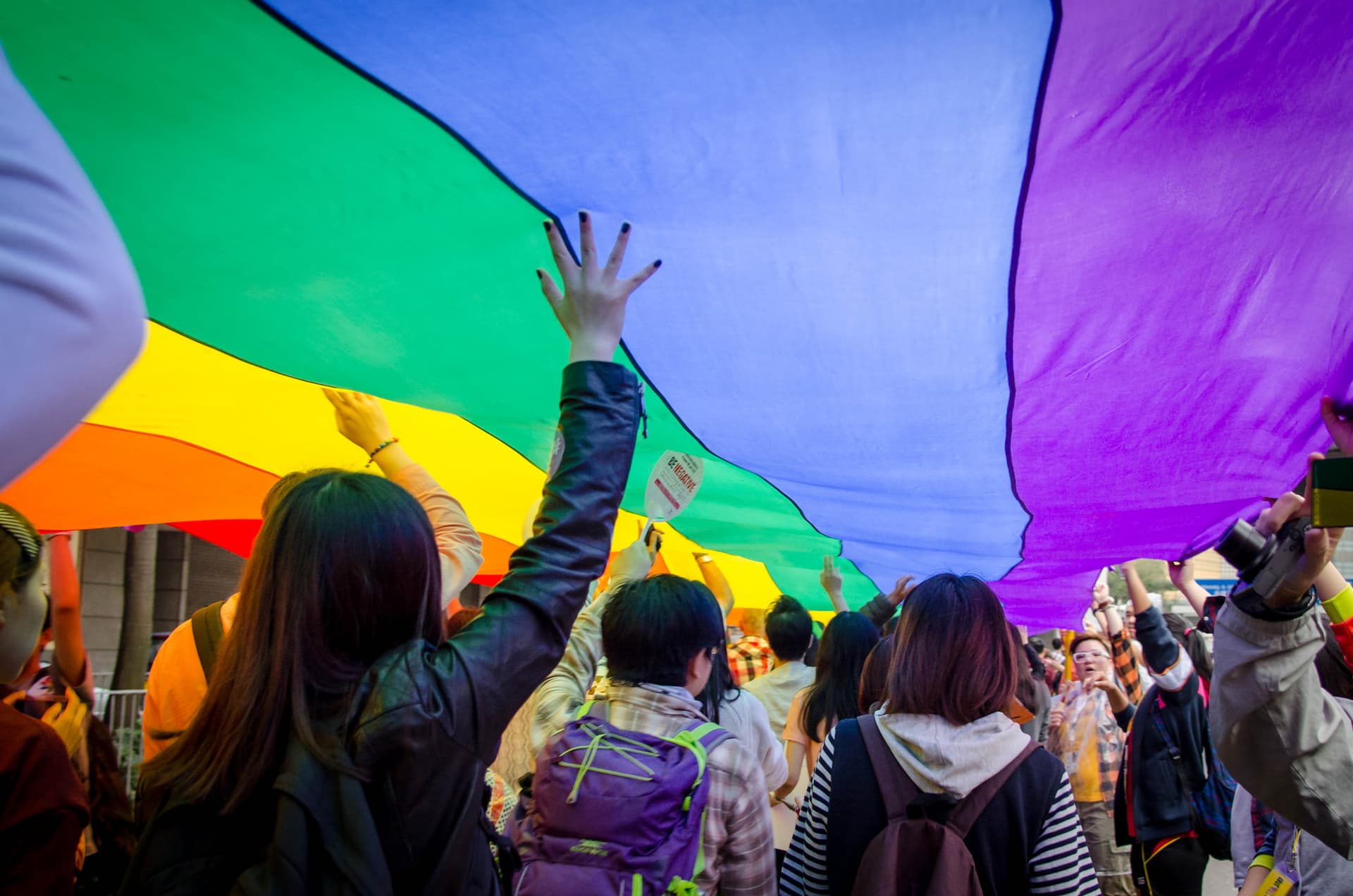
Photo © doctorho on Flickr (CC BY 2.0)
When a woman was forced to leave Hong Kong because of her sexuality, an activist for LGBT rights knew she had to speak out.
Now that more employers are aware of and suspicious of homosexuality, there has been increasing pressure on workers to 'act straight'or face dismissal.
On May 1st, 2006, while most Filipino workers in Hong Kong were celebrating the international Labor Day holiday, Mia* was preparing for her impending departure from the country. A few days earlier, Mia’s employers terminated her work contract after discovering she had been in a two-year relationship with a woman named Jen*.
Plunged into crisis, Mia and Jen met one last time in Chater Garden—the same place where they used to sit together every Sunday, on their one day off. Meeting here reminded the couple of their borrowed hours of happiness. Jen told me she had been dreaming of a home in the Philippines for the two of them. “After we earn enough money, [we will] live like husband and wife, and adopt a baby, ” she said. Now that future was uncertain.
Hong Kong law requires household employees like Mia to have a contract with an employer, and gives migrant workers whose employment has been terminated mid-contract only 14 days to find a new employer. If they fail to secure a job within the two weeks, they have to go back home and wait, without knowledge of when another opportunity for a contract might come through.
When I met Mia and Jen, they were among over 120, 000 Filipina women working as live-in helpers in Hong Kong on government-approved two-year contracts. Today that number has risen to over 177, 000. Worldwide, there are currently over 10 million people of Filipino descent working or living abroad, and the remittances they send home are an important part of the Philippines economy.
Domestic workers in Hong Kong are often on call for 16 hours a day, sixdays a week. Many employers ignore the terms of their government-written employment contracts, leaving migrant women vulnerable. Those who are lesbians are especially at risk.
Lesbian Panic
Shortly after Mia was laid off, she went on a job-hunting spree, but she didn’t have much luck finding a friendly employer who would accept her the way she is.
Nicole Constable, an American researcher, writes that it is impossible to estimate how many Filipina lesbians are living in Hong Kong. In a study of Filipina domestic workers, Constable says that lesbian migrant workers were relatively unnoticed by their employers until 1996. That year, a television news documentary quoted a member of a domestic worker's union who estimated that a quarter of all Filipina domestic helpers were lesbians. This documentary suddenly sparked the concern of employers about lesbianism. Hostile letters were sent to the local newspapers and employers erupted in a moral panic over the discovery of lesbian Filipinas in their households.
Mia’s termination by her Chinese employers indicates that homophobia still existed 10 years after the “outing” of lesbians in the 1996 letter-writing campaign—and it still exists in Hong Kong today.
Not Alone
In the years after I met Mia and Jen, I have metmany more foreign domestic helpers in Hong Kongwho have found love and strength from their same-sex partners. As I documented their stories of heartbreaks, frustrations, courage, and determination, I began to realize that their stories were pushing me to the frontline of the feminist movement to tackle discrimination and exploitation. I have been an activist for migrant rights and LGBT rights ever since.
There are some dedicated activists in Hong Kong working to prevent heartbreaking situations like Mia and Jen’s forced separation. One woman named Jean Leano learned how to defend her rights as a migrant worker at an organization called the Mission for Migrant Workers. She then went on to become a long-term volunteer at the Mission, teaching and providing counseling and legal assistance to other women.
Mia’s story definitely sparked some mixed feelings in Jean. “She should have come to us! Even If I can’t help her, we can still find her a lawyer, ” she said. But on the other hand, Jean is scared for herself even with all the legal resources she has available to her.
“My male employer doesn’t know, ” Jean told me. “His wife hasn’t come yet. I’m not sure if she is homophobic. ” As a butch lesbian or ‘T-bird’, Jean is still cautious, to ward off any possibility of being discovered.
Jean said it is common practice for household workers to transform themselves to employers’ expectations: womanly, plain, unadorned. They often hide any familiarity with urban styles or erase any suggestion of sexual deviance in order to enhance their chances of securing and keeping a job.
Jean confirms that now that more employers are aware of and suspicious of homosexuality, there has been increasing pressure on workers to “act straight” or face dismissal.
Out of Options
For Mia, once she lost her contract, she had little recourse. She could have tried to defend her rights through the government’s Equal Opportunities Committee (EOC), but she did not feel she was within the government’s sphere of mercy and justice. If she were to file a discrimination case at the EOC, she feared that it would drag along for too long. And she was running out of time and money.
Instead she decided to leave for Macau in a desperate attempt to get herself another visa to Hong Kong. Before she left the country, Mia worked part-time and trial jobs to support herself, even though the law prohibits migrant helpers from part-time employment.
On May 13th, Mia embarked on a ferry to Macau. She was lucky enough to get past Immigration in Macau, and to have a free home-stay at a friend of Jen’s. But after 14 days, she was visited by another crisis—her plan to return to Hong Kong failed. With hope gone, she got on a plane to the Philippines instead.
She couldn’t make her way back to Hong Kong this time, she told Jen. She didn’t know when she might be back.
“This is life, you have to deal with it, ” Jen told me.
A few days after their last talk on the phone, I saw Jen at a candlelight vigil to commemorate the human right activists killed by militaries in the Philippines. The candle she was holding brightened her features as she smiled sadly.
“I’ve got to stay, ” she said. “My employer will renew the contract with me in October. ”
Uniting LGBT Migrant Workers
The Mission for Migrant Workers is one of only a few queer-friendly support networks in Hong Kong dealing with migrants. Although they consider gender-sensitive programs a high priority, these have generally lagged behind, due, they say, to insufficient resources for its operations and services. There are other isolated advocates for LGBT migrants in Hong Kong. For example, a Filipino priest, Reverend Dwight Delatorre provides a welcoming space at his church. But it was clear to Mia that more resources are needed.
On her last Labor Day in Hong Kong, Mia told me she hoped to return and set up a gay and lesbian organization for migrants. The migrant organization would follow the example of the local LGBT support groups to fight for their own rights. Mia imagined a day when lesbian women like her would have the freedom to be themselves. They would no longer be afraid of “coming out”.
I have lost contact with Mia, but I hope she will be happy to know that there are a growing number of LGBT migrant support groups making their voices heard in Hong Kong. They have successfully organized two migrant pride paradesto celebrate diversity and advocate equality for all regardless of their gender or sexual identities. Local LGBT communities have also joined hands with migrants to push for anti-discrimination laws to protect LGBT rights. We mustkeep pushing forward to keep Mia's dream alive.
*Names have been changed
STORY AWARDS
This story was published as part of the World Pulse Story Awards program. We believe everyone has a story to share, and that the world will be a better place when women are heard. Share your story with us, and you could be our next Featured Storyteller! Learn more.
- Human Rights
- South and Central Asia