
Girls' Body Dignity through Toilets
Jan 10, 2020
story
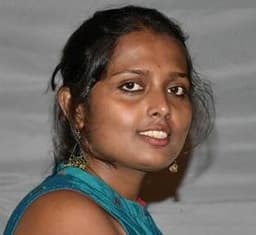


I have lived in Mumbai's slums 30 years of my life. Yes Mumbai, the economic capital of India. One face of Mumbai are the high rises and other face is that of a bunch of slums. Who live in slums? Not the rich, powerful, coming from privileged backgrounds. People living in slums come from vulnerable, powerless, resourceless areas of society. I know, because I am one of them.
People living in slums regularly struggle for their basic amenities such as water, food, shelter, electricity and face various problems of addiction, illiteracy, and so on. When I was in class 9, a friend from school had come over to my house in the slum. He saw my day's schedule chart hanging on the wall and laughed. He laughed because it was different from his schedule chart. His chart had activities such as sports, studies, tuition classes and so on. While my chart showed I had put aside 1.5 hours of my day for \"toilet\". He thought this was really funny and kept laughing about it. I felt awkward and uncomfortable but could not say anything to him because that was my reality.
Day by day, I overcame various odds and completed my schooling. Around the age of 17 or 18 I got married as is the custom in my community and we continued to live in the same slum situation. We lived in a house consisting of a room of 8x10 feet - such rooms stacked one on top of another. Such houses do not have toilets in them.
Throughout my student and professional life, I have often been asked why I am late. While others have answers such as \"I am late due to the late trains\", or \"I am late because had to attend a family function\", my answer is \"I am late because of the long queue at the community toilet\". But of course I can never give this answer.
I can never forget one incident. I was 8 months' pregnant, at only 18. I had very little knowledge about pregnancy, sexual health or reproductive health. I was alone in my one-room house and was suffering from high fever, weakness and diarrhoea. I needed to visit the community toilet but it was far from my house and no one to help me get there. I somehow got myself to the toilet and saw a huge queue of people waiting to use the toilet. The pain in my stomach and back were unbearable, almost like labour pains. A kind woman let me go in before her. I went into the toilet block and cried. I did not know - who was to blame for what I was facing? Was it my fault? And who else?
Situations ten times worse than these due to community toilets has caused me immense mental distress since my girlhood. I never forgot this question - \"whose fault is it?\" and continued my daily routine. I started working in some NGOs and campaigns, and began to develop lenses of body dignity, sexuality and reproductive health. One of these was the Right to Pee campaign for safe, clean, free public toilets for women and girls. I finally realized that it was not my fault. It was the fault of the administration which is not sensitive and indifferent to girls' and women's body dignity and expressions. The fault is of the government which is not responsive to people's basic needs.
In 2016, after many years of work, I formed my own organization called Anubhuti to work for social justice. During our work, we had organized a meeting with community women and I asked them, \"What is the one problem that you need to solve urgently?\" All women replied in voice, \"Sister, it is the condition of our community toilets.\" My personal experiences were once again triggered. There was a further cruel situation, that these women came majorly from Dalit communities - who are considered lower in the Indian caste hierarchy. People from Dalit communities historically clean the toilets of people living in better conditions, and they are themselves struggling for their basic right of dignified toilets. At Anubhuti we decided to raise the campaign for toilet for girls and women, toilet for communities. We organized girls and women of the community, met the local elected leaders, ran a sustained campaign with signature drives, flash mobs and so on. Finally we succeeded in getting the local political leader to repair and reconstruct one community toilet. This girl-led change was a great moment for us. But I thought to myself, this is only one step, this is only the beginning. I cannot stop now, the situation remains the same.
When I was a young girl, I was humiliated and in pain because I was powerless - one of many in the community. But today I am a recognized grassroot young woman leader and I am striving to create platforms of empowerment and justice for many girl and women leaders like me.
- Leadership
- Girl Power
- Health
- Gender-based Violence
- South and Central Asia