
From Shadow to Sunshine - How CTWOO Shaped the Journey of Joan Aluse
Aug 24, 2026
story
Seeking
Visibility
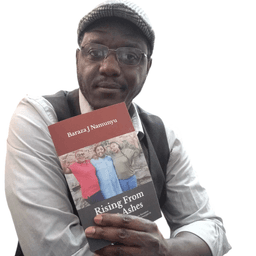

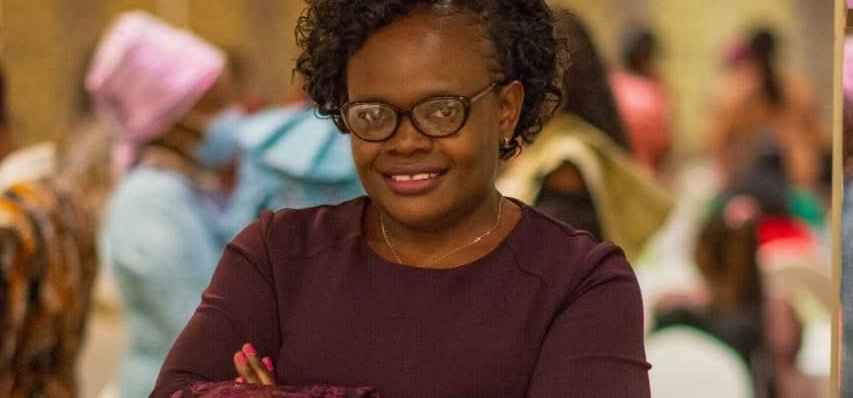
Photo Credit: Joan Aluse, Facebook
Introduction:
True leadership is rarely forged in moments of absolute comfort. Instead, it is born in the fires of personal adversity, emerging when an individual chooses to transform private grief into a public catalyst for structural change.
For Kenyan educator and community champion Joan Aluse, life’s trajectory was completely redefined by severe personal hardship.
Born into a humble family in Vihiga County, Kenya, her early years were marked by a continuous struggle for necessities, including school fees. Yet, her greatest trials lay ahead in adulthood, where her roles as a widow, a mother, a community leader, and a dedicated teacher would converge.
The pivotal anchor through this complex evolution has been her deep involvement with the Come Together Widows and Orphans Organisation (CTWOO)—a leading Kenyan grassroots movement that rescues vulnerable women from systemic oppression and restores their social dignity.
The transition into widowhood is often accompanied by an abrupt loss of identity and structural safety. In many community contexts across East Africa, a widow does not just grieve a spouse; she is frequently subjected to gender-based injustices, social isolation, and aggressive attempts by extended relatives to strip away her matrimonial property.
Having survived severe domestic adversity herself before navigating the harsh realities of losing a partner, Joan Aluse experienced these systemic vulnerabilities firsthand. Her intersection with CTWOO served as a vital turning point. Rather than allowing the heavy stigma of widowhood to isolate her, the organisation provided a safe space where her trauma was validated, and her legal rights were fiercely protected.
Through CTWOO’s structured psychological and economic empowerment programmes, Joan rebuilt her life, discovering that her status as a widow was not a badge of shame, but a profound source of resilient authority.
This personal restoration directly informed her maternal journey. As a mother raising her children single-handedly through immense economic uncertainty, Joan faced the daunting task of shielding her family from the generational trap of poverty.
CTWOO fundamentally recognises that a widow’s primary anxiety is the survival and education of her children. By offering comprehensive support structures, including school resources and basic livelihood security, the organisation alleviated the crushing financial burdens that often fracture single-parent households. This security enabled Joan to model absolute resilience for her household, raised her children with immense dignity, and proved that a home led by a widowed mother can be a sanctuary of academic and personal excellence.
Joan’s personal triumphs naturally propelled her into the sphere of public advocacy, turning her into a formidable community champion. Within CTWOO, she evolved from a beneficiary into an active leader, frequently stepping up to guide community forums, champion widows' property rights, and challenge deep-seated patriarchal biases that marginalise single mothers. Her advocacy emphasises that widows must not remain passive victims of cultural neglect.
By teaching legal literacy, financial independence, and collective solidarity to thousands of women across regional networks, Joan has systematically dismantled the culture of silence surrounding domestic abuse and inheritance theft. Her voice has become a vibrant bridge linking local, rural struggles to international advocacy conversations.
Crucially, this rich tapestry of lived experiences has deeply revolutionised Joan’s professional craft as a classroom teacher. Education is not merely an academic exercise; it is an empathetic calling. Having witnessed the psychological scars that poverty, domestic instability, and sudden parental loss inflict upon young students, Joan brought a profound degree of emotional intelligence into her daily pedagogy. Her alignment with CTWOO’s child advocacy pillars transformed her classroom into a trauma-informed sanctuary. She looks beyond performance metrics, actively tracking the emotional well-being of orphaned or economically disadvantaged students, ensuring they receive the specialised care required to learn effectively.
Ultimately, Joan Aluse’s life story stands as a beautiful testament to the power of structured community solidarity. Through her unshakeable alignment with the Come Together Widows and Orphans Organisation, she effectively converted her deep scars into powerful tools of national transformation. Today, she stands not just as a survivor of adversity, but as a holistic beacon of hope: a mother who protected her home, a teacher who inspires global minds, and a community leader whose daily work guarantees that no widow walks alone in the dark.
Follow Joan Aluse on Facebook using the following Link:
- Global